
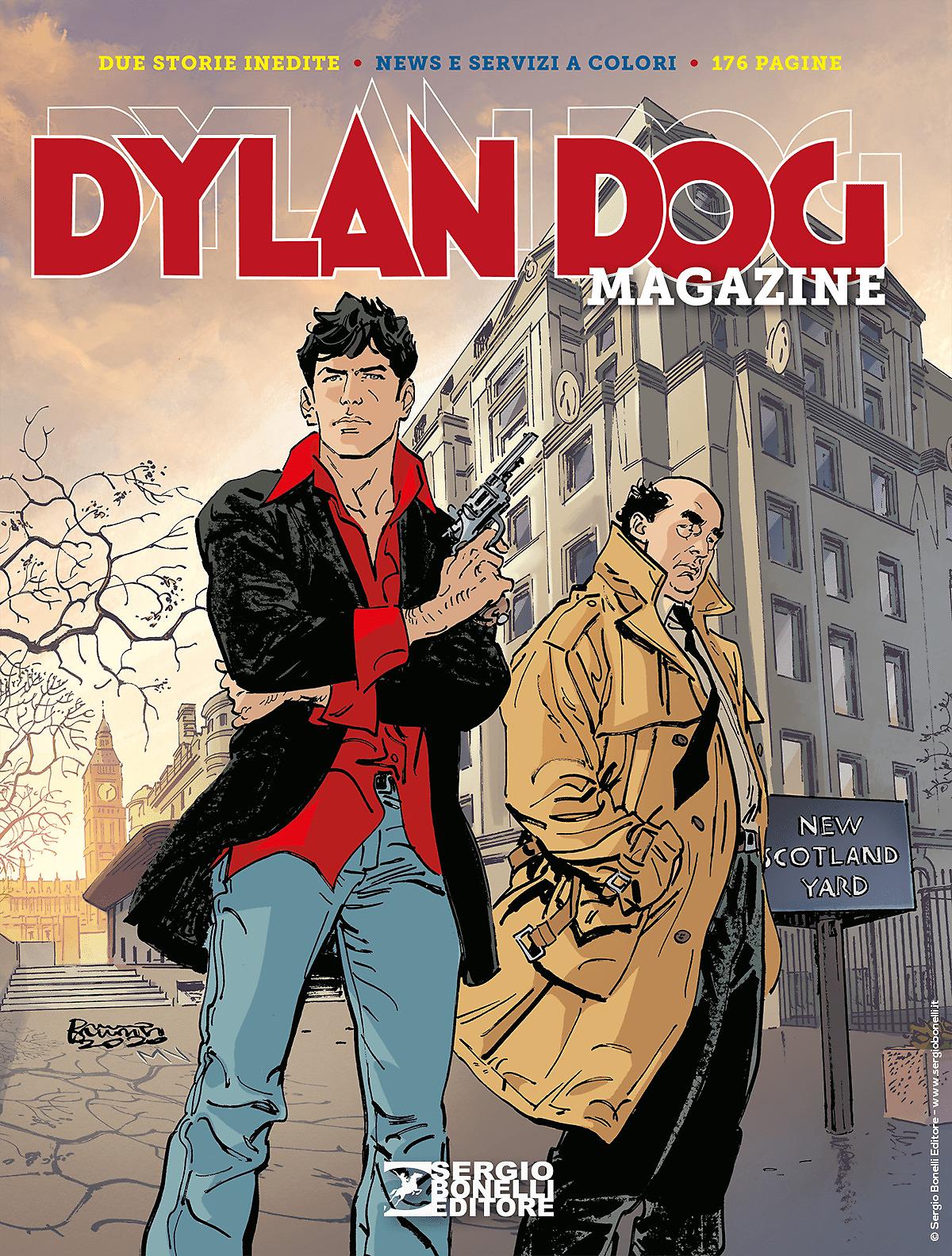
Dylan Dog, a name that resonates with comic book aficionados around the world, is not just a character but a cultural phenomenon. Created by Italian writer Tiziano Sclavi in 1986, Dylan Dog is the protagonist of one of the most successful and influential comic book series ever produced in Italy. Over the decades, this “Nightmare Investigator” has captivated readers with his unique blend of horror, mystery, and existential angst, making him a beloved figure in the world of graphic literature.
The Origins of Dylan Dog
Dylan Dog was conceived during a time when the comic book landscape was dominated by more traditional heroes and genres. In 1985, Tiziano Sclavi pitched the idea of a horror-themed comic series to his publisher, Sergio Bonelli. Initially, Sclavi envisioned a dark detective series set in New York, with a protagonist resembling a Raymond Chandler-esque noir figure. However, after discussions with Bonelli, the character evolved into something far more distinctive—a young, carefree investigator based in London, accompanied by a humorous sidekick.
The character of Dylan Dog was visually inspired by British actor Rupert Everett, whom Sclavi had seen in the film Another Country. This choice gave Dylan a dashing yet melancholic appearance, perfectly suited to his role as a detective who delves into the darkest corners of the human psyche. The iconic visual representation was brought to life by artist Claudio Villa, who was tasked with crafting Dylan Dog’s appearance.
Dylan Dog’s sidekick, Groucho, was modeled after the legendary comedian Groucho Marx. This character added a layer of humor to the series, balancing the horror elements with wit and absurdity. The combination of these elements—horror, mystery, humor, and a distinctly European sensibility—set the stage for the creation of a comic book unlike any other.
The Rise to Fame
Dylan Dog made his debut on October 26, 1986, with the release of the first issue, L’alba dei morti viventi (The Dawn of the Living Dead). Initially, the response was lukewarm, and the comic was considered a potential failure. However, within a week, the tide turned, and the comic sold out, necessitating a reprint. This marked the beginning of Dylan Dog’s meteoric rise to fame.
Over the years, Dylan Dog has become a cultural icon in Italy and beyond. The series quickly gained a massive following, with sales surpassing those of other popular Italian comic book characters like Mister No and Zagor. Dylan Dog eventually became the second best-selling comic book series in Italy, second only to the legendary Tex.
One of the key factors behind Dylan Dog’s success is its appeal across different age groups. While initially targeted at younger audiences, the series has found a dedicated readership among adults as well. This broad appeal is due in part to the complex themes and philosophical undertones that permeate the stories. Dylan Dog is not just a horror comic; it is a reflection on the human condition, exploring themes of fear, love, death, and the meaning of life.
Renowned intellectuals, including the late Umberto Eco, have praised Dylan Dog for its depth and literary quality. Eco famously remarked that “Dylan Dog is an authoritative work,” highlighting the comic’s significance in Italian culture. The character has also been cited in major publications like Corriere della Sera, where philosopher Giulio Giorello encouraged readers to turn to Dylan Dog during a time of literary drought.
The Character of Dylan Dog
Dylan Dog is a private detective specializing in cases that fall outside the realm of the ordinary. His cases often involve the supernatural, the bizarre, and the inexplicable. With a little over 30 years of life, Dylan lives in London in a house filled with monstrous gadgets, complete with a doorbell that emits a blood-curdling scream instead of the usual chime. His past is shrouded in mystery, as he is an ex-Scotland Yard agent with a history that is only hinted at throughout the series.
Unlike traditional heroes, Dylan Dog is deeply flawed. He experiences fear, self-doubt, and often fails to fully resolve the cases he takes on. He is a contradictory figure—both brave and terrified, skeptical and curious, a man who constantly questions himself and the world around him. Despite his flaws, Dylan Dog is driven by a relentless desire to understand the unknown, to confront the nightmares that plague both his clients and himself.
Dylan Dog’s personality is further defined by his love for music—he plays the clarinet, often performing Tartini’s “Devil’s Trill Sonata.” He is a non-smoker, a non-drinker (though he is a recovering alcoholic), a vegetarian, an animal lover, and an advocate for non-violence. These traits, combined with his darker, more introspective qualities, paint a picture of a man deeply at odds with the world, and even more so with himself. He struggles to maintain stable relationships, particularly with women, and finds solace in the companionship of his old superior at Scotland Yard, Inspector Bloch, and his eccentric assistant, Groucho.
Cultural Impact and Legacy
Dylan Dog is more than just a comic book character; he is a cultural phenomenon. Over the years, the series has expanded beyond the confines of the monthly comic book format. Special editions, crossover series like Dylan Dog & Martin Mystère, and the Almanacchi della Paura (Almanacs of Fear) have been created to cater to the insatiable demand for more Dylan Dog stories. However, the heart of the series remains the monthly comic book, meticulously curated by Sclavi himself. Sclavi’s dream was to create Italy’s first “author’s comic” that could also achieve mass popularity, and with Dylan Dog, he succeeded beyond his wildest expectations.
The character has also played a role in social and cultural campaigns. Dylan Dog has been featured in anti-drug and anti-alcohol abuse initiatives, further solidifying his status as a figure of cultural significance. The comic’s success has also helped it to hold its own against the dominance of Japanese manga in the global comic book market.
In 2011, after years of speculation, Dylan Dog finally made the leap to the big screen with Dylan Dog: Dead of Night, directed by Kevin Munroe and starring Brandon Routh as the titular character. While the film received mixed reviews, it introduced Dylan Dog to a wider international audience, cementing his status as a global pop culture icon.
The Historical Context of Dylan Dog
To fully appreciate the impact of Dylan Dog, it is essential to understand the historical context in which the character was created. The 1980s were a period of significant cultural change in Italy and across the Western world. Horror as a genre was experiencing a renaissance, with films, books, and television shows exploring themes of fear, the supernatural, and the unknown. However, there was a gap in the comic book market for a character that could embody these themes while also offering a deeper exploration of the human psyche.
Dylan Dog filled this gap perfectly. Sclavi’s creation was not just a response to the popularity of horror but also a commentary on the anxieties and uncertainties of the modern world. The character’s struggles with his own fears and insecurities mirrored the broader societal concerns of the time, making Dylan Dog a relatable and enduring figure for readers.
Moreover, Dylan Dog’s influence extends beyond the world of comics. The character has inspired a generation of writers, artists, and filmmakers, and his impact can be seen in various forms of media. The series’ blend of horror, humor, and philosophical reflection has set a standard for how genre fiction can be both entertaining and thought-provoking.
SEO Optimization and Digital Strategy
As with any cultural icon, maintaining Dylan Dog’s relevance in the digital age is crucial. SEO optimization plays a vital role in ensuring that Dylan Dog remains visible to both long-time fans and new readers. Keywords such as “Dylan Dog age,” “Dylan Dog comic series,” and “Dylan Dog horror detective” are essential for capturing the interest of potential fans searching for information about the character.
In addition to traditional print media, Dylan Dog has a strong presence in the digital realm. The comic series is available in digital format, allowing readers to access the stories on various devices. Social media platforms also play a significant role in keeping the character connected with his audience. Engaging with fans through content such as behind-the-scenes looks, interviews with creators, and fan art helps to keep Dylan Dog at the forefront of popular culture.
Conclusion
Dylan Dog is not just a character in a comic book; he is a symbol of the power of storytelling. His journey from a niche comic book hero to a cultural icon is a testament to the creativity and vision of Tiziano Sclavi and the team at Sergio Bonelli Editore. Dylan Dog’s appeal lies in his complexity, his humanity, and his ability to confront the darkest aspects of the human experience with courage and wit.
As he continues to navigate the nightmares that haunt him and his clients, Dylan Dog remains a timeless figure in the world of graphic literature. His stories resonate with readers across generations, offering both thrills and thoughtful reflections on life, death, and everything in between. With millions of copies sold and a legacy that spans decades, Dylan Dog stands as a testament to the enduring power of the horror genre and the unique ability of comics to explore the human condition.


