
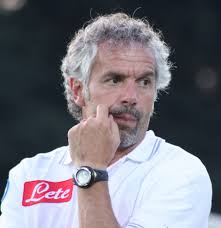
Roberto Donadoni is a name synonymous with Italian football, a player and coach whose influence spans decades. Born on September 9, 1963, in Cisano Bergamasco, Italy, Donadoni’s career is a testament to dedication, skill, and a deep understanding of the game. From his early days as a promising player in the Italian leagues to his later years as a respected coach, Donadoni’s journey is marked by significant achievements and notable milestones.
Early Life and Introduction to Football
Roberto Donadoni grew up in Cisano Bergamasco, a small town in the province of Bergamo. From a young age, he displayed a natural talent for football, which led him to join the youth ranks of Atalanta, a prominent football club in Italy. His early years at Atalanta were crucial in shaping his career, as he honed his skills and developed the attributes that would later make him a standout player.
Donadoni made his professional debut with Atalanta in the 1981-1982 season, playing in Serie B, the second tier of Italian football. His performances were impressive, and he quickly became a key player for the team. In the 1983-1984 season, Donadoni played a pivotal role in helping Atalanta secure promotion to Serie A, Italy’s top football league. This achievement was a significant milestone in his career, marking the beginning of his rise to fame in the world of football.
The Golden Years at AC Milan
Donadoni’s exceptional performances at Atalanta caught the attention of AC Milan, one of the most prestigious football clubs in the world. In 1986, he made a high-profile move to Milan, becoming the first major signing under the club’s then-new president, Silvio Berlusconi. This transfer marked the beginning of a decade-long association with the Rossoneri, during which Donadoni would become an integral part of one of the greatest teams in football history.
Under the guidance of legendary coach Arrigo Sacchi, Donadoni was a key player in a Milan side that revolutionized football with its innovative tactics and relentless pressing style. Playing primarily as a right midfielder, Donadoni was known for his versatility, creativity, and work rate. He was not only a reliable presence in defense but also a potent attacking force, contributing with crucial goals and assists.
During his time at Milan, Donadoni won numerous titles, including five Serie A championships (1988, 1992, 1993, 1994, 1996) and three UEFA Champions League titles (1989, 1990, 1994). These achievements solidified his place as one of the best midfielders of his generation. His ability to perform consistently at the highest level earned him admiration from fans and peers alike.
International Career with the Italian National Team
Roberto Donadoni’s talent was not limited to club football; he also had a distinguished international career with the Italian national team. He made his debut for Italy on October 8, 1986, in a friendly match against Greece. Over the next decade, Donadoni became a regular fixture in the national team, representing Italy in several major tournaments.
One of the highlights of his international career was the 1990 FIFA World Cup, held in Italy. Under the management of Azeglio Vicini, the Italian team performed admirably, reaching the semifinals before losing to Argentina in a dramatic penalty shootout. Italy eventually finished third in the tournament, and Donadoni’s contributions were widely recognized.
In 1994, Donadoni was part of the Italian squad that reached the final of the FIFA World Cup in the United States. Coached by Arrigo Sacchi, Italy faced Brazil in the final, a match that ended in heartbreak as Italy lost in a penalty shootout. Despite the disappointment, Donadoni’s performances throughout the tournament were commendable, and he remained a key player for the national team until his retirement from international football.
Donadoni earned 63 caps for Italy, scoring five goals. His international career, marked by consistency and dedication, further enhanced his reputation as one of the finest midfielders in the history of Italian football.
The American Adventure and Return to Milan
After the 1994 World Cup, Donadoni made a surprising move by joining the New York Metrostars (now known as New York Red Bulls) in Major League Soccer (MLS). At the time, it was uncommon for European players of his caliber to play in the United States, but Donadoni embraced the challenge. His presence in MLS helped raise the profile of the league, and he became a fan favorite during his two-year stint in New York.
In 1997, Donadoni returned to AC Milan at the request of Fabio Capello, who was then the coach of the Rossoneri. Although his second spell at Milan was shorter, he continued to contribute with his experience and leadership. In 1999, Donadoni made another unexpected move, this time to Al Ittihad in Saudi Arabia. He won the Saudi Premier League with the club, adding another trophy to his collection before retiring from professional football in 2000.
Transition to Coaching
After retiring as a player, Roberto Donadoni transitioned into coaching, obtaining his coaching license and embarking on a new phase of his football career. His first coaching job was with Lecco in Serie C1 during the 2001-2002 season. Despite being new to coaching, Donadoni showed promise, leading Lecco to a respectable ninth-place finish.
The following season, he took charge of Livorno in Serie B, where he further honed his coaching skills. Under his guidance, Livorno finished in tenth place, and Donadoni began to establish himself as a capable coach with a bright future.
In 2003, Donadoni was appointed as the head coach of Genoa, a club with a rich history in Italian football. Unfortunately, his tenure at Genoa was short-lived, as he was dismissed after just three matches. Despite this setback, Donadoni’s coaching career was far from over.
The National Team and Coaching Journey
In 2006, following Italy’s triumph at the FIFA World Cup in Germany, Roberto Donadoni was appointed as the head coach of the Italian national team, succeeding Marcello Lippi. Taking over the reins of a team that had just won the World Cup was no small task, and Donadoni faced immense pressure to deliver results.
Under his leadership, Italy qualified for the UEFA Euro 2008, held in Austria and Switzerland. The tournament was a mixed experience for Donadoni and his team. Italy advanced to the quarterfinals, where they faced Spain, the eventual champions. The match ended in a goalless draw, and Italy was eliminated in a penalty shootout. Following the tournament, Donadoni was replaced by Marcello Lippi, who returned to the national team.
After his stint with the national team, Donadoni returned to club management. He took charge of Napoli in March 2009, leading the team through the remainder of the season. The following year, he was appointed as the head coach of Cagliari, where he continued to build his reputation as a tactically astute manager.
In 2012, Donadoni took over as the head coach of Parma, a club with a storied history in Italian football. His time at Parma was challenging, as the club was going through a period of financial instability. Despite these difficulties, Donadoni managed to keep the team competitive in Serie A, earning praise for his ability to navigate tough circumstances.
Legacy and Impact on Football
Roberto Donadoni’s career, both as a player and a coach, has left a lasting impact on Italian football. As a player, he was part of one of the greatest teams in history, contributing to AC Milan’s dominance in the late 1980s and early 1990s. His performances on the international stage further solidified his legacy as one of Italy’s finest midfielders.
As a coach, Donadoni has shown resilience and adaptability, taking on various challenges across different leagues and levels of football. His ability to guide teams through difficult situations, such as his time at Parma, highlights his tactical acumen and leadership qualities.
Today, Donadoni is remembered as a footballer who combined technical skill with tactical intelligence. His contributions to the game, both on and off the pitch, continue to be recognized and celebrated by football enthusiasts around the world.


