
Introduction
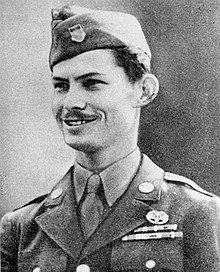
Desmond Doss is a name that resonates with valor, selflessness, and unwavering faith. Born on February 7, 1919, in Lynchburg, Virginia, Doss became a symbol of courage during World War II, not for taking lives, but for saving them. His life story is a compelling tale of conviction, as he became the first conscientious objector to receive the Medal of Honor, the highest military decoration in the United States. This article explores the life of Desmond Doss, his rise to fame, his significant contributions during the war, and the legacy he left behind.
Early Life and Background
Desmond Thomas Doss was born into a devout Christian family. His parents, William Doss, a carpenter, and Bertha Doss, a homemaker, instilled in him strong religious values from an early age. Doss was a member of the Seventh-day Adventist Church, a Christian denomination that played a crucial role in shaping his worldview, particularly his staunch pacifism. This faith would later define his actions during one of the most tumultuous periods in history—World War II.
Growing up in Lynchburg, Doss was a quiet and unassuming child. He adhered strictly to the teachings of his faith, which emphasized the sanctity of life and the importance of keeping the Sabbath. His deep religious convictions would later become the cornerstone of his decision to serve his country without bearing arms.
World War II and the Call to Duty
When the United States entered World War II in 1941, Desmond Doss faced a moral dilemma. On one hand, he felt a strong sense of duty to serve his country, but on the other, his religious beliefs forbade him from taking a life or carrying a weapon. Despite these conflicting emotions, Doss volunteered for the U.S. Army in April 1942, determined to fulfill his patriotic duty while staying true to his faith.
Doss enlisted as a medic, believing that this role would allow him to save lives rather than take them. He was assigned to the 77th Infantry Division, where he quickly became known for his unwavering commitment to his principles. His refusal to carry a weapon earned him the label of a conscientious objector, a term used for individuals who refuse to engage in combat due to moral or religious beliefs. However, Doss preferred the term “conscientious cooperator,” as he was eager to serve his country, just not in the traditional sense.
Challenges and Persecution in the Military
Desmond Doss’s decision to serve as a non-combatant was met with hostility and ridicule from his fellow soldiers. Many viewed his refusal to bear arms as cowardice, and he was often ostracized and bullied. Some of his comrades even tried to have him discharged from the military, arguing that his presence endangered their unit. Despite the constant harassment, Doss remained resolute, enduring the abuse with quiet dignity.
The turning point came when Doss’s unit was deployed to the Pacific Theater, where they faced some of the fiercest battles of the war. It was here that Doss would prove his worth and silence his detractors.
Heroism at Hacksaw Ridge
Desmond Doss’s most famous act of heroism occurred during the Battle of Okinawa, one of the bloodiest battles of World War II. In April 1945, Doss’s unit was tasked with capturing a heavily fortified escarpment known as Hacksaw Ridge. The Japanese forces were entrenched in the ridge, making it a nearly impregnable stronghold. The battle was intense, with heavy casualties on both sides.
As the fighting raged on, Doss’s unit was ordered to retreat. However, many of his comrades lay wounded on the battlefield, unable to escape the relentless gunfire. Refusing to abandon them, Doss stayed behind, risking his life to rescue the injured soldiers. Over the course of several hours, Doss single-handedly dragged 75 wounded men to safety, lowering them down the ridge using a rope sling. Each time he saved a life, he prayed, “Lord, please help me get one more.” His actions were nothing short of miraculous, as he repeatedly exposed himself to enemy fire without ever carrying a weapon for self-defense.
Doss’s bravery during the Battle of Okinawa earned him the respect and admiration of his fellow soldiers, many of whom had previously doubted him. His actions not only saved lives but also demonstrated the power of faith and conviction in the face of overwhelming odds.
Recognition and the Medal of Honor
Desmond Doss’s extraordinary heroism did not go unnoticed. On October 12, 1945, he was awarded the Medal of Honor by President Harry S. Truman in a ceremony at the White House. Truman was deeply moved by Doss’s actions, telling him, “I’m proud of you. You really deserve this. I consider this a greater honor than being President.”
Doss was the first conscientious objector to receive the Medal of Honor, marking a significant moment in U.S. military history. His citation read: “Through his outstanding bravery and unflinching determination in the face of desperately dangerous conditions, Private First Class Doss saved the lives of many soldiers. His name became a symbol throughout the 77th Infantry Division for outstanding gallantry far above and beyond the call of duty.”
Post-War Life and Challenges
After the war, Desmond Doss returned to the United States as a national hero. However, his service had taken a heavy toll on his health. Doss had been wounded three times during the war and had contracted tuberculosis, which led to a long and painful recovery. He spent five years undergoing medical treatment and recuperation, during which he lost a lung and five ribs due to complications from the disease.
Despite his physical ailments, Doss remained active in his community and continued to live a life of service. He became a symbol of the Seventh-day Adventist Church, inspiring many with his story of faith and courage. In recognition of his service, a section of the Georgia Highway 2 was named the “Desmond T. Doss Medal of Honor Highway” in 1990, a fitting tribute to a man who had given so much for his country.
Legacy and Cultural Impact
Desmond Doss’s legacy extends far beyond his military service. His story has inspired countless individuals around the world, serving as a powerful reminder of the impact that one person’s faith and determination can have. In 2016, Doss’s life was immortalized in the film “Hacksaw Ridge,” directed by Mel Gibson and starring Andrew Garfield as Doss. The movie received critical acclaim and brought Doss’s story to a global audience, ensuring that his legacy would live on for future generations.
“Hacksaw Ridge” portrayed Doss’s unwavering commitment to his principles and the incredible sacrifices he made during the war. The film was praised for its realistic depiction of the horrors of battle, as well as its respectful portrayal of Doss’s faith. Andrew Garfield’s performance as Doss earned him an Academy Award nomination for Best Actor, further solidifying the film’s impact.
Final Years and Death
In his later years, Desmond Doss continued to receive recognition for his service. In 2000, he was honored by the Georgia House of Representatives with a special citation acknowledging his heroic actions during World War II. Despite his declining health, Doss remained active in his church and community, always willing to share his story with those who would listen.
Desmond Doss passed away on March 23, 2006, at his home in Piedmont, Alabama. He was 87 years old. Coincidentally, he died on the same day as David Bleak, another Medal of Honor recipient. Doss was laid to rest at the National Cemetery in Chattanooga, Tennessee, where his grave continues to be a site of pilgrimage for those who wish to honor his memory.
Conclusion
Desmond Doss’s life is a testament to the power of conviction and the strength of the human spirit. His unwavering faith and determination allowed him to overcome immense challenges and save countless lives during one of the most brutal conflicts in history. As the first conscientious objector to receive the Medal of Honor, Doss broke new ground in military history, showing that heroism comes in many forms.
Doss’s story has been preserved through books, documentaries, and films, ensuring that future generations will continue to learn from his example. His life serves as an inspiration not only to those in the military but to anyone who faces difficult choices and must stand firm in their beliefs. Desmond Doss will forever be remembered as a true American hero, whose legacy of courage, faith, and selflessness will endure for generations to come.


