
Introduction
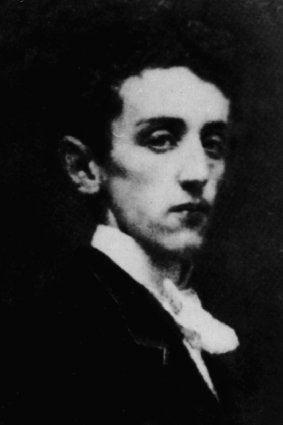
Carlo Dossi, born Carlo Alberto Pisani Dossi on March 27, 1849, in Zenevredo, a small town in the province of Pavia, Italy, was a multifaceted figure in the Italian literary and political landscape of the late 19th and early 20th centuries. His life, marked by a deep passion for culture, literature, and politics, was a blend of creative genius and diplomatic acumen. Dossi’s legacy is particularly significant for his contributions to the Scapigliatura movement, a countercultural literary movement in Milan, as well as his work as a diplomat under the influential statesman Francesco Crispi. This article delves into the life of Carlo Dossi, exploring his journey through literature, politics, and archaeology, and highlighting the key moments that defined his remarkable career.
Early Life and Cultural Awakening
Carlo Dossi was born into a wealthy family of landowners, which provided him with the privilege of a good education and the freedom to pursue his intellectual interests. In 1861, at the age of 12, Dossi moved to Milan, a city that was rapidly becoming a hub of cultural and political activity. Milan’s vibrant intellectual environment had a profound impact on young Dossi, who soon became involved with the Scapigliatura movement.
The Scapigliatura, often seen as Italy’s version of the Bohemian movement, was a group of rebellious writers, artists, and musicians who rejected the conservative values of their time. The movement was characterized by its opposition to traditional norms and its embrace of avant-garde artistic expressions. Dossi, with his sharp wit and innovative literary style, quickly became one of the prominent voices of this movement. He contributed to various periodicals, including Cronaca Bizantina, Il Capitan Fracassa, and La Riforma, where he showcased his talent for satire and social commentary.
Literary Career and Major Works
Carlo Dossi’s literary career, though brief, was marked by a unique blend of linguistic innovation and sharp social critique. His writing was characterized by a playful manipulation of language, mixing highbrow literary forms with popular dialects and technical jargon. This approach made his work stand out in the Italian literary scene, where he was often seen as an outlier, unaligned with any specific literary school or tradition.
One of Dossi’s earliest works, L’altrieri (1868), established him as a writer of considerable talent. This work, along with others like Vita di Alberto Pisani (1870) and Ona famiglia de cialapponi (1873), co-authored with Gigi Pirelli, reflected his deep engagement with the socio-political issues of his time. Dossi’s works often explored the complexities of human nature and the absurdities of social conventions, making him a keen observer of the human condition.
Another significant work was La colonia felice (1878), which, like much of his writing, was a satirical exploration of society and its foibles. Dossi’s use of language in this and other works was both inventive and provocative, as he frequently employed abrupt shifts in tone and style, moving seamlessly between the formal and the colloquial. His later works, such as Ritratti umani, dal calamajo di un medico (1874) and Gocce d’inchiostro (1880), further cemented his reputation as a literary innovator.
Despite his literary success, Dossi’s writing career was relatively short-lived. His involvement in politics, particularly his close association with Francesco Crispi, led him to gradually distance himself from the literary world.
Political Career and Diplomatic Service
Carlo Dossi’s political career began in earnest when he became associated with Francesco Crispi, one of Italy’s most prominent statesmen. Crispi, who served as the Prime Minister of Italy during two separate terms (1887-1891 and 1893-1896), recognized Dossi’s intellectual talents and appointed him to various diplomatic positions. This marked the beginning of Dossi’s transition from the world of letters to the world of politics.
In 1870, Dossi was appointed as the Italian Consul in Bogotá, Colombia, a role that introduced him to the complexities of international diplomacy. His success in this position led to further appointments, including his role as Crispi’s private secretary in 1887. Dossi’s diplomatic career reached its zenith when he was appointed as the Minister Plenipotentiary to Athens. During his time in Greece, Dossi developed a deep interest in archaeology, a passion that would continue to shape his life long after his diplomatic career had ended.
Dossi’s time in Athens was marked by significant achievements in both diplomacy and archaeology. He was deeply involved in the excavation of ancient sites and the collection of artifacts, many of which he later brought back to Italy. His work in Athens also provided him with a unique perspective on the cultural and historical connections between Italy and Greece, which he explored in his writings.
Retirement and Archaeological Pursuits
Following the fall of Francesco Crispi’s government in 1896, Carlo Dossi decided to retire from his diplomatic career. In 1901, he settled in his villa in Corbetta, a town near Milan, where he devoted himself to his passion for archaeology. The villa, inherited from his wife’s uncle, Francesco Mussi, became the center of Dossi’s archaeological activities.
Dossi’s archaeological work was extensive and varied. He conducted numerous excavations in the Lombardy region, particularly in areas around Corbetta, Albairate, Santo Stefano Ticino, Sedriano, and along the banks of the Ticino River. His collection included a wide range of artifacts, from pre-Columbian relics to objects from ancient Greece and Rome. Dossi meticulously cataloged his findings and established the Museo Pisani Dossi in his villa, where he displayed his collection.
Dossi’s passion for archaeology was passed down to his son, Franco Dossi, who continued his father’s work as a collector and curator. The Pisani Dossi Museum, though relatively small, became an important repository of archaeological artifacts, reflecting Carlo Dossi’s lifelong commitment to preserving and studying the past.
Legacy and Cultural Impact
Carlo Dossi’s legacy is a complex one, encompassing his contributions to literature, politics, and archaeology. As a writer, Dossi was a pioneer of linguistic experimentation and social critique, challenging the conventions of his time and paving the way for future generations of Italian writers. His works, though not as widely known today as those of some of his contemporaries, remain important examples of the literary innovation that characterized the Scapigliatura movement.
In the political realm, Dossi’s career as a diplomat and his close association with Francesco Crispi placed him at the center of some of the most significant events in late 19th-century Italian history. His work in Greece, in particular, left a lasting impact on the field of archaeology and contributed to the broader understanding of Mediterranean history.
Dossi’s life was also marked by his deep friendships with other cultural figures of his time, most notably the artist Tranquillo Cremona. Cremona, a leading figure in the Scapigliatura movement, painted a portrait of Dossi that remains in the villa in Corbetta. Dossi often credited Cremona with teaching him the art of writing, underscoring the close connection between their artistic and intellectual pursuits.
Final Years and Death
Carlo Dossi spent the final years of his life in relative seclusion, focused on his archaeological work and his family. He remained active in local affairs, serving on the Corbetta City Council from 1902 to 1910. His contributions to the cultural and political life of the region were widely recognized, and he was respected as a man of intellect and integrity.
Dossi passed away on November 19, 1910, in Cardina, near Como, Italy. His death marked the end of an era, but his influence continued to be felt in the fields of literature, politics, and archaeology. Dossi’s works, though not as frequently studied as those of some of his contemporaries, offer valuable insights into the cultural and intellectual currents of his time.
Conclusion
Carlo Dossi’s life was a testament to the power of intellectual curiosity and cultural engagement. From his early involvement in the Scapigliatura movement to his later years as a diplomat and archaeologist, Dossi demonstrated a relentless pursuit of knowledge and a deep commitment to the preservation of history. His literary works, characterized by their linguistic innovation and social critique, remain an important part of Italy’s cultural heritage, while his contributions to archaeology and diplomacy continue to be recognized by scholars and historians.
Dossi’s legacy is one of complexity and richness, reflecting the many facets of his life and work. As a writer, diplomat, and archaeologist, he left an indelible mark on the cultural and intellectual landscape of Italy, and his story serves as an inspiration to those who seek to combine creativity with a commitment to public service.


