
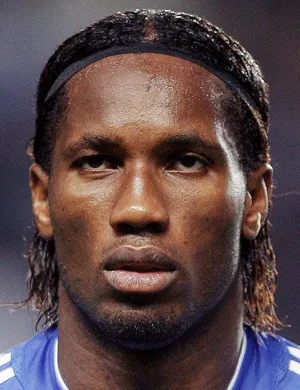
Didier Drogba, born on March 11, 1978, in Abidjan, Côte d’Ivoire, is a football icon whose name is synonymous with power, precision, and leadership on the field. Best known for his time at Chelsea FC, Drogba’s career is a remarkable journey from humble beginnings to global stardom. His influence extends beyond football, making him a significant figure in both sports and humanitarian efforts. This article delves into the life and career of Didier Drogba, exploring the milestones that have defined his journey to fame.
Early Life and Beginnings in Football
Didier Yves Drogba Tébily was born in Abidjan, the economic capital of Côte d’Ivoire. His early life was marked by frequent moves between Africa and Europe, where he was sent to live with his uncle, Michel Goba, a professional footballer, in France at the age of five. This early exposure to football in Europe sparked Drogba’s interest in the sport, but it wasn’t until his teenage years that he began to seriously pursue a career in football.
Drogba’s early football career started at Levallois, a semi-professional club in France, where his performances caught the attention of scouts. Despite a slow start to his professional career, with injuries and limited playing time at Le Mans, Drogba’s potential was undeniable. His perseverance paid off when he moved to Guingamp in 2002, where he scored 17 goals in a single season, establishing himself as one of the top strikers in Ligue 1.
Rise to Prominence: Olympique de Marseille
In 2003, Drogba transferred to Olympique de Marseille, where his career truly began to take off. At Marseille, he quickly became a fan favorite, known for his incredible goal-scoring ability, physical presence, and knack for performing in crucial moments. During the 2003-2004 season, Drogba scored 19 goals in Ligue 1 and added another 12 in European competitions, including five in the UEFA Champions League and seven in the UEFA Cup. His outstanding performances earned him the Ligue 1 Player of the Year award and a place in the hearts of Marseille supporters.
Drogba’s success at Marseille was short-lived but impactful. His performances on the European stage attracted the attention of top clubs across the continent, and it wasn’t long before Chelsea FC, under the ownership of Roman Abramovich, made a move to bring him to the Premier League.
Chelsea FC: The Making of a Legend
In 2004, Didier Drogba joined Chelsea for a then club-record fee of £24 million (approximately €36 million). This move marked the beginning of one of the most successful periods in both Drogba’s career and Chelsea’s history. Under the management of José Mourinho, Drogba quickly became the focal point of Chelsea’s attack, known for his ability to score crucial goals in the biggest matches.
Drogba’s impact at Chelsea was immediate. In his first season, he helped the club secure their first Premier League title in 50 years, scoring 16 goals in all competitions. Over the years, Drogba’s contributions would only grow, with his blend of strength, skill, and clutch performances in critical moments solidifying his status as a Chelsea legend.
Perhaps the pinnacle of Drogba’s Chelsea career came in 2012 during the UEFA Champions League final against Bayern Munich. In what is widely regarded as one of the greatest individual performances in the competition’s history, Drogba scored the equalizing goal in the 88th minute with a powerful header and later converted the winning penalty in the shootout, securing Chelsea’s first-ever Champions League title. This performance epitomized Drogba’s ability to deliver in the most high-pressure situations, earning him a place in the annals of football history.
International Career: Leading Côte d’Ivoire
Didier Drogba’s influence extended beyond club football, as he was a pivotal figure for the Côte d’Ivoire national team. Drogba made his debut for Les Éléphants in 2002 and quickly established himself as the team’s leading striker. His leadership on and off the field was instrumental in helping Côte d’Ivoire qualify for their first-ever FIFA World Cup in 2006, a significant achievement for the nation.
Drogba’s contributions to the national team were not just limited to his goal-scoring prowess—he became a symbol of hope and unity in a country plagued by civil conflict. In 2005, after helping Côte d’Ivoire qualify for the World Cup, Drogba made a public plea for peace, urging warring factions in his country to lay down their arms. His call for peace was instrumental in initiating a ceasefire, further elevating his status as a national hero.
Throughout his international career, Drogba became Côte d’Ivoire’s all-time leading scorer, with 65 goals in 105 appearances. Although the national team fell short of winning major international tournaments, Drogba’s legacy as a leader and ambassador for his country is indisputable.
Later Career: China, Turkey, and Return to Chelsea
After an illustrious first stint with Chelsea, Drogba left the club in 2012 to explore new challenges. He signed with Shanghai Shenhua in the Chinese Super League, where he continued to showcase his goal-scoring ability. However, his time in China was short-lived due to financial issues at the club, leading Drogba to move to Galatasaray in Turkey.
At Galatasaray, Drogba added more silverware to his collection, winning the Turkish Super Lig and contributing to the club’s success in domestic and European competitions. His impact was immediate, scoring crucial goals in both the league and the UEFA Champions League. Despite his advancing age, Drogba’s performances demonstrated that he remained one of the most effective strikers in world football.
In 2014, Drogba returned to Chelsea for a second spell, reuniting with José Mourinho. Although his role was more limited compared to his first stint, Drogba played a valuable part in Chelsea’s 2014-2015 Premier League title-winning campaign. His leadership and experience were crucial in guiding a younger generation of Chelsea players, and his return was met with widespread adulation from the club’s supporters.
Final Years and Legacy
After leaving Chelsea for the second time, Didier Drogba moved to Major League Soccer (MLS) in the United States, signing with the Montreal Impact. In MLS, Drogba continued to defy expectations, scoring 21 goals in 33 appearances and leading the Impact to the playoffs. His time in North America added another chapter to his storied career, demonstrating his enduring ability to perform at a high level.
Drogba’s final playing years were spent with Phoenix Rising, a club in the United Soccer League (USL) where he also took on an ownership role. His involvement with Phoenix Rising underscored his commitment to giving back to the sport and helping to grow football in emerging markets.
Didier Drogba officially retired from professional football in 2018, ending a career that spanned over two decades. His impact on the game, however, extends far beyond his on-field achievements. Drogba is widely regarded as one of the greatest African footballers of all time, and his influence on the sport, particularly in Africa, is immeasurable.
Humanitarian Efforts and Off-Field Contributions
Beyond his footballing achievements, Didier Drogba has made significant contributions off the field, particularly in the realm of humanitarian work. In 2007, he was appointed a United Nations Development Programme (UNDP) Goodwill Ambassador, using his platform to advocate for peace, development, and humanitarian causes.
Drogba’s charitable efforts are epitomized by the Didier Drogba Foundation, which he established in 2007. The foundation focuses on providing healthcare and education in Côte d’Ivoire, particularly in underserved communities. One of its most notable achievements was the construction of a hospital in Abidjan, which provides much-needed medical services to the local population.
Drogba’s commitment to giving back has earned him numerous accolades, including the Golden Foot award in 2013, which recognizes both athletic excellence and contributions to the community. His legacy as a footballer is matched by his legacy as a humanitarian, making him a role model both on and off the pitch.
Conclusion: Didier Drogba’s Enduring Legacy
Didier Drogba’s journey from the streets of Abidjan to the pinnacle of world football is a story of perseverance, talent, and leadership. His impact on the game is profound, having redefined the role of the modern striker with his physicality, technical ability, and clutch performances. At Chelsea, he is revered as a club legend, and in Côte d’Ivoire, he is celebrated as a national hero.
Drogba’s legacy extends beyond his goal-scoring records and trophies. He is a symbol of hope and unity, both in his home country and around the world. His humanitarian efforts have made a tangible difference in the lives of many, and his commitment to using his platform for good continues to inspire future generations.
As football continues to evolve, Didier Drogba’s name will remain synonymous with excellence, not only as a player but also as a global ambassador for the sport and a force for positive change. His life highlights are a testament to the power of sport to transcend borders and bring people together, making him one of the most influential figures in the history of football.


