
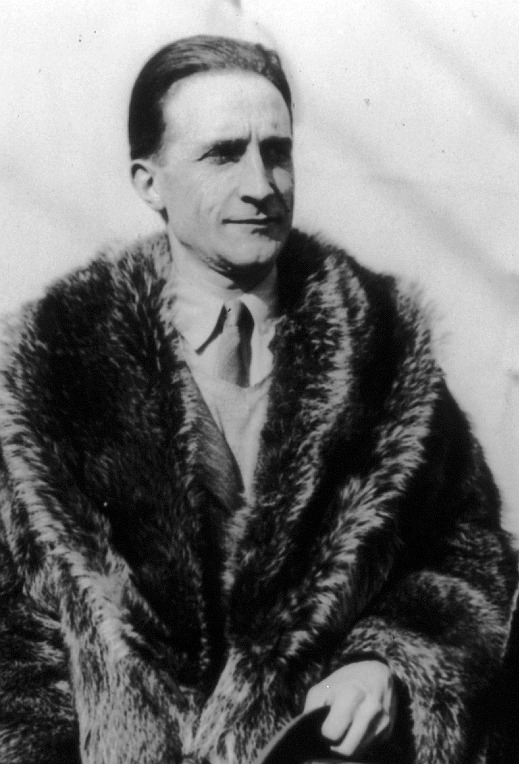
Marcel Duchamp, born on July 28, 1887, in Blainville-Crevon, France, is widely regarded as one of the most influential artists of the 20th century. Known for his pioneering work in conceptual art, Duchamp challenged the traditional boundaries of what constituted art and played a pivotal role in the development of various modern art movements, including Dada and Surrealism. This article delves into Duchamp’s life, his rise to fame, and the highlights that have marked his revolutionary career.
Early Life and Artistic Beginnings
Marcel Duchamp was born into a family with a strong affinity for art. His early exposure to the world of painting came from his brothers, Gaston (known as Jacques Villon) and Raymond Duchamp-Villon, who were both accomplished artists. Duchamp began painting at the age of 15, influenced initially by the techniques of the Impressionists, a movement that dominated the French art scene at the time.
In 1904, Duchamp moved to Paris, the epicenter of the avant-garde, where he briefly attended the Académie Julian. However, he quickly grew disillusioned with the traditional academic approach to art and abandoned formal education. Between 1906 and 1910, Duchamp’s work reflected various artistic influences, including the realism of Édouard Manet, the intimate domestic scenes of Pierre Bonnard and Édouard Vuillard, and the vibrant colors of the Fauvist movement.
Duchamp’s encounter with the works of Paul Cézanne in 1910 was a turning point in his artistic development. Cézanne’s emphasis on form and structure, as opposed to purely aesthetic concerns, inspired Duchamp to move away from Impressionism. For a time, he was influenced by Cézanne and the Fauvist movement, but this phase was short-lived as Duchamp sought to explore new artistic territories.
The Birth of Conceptual Art
The years 1911 and 1912 were particularly significant in Duchamp’s career, as he created some of his most important early works, including Nu descendant un escalier n°2 (Nude Descending a Staircase, No. 2), Le Roi et la Reine entourés de nus vites (The King and Queen Surrounded by Swift Nudes), and La Mariée (The Bride). These works demonstrated Duchamp’s growing interest in movement, time, and abstraction, themes that would become central to his later work.
Nu descendant un escalier n°2 was particularly notable for its depiction of motion, influenced by the emerging art of Cubism and the futurist fascination with dynamic movement. The painting caused a sensation—and scandal—when it was exhibited at the 1913 Armory Show in New York. The public and critics alike were baffled by its abstract, mechanistic representation of a figure in motion, marking Duchamp’s first major impact on the art world.
Despite the success of Nu descendant un escalier n°2, Duchamp became increasingly disillusioned with painting. He felt that traditional forms of art had exhausted their potential and began to explore new ways of expressing ideas. This led to the creation of what would become one of his most enduring contributions to art: the “ready-made.”
The Ready-Mades and Rejection of Traditional Art
In 1913, Duchamp created his first “ready-made,” Bicycle Wheel, which consisted of a bicycle wheel mounted on a stool. The concept behind the ready-mades was revolutionary: by selecting and presenting everyday objects as art, Duchamp challenged the very definition of art and the role of the artist. He argued that the artist’s choice, rather than the object itself, imbued it with artistic value.
One of Duchamp’s most famous ready-mades is Fountain (1917), a porcelain urinal signed “R. Mutt.” Submitted anonymously to the Society of Independent Artists exhibition, Fountain was rejected by the jury, sparking a debate about what could be considered art. Duchamp’s ready-mades were a direct challenge to the art establishment, questioning the importance of craftsmanship, aesthetics, and the traditional notion of the artist as a creator.
Duchamp’s ready-mades also reflected his interest in irony and humor, elements that would continue to characterize his work throughout his career. The ready-mades were not merely about shock value; they were intellectual provocations that forced viewers to reconsider their assumptions about art and its purpose.
The Large Glass and Shift to Conceptualism
In 1915, Duchamp moved to New York, where he became deeply involved in the burgeoning avant-garde scene. He formed close friendships with key figures like Walter and Louise Arensberg, and Francis Picabia, and began a lifelong collaboration with the photographer and artist Man Ray. During this period, Duchamp began working on one of his most ambitious projects, La Mariée mise à nu par ses célibataires, même (The Bride Stripped Bare by Her Bachelors, Even), also known as The Large Glass.
The Large Glass is an intricate, symbolic work that combines painting with elements of sculpture and mechanics. Composed of two large panes of glass, it features abstract, enigmatic forms that suggest a narrative of unfulfilled desire and the mechanization of love. The work, which Duchamp never completed, is filled with cryptic symbols and references to alchemy, sex, and the unconscious, making it one of the most analyzed and debated pieces of 20th-century art.
Duchamp’s work on The Large Glass marked his transition from traditional art forms to a more conceptual approach. He was no longer interested in creating beautiful objects but in exploring ideas and challenging the boundaries of art. This shift was part of a broader movement in modern art towards abstraction, conceptualism, and the questioning of established norms.
Dadaism, Surrealism, and Influence on Modern Art
Duchamp’s influence extended beyond his own work to the broader art movements of the 20th century. In the early 1920s, he became associated with the Dada movement, an avant-garde artistic and literary movement that emerged in response to the horrors of World War I. Dadaists rejected traditional values and embraced absurdity, chance, and anti-art sentiments. Duchamp’s ready-mades and his ironic, irreverent approach to art made him a central figure in the Dada movement.
Duchamp also played a significant role in the development of Surrealism, a movement that sought to explore the unconscious mind through dreamlike imagery and irrational juxtapositions. Although he was not formally part of the Surrealist group, Duchamp’s work, particularly The Large Glass and his later piece Étant donnés (Given: 1. The Waterfall, 2. The Illuminating Gas), had a profound influence on Surrealist artists.
In 1920, Duchamp, along with Man Ray and Katherine Dreier, founded the Société Anonyme, an organization dedicated to promoting contemporary art in America. During this time, Duchamp adopted the alter ego “Rrose Sélavy,” a female persona through which he explored issues of gender, identity, and the fluidity of artistic expression. Duchamp’s experiments with photography, film, and optical devices, such as his “Rotoreliefs,” further demonstrated his interest in the intersection of art, technology, and perception.
Later Years and Lasting Legacy
In 1923, Duchamp shocked the art world by announcing that he was abandoning art to pursue a career as a professional chess player. He devoted much of the following decades to playing chess at a competitive level, a move that many saw as the ultimate act of artistic defiance. However, Duchamp never completely abandoned art; he continued to create works in secret and participated in exhibitions.
One of Duchamp’s most significant later works is Étant donnés (1946–1966), a complex and mysterious installation piece that he worked on in secret for over two decades. The work, which can only be viewed through a pair of peepholes in a wooden door, presents a voyeuristic scene of a nude female figure lying in a landscape, illuminated by a gas lamp. Étant donnés is often seen as a continuation of the themes explored in The Large Glass, but with a more explicit engagement with the viewer’s gaze and the act of looking.
Duchamp’s influence on contemporary art is immeasurable. His ready-mades laid the groundwork for later developments in conceptual art, and his challenges to the definition of art prefigured the work of artists like Andy Warhol, Robert Rauschenberg, and Jeff Koons. Duchamp’s emphasis on ideas over aesthetics, his use of irony and humor, and his rejection of traditional artistic hierarchies continue to inspire and provoke artists, critics, and audiences today.
Conclusion
Marcel Duchamp’s life and work represent a radical rethinking of what art can be. By challenging the conventions of his time and redefining the role of the artist, Duchamp opened up new possibilities for artistic expression and set the stage for much of what we now consider modern and contemporary art. His legacy is one of innovation, intellectual rigor, and a relentless questioning of the status quo.
Duchamp’s work remains a touchstone for artists and thinkers who seek to explore the boundaries of creativity and the nature of art itself. His influence is evident in the continued relevance of conceptual art and the ongoing debates about the meaning and purpose of art in the modern world. Marcel Duchamp may have passed away on October 2, 1968, but his ideas and his art continue to challenge, inspire, and provoke more than half a century later.


