
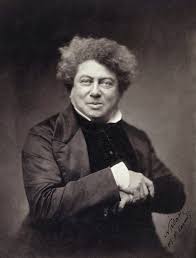
Alexandre Dumas père, born on July 24, 1802, in Villers-Cotterêts, France, stands as one of the most prolific and beloved writers of the 19th century. His works, including “The Three Musketeers” and “The Count of Monte Cristo,” have become cornerstones of world literature, inspiring countless adaptations in film, theater, and television. Dumas père’s life was as adventurous and colorful as the characters he created, filled with dramatic successes, financial ruin, and a lasting legacy that continues to captivate readers around the globe.
Early Life: A Mixed Heritage and Humble Beginnings
Alexandre Dumas was born to Thomas-Alexandre Davy de la Pailleterie, a French general of mixed race, and Marie-Louise Élisabeth Labouret, a Frenchwoman. His father, known as “the Black Devil,” was a celebrated figure in the French Revolutionary Wars, the son of a French nobleman and a Haitian slave. This unique heritage gave Dumas a distinct perspective on race and class, themes that would occasionally surface in his later works.
Dumas’ father died when he was only four years old, leaving the family in financial straits. Despite these hardships, Dumas’ mother ensured that he received a solid education, which would lay the foundation for his future literary career. In 1823, at the age of 21, Dumas moved to Paris to pursue a career in law but quickly shifted his focus to the world of literature and theater, where his talents found fertile ground.
The Theatrical Success and Transition to Novels
Alexandre Dumas père began his literary career as a playwright, finding success in the burgeoning Romantic movement. His first major work, “Henri III and His Court” (1829), was well-received and marked his entry into the French literary scene. Dumas’ plays were known for their vivid characters, intense emotions, and dramatic plotlines, qualities that would also define his later novels.
In 1830, with the rise of King Louis-Philippe, Dumas’ fortunes improved as he secured a position with the Duke of Orléans, the future king. This connection provided Dumas with both the financial stability and the social network needed to pursue his literary ambitions. It was during this period that Dumas père began experimenting with historical novels, a genre that would soon bring him worldwide fame.
The Masterpieces: “The Three Musketeers” and “The Count of Monte Cristo”
The 1840s were a particularly productive period for Dumas père, during which he penned some of his most enduring works. In 1844, he published “The Three Musketeers,” a swashbuckling adventure set in the 17th century. The novel, serialized in the newspaper Le Siècle, was an instant hit, captivating readers with its tale of friendship, honor, and intrigue.
Following the success of “The Three Musketeers,” Dumas père continued to explore the genre of historical adventure with “The Count of Monte Cristo,” published later that same year. This novel, perhaps Dumas’ most famous work, tells the story of Edmond Dantès, a man wrongfully imprisoned who embarks on a quest for revenge after escaping from prison. The novel’s themes of justice, vengeance, and redemption resonated with readers, cementing Dumas’ reputation as a master storyteller.
Both novels were part of a broader trend in 19th-century literature, where serialized fiction became immensely popular. By publishing his works in installments, Dumas père could reach a wider audience, creating suspense and anticipation with each new chapter. This approach not only made his works accessible to a broad readership but also ensured that his stories remained in the public consciousness long after their initial publication.
Collaborations and Writing Process
Dumas père was an exceptionally prolific writer, a feat made possible by his collaboration with other writers, most notably Auguste Maquet. Maquet, a historian and novelist in his own right, played a crucial role in the creation of Dumas’ novels, particularly in developing the plot outlines and conducting historical research. Together, they formed a formidable literary partnership, producing a vast array of works that included “The Man in the Iron Mask” and “Twenty Years After,” sequels to “The Three Musketeers.”
While some critics have questioned the extent of Maquet’s contributions, it is clear that Dumas père’s creative genius was the driving force behind these works. His ability to craft engaging narratives, filled with dynamic characters and thrilling adventures, ensured that his novels would become timeless classics.
Dumas père’s writing process was both intense and methodical. He maintained a rigorous schedule, often working on multiple projects simultaneously. His boundless energy and imagination allowed him to produce a staggering volume of work, which included not only novels and plays but also essays, travel books, and memoirs.
Personal Life: Fame, Fortune, and Financial Ruin
With the success of his novels, Alexandre Dumas père became one of the most famous and wealthy writers in France. However, his newfound wealth did little to curb his extravagant lifestyle. Dumas was known for his lavish spending, which included the construction of the Château de Monte-Cristo, a grand estate outside Paris, named after his famous novel.
Dumas’ personal life was as colorful as his fiction. He had numerous romantic entanglements, fathering several children, including Alexandre Dumas fils, who would go on to become a renowned writer in his own right. Despite his success, Dumas père struggled with financial management, often living beyond his means. His spending habits, combined with a series of failed business ventures, eventually led to financial ruin.
In 1851, facing mounting debts, Dumas fled to Belgium to escape his creditors. He continued to write prolifically during this period, but his financial troubles persisted. In 1854, after resolving some of his debts, he returned to Paris, only to face new challenges.
Later Years: Political Involvement and Final Works
In the later years of his life, Dumas père became increasingly involved in political causes, particularly those related to Italian unification. A staunch supporter of Giuseppe Garibaldi, Dumas even attempted to supply arms to Garibaldi’s forces during the Expedition of the Thousand in 1860. Dumas’ involvement in Italian politics reflected his broader commitment to the ideals of liberty and justice, themes that permeated his literary work.
During his time in Italy, Dumas wrote “The Last Cavalier,” a historical novel that, while less well-known than his earlier works, showcased his continued ability to blend history and fiction. He also served as the director of the excavations at Pompeii, a position that allowed him to indulge his passion for history and archaeology.
In 1864, Dumas returned to France, where his health began to decline. Despite his physical ailments, he continued to write, producing works such as “The Knight of Sainte-Hermine,” which was published posthumously in 2005 after being left unfinished at his death.
Legacy: A Literary Giant and Cultural Icon
Alexandre Dumas père passed away on December 5, 1870, at the age of 68. He died at his son’s home in Puys, near Dieppe, following a stroke that left him partially paralyzed. His death marked the end of an era, but his legacy as one of the greatest storytellers in the history of literature was already firmly established.
Dumas’ works have been translated into countless languages and adapted into numerous films, television series, and stage productions. “The Three Musketeers” and “The Count of Monte Cristo” remain among the most popular and enduring novels ever written, continuing to captivate audiences with their tales of adventure, intrigue, and heroism.
In 2002, Dumas’ remains were transferred to the Panthéon in Paris, a testament to his enduring influence on French culture and literature. This honor placed him alongside other great figures of French history, such as Voltaire and Victor Hugo, cementing his status as a national icon.
Conclusion: A Legacy of Adventure and Imagination
Alexandre Dumas père was a man of immense talent and boundless creativity. His ability to craft stories that transcended time and place has ensured that his works continue to be celebrated by readers and scholars alike. Despite the financial difficulties and personal challenges he faced, Dumas père remained committed to his craft, producing a body of work that has left an indelible mark on world literature.
His legacy is not only found in the pages of his novels but also in the countless adaptations and reinterpretations of his stories that have kept his characters alive for generations. Dumas père’s life, much like his fiction, was filled with adventure, passion, and drama—a true testament to the power of storytelling.
As we reflect on his life and work, it is clear that Alexandre Dumas père was more than just a writer; he was a cultural force whose impact on literature and popular culture will continue to be felt for centuries to come.


