
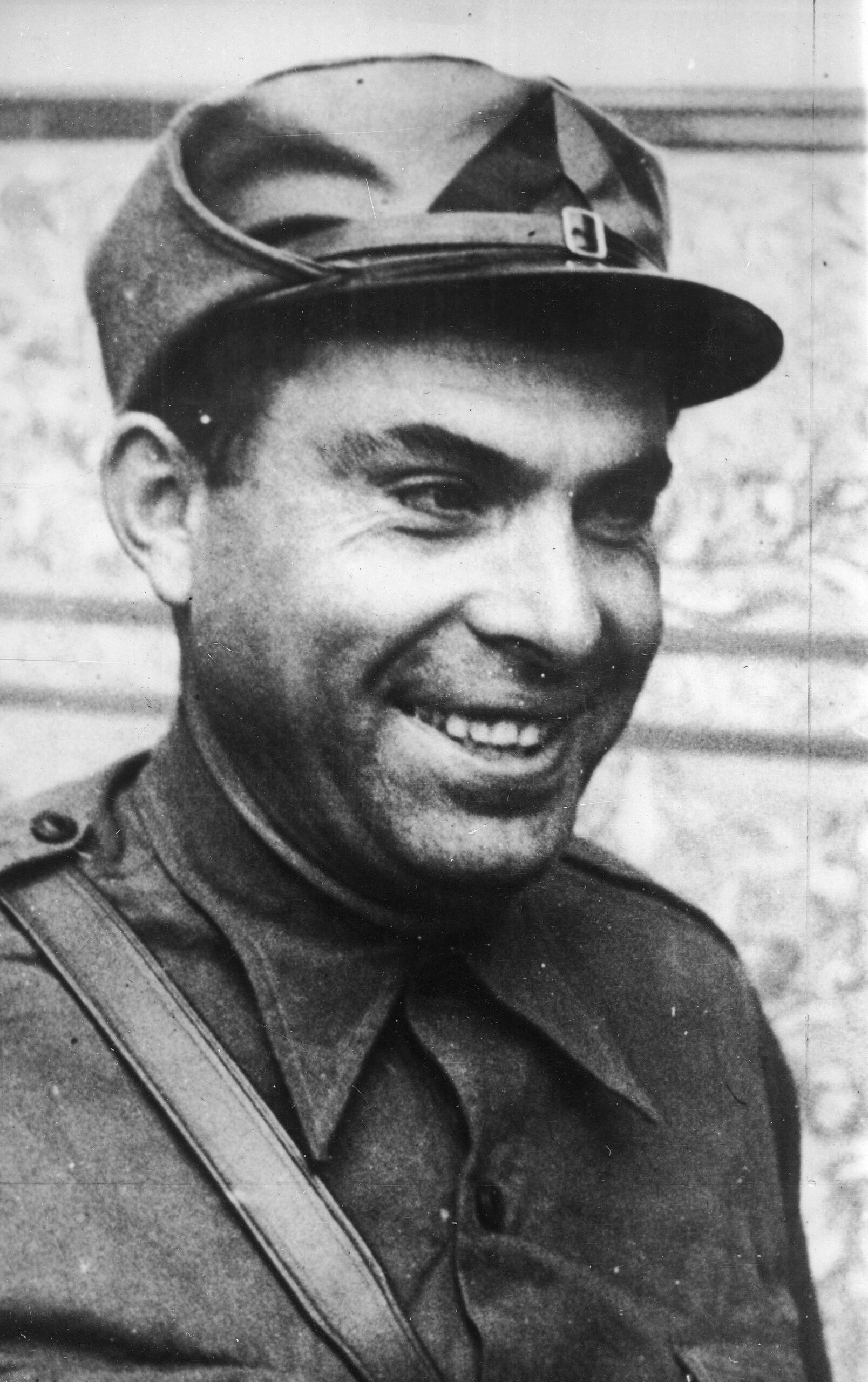
Buenaventura Durruti, born on July 14, 1896, in León, Spain, was a key figure in the Spanish anarchist movement and a central figure during the Spanish Civil War. His life is a testament to the fierce struggle for workers’ rights and the fight against authoritarianism in early 20th-century Spain. Durruti’s legacy as a revolutionary leader and his role in one of the most turbulent periods in Spanish history have made him a symbol of resistance and a hero for many who continue to fight for social justice. This article explores his life, his rise to prominence, and the key events that defined his impact on history.
Early Life and Background
Born into a working-class family in León, a small, conservative city in Spain, Durruti was one of nine children. His father was a socialist-leaning railroad worker, and his mother was a homemaker. The conservative and monarchist atmosphere of León contrasted sharply with the socialist ideals that Durruti encountered at home. This early exposure to social inequality and workers’ struggles planted the seeds of his future activism.
Durruti attended school until the age of 14, showing a strong aptitude for learning and a deep love for reading. However, economic realities forced him to leave school and start working. He found a job in a local metal workshop, where he trained as a mechanic. In the evenings, he continued his education by attending night classes, further developing his skills and broadening his understanding of the world.
First Steps into Activism
Durruti’s first foray into political activism came during the general strike of 1917, organized by the Unión General de Trabajadores (UGT). The strike was brutally suppressed by the Civil Guard, resulting in numerous deaths and injuries. Durruti played a prominent role in the strike, and his active participation caught the attention of the authorities. Facing persecution and fearing arrest, he fled León, marking the beginning of his life as a revolutionary.
He moved to Gijón in the Asturias region, a hub of anarcho-syndicalist activity, where he became involved with the Confederación Nacional del Trabajo (CNT), a powerful anarchist trade union founded in 1910. Here, Durruti met Manuel Buenacasa, the general secretary of the CNT, who became a close friend and mentor. Through Buenacasa, Durruti deepened his understanding of anarchist principles and the struggle against capitalist oppression.
The Rise of Anarchism and the Formation of Los Justicieros
Durruti’s time in Gijón was marked by his increasing involvement in anarchist activities. He joined a militant group called “Los Justicieros” (The Avengers), where he met lifelong comrades Joan Oliver and Francisco Ascaso. Together, they engaged in direct action against the oppressive forces of the Spanish state and the capitalist class. The group sought to protect workers from the hired guns of factory owners, known as “Pistoleros,” who were employed to suppress labor movements and assassinate union leaders.
Durruti’s involvement in these activities made him a target for the authorities, and he soon found himself on the run. In 1923, he fled to France with Ascaso and another comrade, Gregorio Jover. They were eventually arrested in Paris but were released in 1927 after a successful international campaign for their freedom. During his time in Paris, Durruti met Emilienne Morin, a fellow anarchist who would become his lifelong partner.
Return to Spain and the Fight for Workers’ Rights
After his release, Durruti returned to Spain and resumed his work with the CNT, focusing on organizing workers and building alliances between different anarchist factions. He played a crucial role in the efforts to unify the CNT with the Federación Anarquista Ibérica (FAI), a militant anarchist organization that sought to ensure the CNT remained true to its revolutionary principles.
Durruti’s activism during this period did not go unnoticed, and he was frequently imprisoned. However, his resolve remained unshaken, and he continued to work tirelessly for the anarchist cause. By 1935, he had become one of the most influential figures in the Spanish anarchist movement, and his leadership was instrumental in the CNT’s growth into the largest anarchist union in Spain.
The Spanish Civil War and Durruti’s Leadership
The Spanish Civil War, which began in July 1936, was a defining moment in Durruti’s life and in the history of Spain. The war started when a faction of the Spanish military, led by General Francisco Franco, attempted to overthrow the democratically elected government. In response, the workers and peasants, organized by the CNT and other leftist groups, rose up to defend the Republic.
Durruti quickly emerged as one of the most effective and charismatic leaders of the anarchist forces. Based in Barcelona, he organized the defense of the city against the fascist uprising and played a key role in the CNT’s takeover of Catalonia. Under his leadership, the CNT established a revolutionary workers’ government, implementing sweeping changes that included collectivizing factories and land, and dismantling the old structures of power.
Durruti’s most famous military campaign was the formation of the Durruti Column, a volunteer army of 10,000 anarchists who marched from Barcelona towards Madrid to defend the capital from Franco’s forces. As the Durruti Column advanced through Aragon, they liberated numerous towns and villages, implementing anarchist principles by expropriating land from the wealthy and redistributing it to the peasants. Churches were burned, and records of property ownership were destroyed, symbolizing the destruction of the old order and the creation of a new society based on communal ownership and cooperation.
Death and Legacy
On November 20, 1936, Buenaventura Durruti was killed in Madrid under mysterious circumstances. The exact cause of his death remains a subject of debate; some accounts suggest that he was accidentally shot by his own weapon, while others claim he was assassinated by Francoist forces. Regardless of the circumstances, Durruti’s death was a devastating blow to the anarchist movement and to the anti-fascist cause in Spain.
Durruti’s funeral in Barcelona was attended by hundreds of thousands of people, a testament to his profound impact on the Spanish working class and the broader international anarchist movement. He was celebrated as a martyr for the cause of freedom and social justice, and his legacy continues to inspire anarchists and socialists around the world.
Durruti’s influence on anarchism extends far beyond his military exploits during the Spanish Civil War. He embodied the principles of anarchism in both his personal life and his political activities, rejecting authority and hierarchy in favor of mutual aid, direct action, and solidarity among workers.
Durruti believed that true freedom could only be achieved through the destruction of the capitalist system and the creation of a society based on communal ownership and cooperation. He rejected the idea of seizing state power, arguing instead for the abolition of the state and the establishment of decentralized, self-managed communities. This vision of anarchism, rooted in the experiences of the Spanish working class, continues to resonate with those who seek to challenge the existing social order and build a more just and equitable world.
The Historical Context of Durruti’s Life
To fully understand Durruti’s life and legacy, it is essential to consider the historical context in which he lived. Spain in the early 20th century was a deeply divided country, with a small elite controlling vast wealth and power, while the majority of the population lived in poverty. The rise of anarchism in Spain was a response to these conditions, offering a vision of a radically different society in which workers would have control over their own lives and destinies.
The Spanish Civil War, in which Durruti played such a central role, was not just a conflict between fascism and democracy, but also a social revolution in which millions of workers and peasants sought to overthrow the old order and create a new society based on equality and freedom. The war ended in defeat for the Republic and the victory of Franco’s fascist forces, leading to decades of brutal repression. However, the legacy of the revolution and the struggles of figures like Durruti continue to inspire those who fight for social justice and human dignity.
Durruti’s Enduring Legacy
More than 80 years after his death, Buenaventura Durruti remains an iconic figure in the history of anarchism and the global struggle for social justice. His commitment to the cause of the working class, his willingness to take up arms in defense of freedom, and his unwavering belief in the possibility of a better world have made him a symbol of resistance against oppression.
Durruti’s legacy is not just a matter of historical interest; it continues to resonate in contemporary struggles against authoritarianism, capitalism, and social injustice. His life and work offer a powerful reminder that the fight for a better world is ongoing and that the principles of anarchism—mutual aid, direct action, and solidarity—are as relevant today as they were in Durruti’s time.
Conclusion
Buenaventura Durruti’s life was a testament to the power of conviction and the enduring struggle for justice. From his early days as a young worker in León to his leadership in the Spanish Civil War, Durruti remained steadfast in his commitment to the anarchist cause. His legacy, marked by his dedication to the principles of freedom, equality, and mutual aid, continues to inspire generations of activists and revolutionaries.
Durruti’s story is not just a tale of a revolutionary leader, but also a reminder of the profound impact that individuals can have on the course of history. His life and work are a powerful example of the possibilities that arise when ordinary people take extraordinary actions in the pursuit of a better world.


