
Introduction
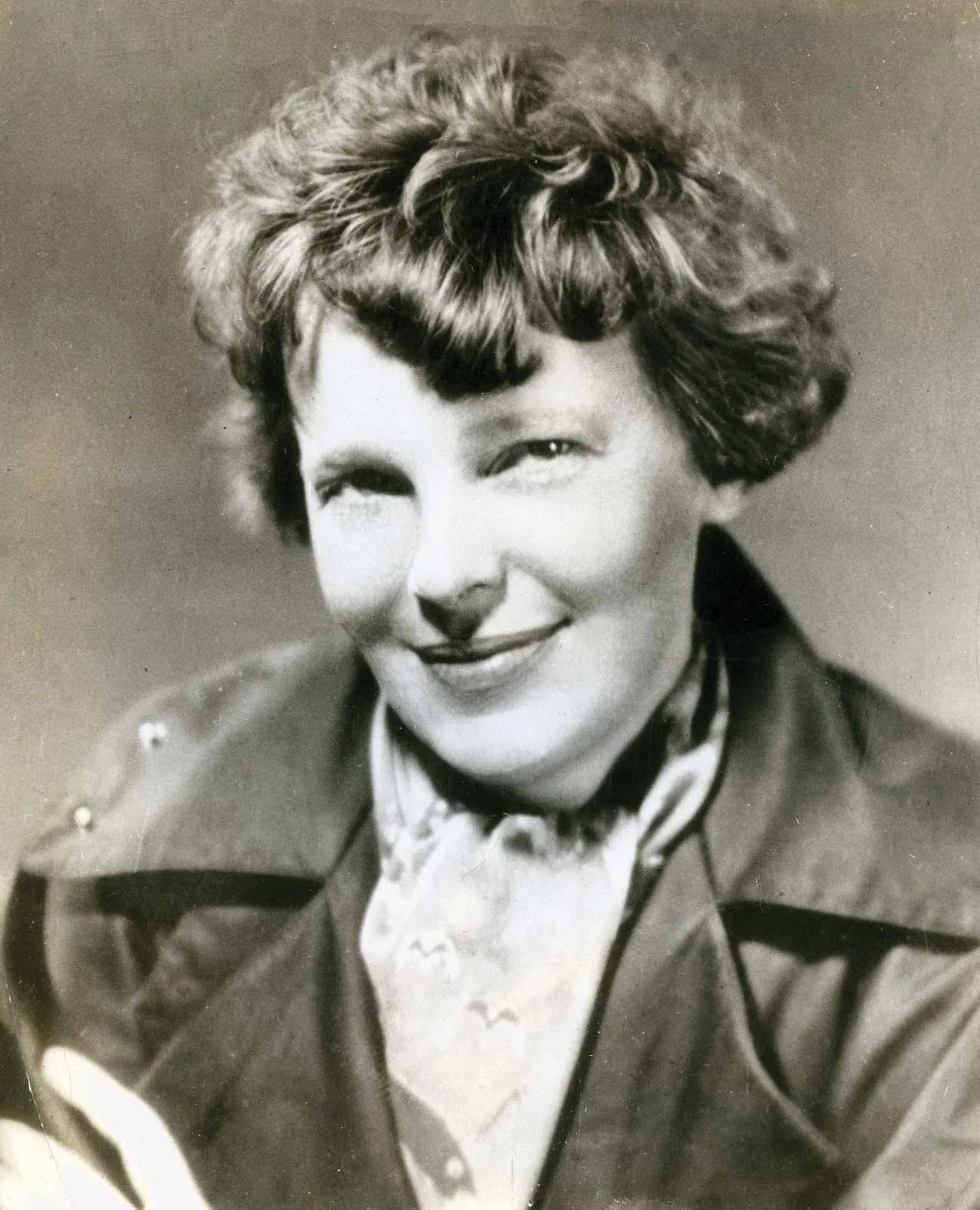
Amelia Earhart, born on July 24, 1897, in Atchison, Kansas, is an enduring symbol of courage, adventure, and pioneering spirit. As the first woman to fly solo across the Atlantic Ocean, Earhart’s name is etched in history not only as an aviator but as a trailblazer who defied societal norms and inspired generations of women to pursue their dreams. This article explores the life of Amelia Earhart, delving into her age, rise to fame, and significant life highlights while also examining the historical context that shaped her extraordinary journey.
Early Life: The Foundation of a Pioneer
Amelia Earhart’s early life was marked by a sense of adventure and an unquenchable curiosity about the world around her. Born to Samuel “Edwin” Stanton Earhart and Amelia “Amy” Otis Earhart, Amelia grew up in a family that valued education and encouraged her inquisitive nature. However, her childhood was not without challenges. Her father struggled with alcoholism, which led to financial instability and a nomadic lifestyle for the family.
Despite these difficulties, Earhart thrived academically and developed a keen interest in science and mechanics. She attended several schools during her formative years, ultimately enrolling at Ogontz School in Pennsylvania, a prestigious college preparatory school for girls. However, she left Ogontz in 1918 before graduating to join her sister, Muriel, in Toronto, Canada, where she volunteered as a nurse’s aide during World War I. This experience, witnessing the bravery of wounded soldiers, further fueled her desire to make a significant impact on the world.
The Spark of Aviation: A Life-Changing Encounter
Amelia Earhart’s passion for aviation was ignited at the age of ten when she attended an air show in Des Moines, Iowa. However, it wasn’t until several years later that she took her first flight, an experience that would change her life forever. In 1920, Earhart and her father visited an airfield in Long Beach, California, where she took a 10-minute flight with pilot Frank Hawks. The sensation of soaring through the sky captivated her, and from that moment, she knew she was destined to fly.
Determined to pursue her newfound passion, Earhart worked various jobs to save money for flying lessons. In 1921, she began training under Neta Snook, a female aviator who became her mentor. Just six months later, Earhart purchased her first airplane, a bright yellow Kinner Airster, which she affectionately named “The Canary.” With “The Canary,” she set her first aviation record in 1922 by becoming the first woman to fly solo to an altitude of 14,000 feet.
Breaking Barriers: The Transatlantic Flight
Amelia Earhart’s rise to fame began in earnest in 1928 when she was invited to be the first woman to fly across the Atlantic Ocean, albeit as a passenger. The flight, piloted by Wilmer Stultz and Louis Gordon, took place aboard the aircraft Friendship. Although Earhart played a limited role in the flight, her presence as a pioneering woman in aviation captured the public’s imagination, and she was celebrated as a hero upon her return to the United States.
Capitalizing on her newfound fame, Earhart embarked on a lecture tour and published a book, 20 Hours, 40 Minutes, detailing her experiences. The success of the book, coupled with her public appearances, solidified her status as a symbol of women’s empowerment and opened doors for her in the male-dominated field of aviation.
However, Earhart was not content with being a passenger. She was determined to prove her skills as a pilot and, in 1932, she achieved what no woman had done before: she flew solo across the Atlantic Ocean. On May 20, 1932, Earhart departed from Harbour Grace, Newfoundland, in her Lockheed Vega 5B, bound for Paris. Strong winds, icy conditions, and mechanical issues forced her to land in a pasture near Londonderry, Northern Ireland, instead. Despite the challenges, the 14-hour, 56-minute flight was a resounding success, and Earhart became an international sensation. Her feat earned her the Distinguished Flying Cross, making her the first woman to receive the honor.
Amelia Earhart: A Symbol of Modern Womanhood
Amelia Earhart’s achievements in aviation were not limited to her record-breaking flights. She was also a passionate advocate for women’s rights and used her fame to challenge the traditional gender roles of her time. Earhart believed that women should have the same opportunities as men and sought to inspire women to pursue careers in fields that were traditionally male-dominated.
In 1929, Earhart co-founded The Ninety-Nines, an international organization of female pilots that aimed to support women in aviation. The organization, named after the 99 charter members, provided a network for women pilots and worked to promote the advancement of women in the field. Earhart served as the organization’s first president and remained actively involved throughout her career.
Beyond her contributions to aviation, Earhart was also a fashion icon. Recognizing the need for practical and stylish clothing for women, especially those involved in aviation, she designed a line of “active wear” that combined functionality with fashion. Her clothing line was ahead of its time, featuring separates that allowed for ease of movement, and it was sold in department stores across the United States.
The Final Frontier: The Mystery of Amelia Earhart’s Disappearance
As Amelia Earhart’s fame grew, so did her ambitions. In 1937, she embarked on her most daring adventure yet: a flight around the world. This journey, if successful, would make her the first woman to circumnavigate the globe by air. Earhart chose to fly a Lockheed Electra 10E, a twin-engine aircraft equipped with the latest navigation technology. Accompanying her on the journey was her navigator, Fred Noonan.
The flight began on June 1, 1937, in Miami, Florida. Over the next month, Earhart and Noonan made their way across South America, Africa, the Indian subcontinent, and Southeast Asia, covering nearly 22,000 miles. By the time they reached Lae, New Guinea, on June 29, they had completed approximately two-thirds of their journey.
The next leg of the flight was to be one of the most challenging: a 2,556-mile stretch across the Pacific Ocean to Howland Island, a tiny speck of land located halfway between Australia and Hawaii. On July 2, 1937, Earhart and Noonan took off from Lae, but they never reached their destination. Despite an extensive search by the U.S. Navy and Coast Guard, no trace of the aircraft or its occupants was ever found.
The disappearance of Amelia Earhart remains one of the greatest unsolved mysteries of the 20th century. Numerous theories have been proposed over the years, ranging from a crash into the ocean to capture by the Japanese military. Some even speculate that Earhart survived and lived out her life under an assumed identity. However, no definitive evidence has ever been uncovered to confirm what happened to her.
Legacy: The Enduring Influence of Amelia Earhart
Amelia Earhart’s legacy is far-reaching and continues to inspire people around the world. Her achievements in aviation broke barriers for women and opened doors for future generations of female pilots. Earhart’s fearless pursuit of her dreams and her refusal to be limited by societal expectations have made her a role model for anyone striving to overcome obstacles and achieve greatness.
In recognition of her contributions to aviation and her enduring influence, Earhart has been honored in numerous ways. Schools, airports, and streets bear her name, and her image has appeared on postage stamps and commemorative coins. The Amelia Earhart Award, presented by the Civil Air Patrol, is one of the highest honors given to its cadets. Additionally, The Ninety-Nines organization, which Earhart helped establish, continues to support women in aviation and promotes the advancement of female pilots.
In popular culture, Earhart’s story has been the subject of books, documentaries, and films. The 2009 biographical film Amelia, starring Hilary Swank as Earhart and Richard Gere as her husband, George Putnam, brought her story to a new generation. Earhart’s life and legacy also continue to be a topic of interest for historians and researchers, who seek to uncover more about her final flight and the circumstances surrounding her disappearance.
Conclusion
Amelia Earhart’s life was defined by her courage, determination, and pioneering spirit. From her early days as a nurse’s aide during World War I to her groundbreaking achievements in aviation, Earhart consistently pushed the boundaries of what was possible. Her disappearance remains a mystery, but her legacy as a trailblazer and advocate for women’s rights endures. Amelia Earhart’s story is not just about the heights she reached in the sky but about the heights she inspired others to reach in their own lives.
Her impact on the world of aviation and her role in challenging gender norms continue to resonate, making her an enduring symbol of what it means to be a true pioneer.


