
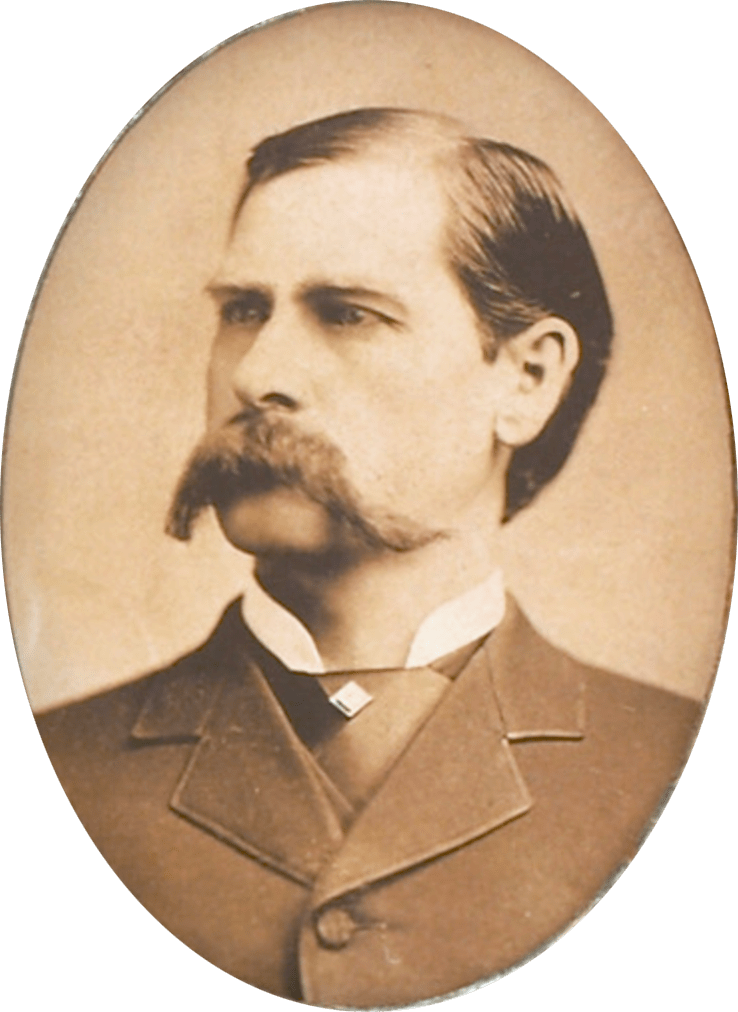
Wyatt Earp is one of the most legendary figures in American history, particularly in the context of the Old West. Born on March 19, 1848, in Monmouth, Illinois, Wyatt Berry Stapp Earp became famous as a lawman, gambler, and gunfighter. His life, filled with adventure, danger, and controversy, has been immortalized in countless books, movies, and television shows, making him a symbol of the rugged, untamed American frontier. But who was Wyatt Earp, and what events in his life contributed to his enduring fame?
Early Life and Family Background
Wyatt Earp was born to Nicholas Porter Earp, a farmer and sometimes lawman, and his second wife, Virginia Ann Cooksey. His name, Wyatt Berry Stapp Earp, was given in honor of his father’s commanding officer during the Mexican-American War. The Earp family, including Wyatt’s several siblings, moved frequently during his early years, a pattern that would continue throughout his life.
In 1849, when Wyatt was just a year old, the Earp family left Monmouth for California. However, the journey was halted in Iowa, where they settled near the town of Pella. The family attempted to make a living farming, but after a few years, Nicholas Earp moved them back to Monmouth, only to struggle with finding steady work. This led to Nicholas taking up various odd jobs, including law enforcement and the sale of alcohol, which eventually led to legal trouble. The family relocated again, this time back to Pella, just as the Civil War was breaking out.
Early Ambitions and the Path to Law Enforcement
During the Civil War, Wyatt’s older brothers—Virgil, James, and Newton—joined the Union Army, leaving young Wyatt, then just thirteen, eager to follow in their footsteps. However, his age prevented him from enlisting. Instead, Wyatt stayed at home, helping with the family farm and other duties.
By 1865, as the Civil War was winding down, Wyatt began seeking work to support himself. He found employment with the Phineas Banning Company, a transportation firm, and worked along the Imperial Valley route. This work experience laid the foundation for Wyatt’s later ventures into more adventurous and often dangerous professions.
In 1866, Wyatt moved to Arizona, working as a wagon train leader between Wilmington, California, and Prescott, Arizona. His exposure to the rough-and-tumble life of the frontier during this period was crucial in shaping his future career. It was also during this time that he began participating in boxing matches and gambling, activities that would become central to his life.
In 1868, Nicholas Porter Earp became the sheriff of Lamar, Missouri, a position he held briefly before becoming a justice of the peace. Wyatt, by then twenty years old, took over his father’s role as sheriff of Lamar on November 17, 1869. This marked the beginning of Wyatt Earp’s career in law enforcement, a career that would be both illustrious and infamous.
Personal Tragedy and the Move to Kansas
Wyatt Earp’s early years as a lawman were marred by personal tragedy. Shortly after becoming sheriff, he married Urilla Sutherland, a young woman from New York. Unfortunately, their marriage was short-lived; Urilla died suddenly, likely from typhoid fever, leaving Wyatt devastated. Little is known about Wyatt’s life immediately following this loss, but it is clear that it had a profound impact on him, pushing him towards a life on the move.
By 1875, Wyatt had relocated to Wichita, Kansas, a booming cow town where he continued his work as a lawman. His no-nonsense approach to enforcing the law quickly earned him a reputation as someone who could handle the rough elements that frequented the town. However, this period of stability did not last long. Wyatt soon found himself moving again, this time to Dodge City, Kansas, a town notorious for its lawlessness.
Dodge City and Rise to Fame
Dodge City was one of the most dangerous towns in the American West during the 1870s, known for its saloons, gambling halls, and frequent gunfights. It was here that Wyatt Earp truly began to make a name for himself as a lawman. Serving as an assistant marshal, Wyatt worked alongside some of the most famous figures of the Old West, including Bat Masterson and Doc Holliday.
Wyatt’s time in Dodge City solidified his reputation as a tough but fair lawman, capable of dealing with the most dangerous situations. His ability to maintain order in such a chaotic environment earned him the respect of his peers and the fear of outlaws. It was also in Dodge City that Wyatt met his long-time companion, Mattie Blaylock, with whom he would eventually move to the Arizona Territory.
Tombstone and the OK Corral
In 1879, Wyatt Earp, along with his brothers Virgil and Morgan, moved to the silver boomtown of Tombstone, Arizona. It was here that Wyatt would become involved in the most famous event of his life—the Gunfight at the OK Corral.
The tension in Tombstone was high, fueled by the rivalry between the Earp brothers, along with their ally Doc Holliday, and the Clanton-McLaury gang, a group of outlaws who were known for rustling cattle and other illegal activities. On October 26, 1881, these tensions erupted into violence in a vacant lot near the OK Corral. The gunfight, which lasted only about thirty seconds, resulted in the deaths of three members of the Clanton-McLaury gang and became one of the most famous events in the history of the American West.
The aftermath of the OK Corral shootout was brutal for the Earp family. Five months after the gunfight, Wyatt’s brother Morgan was ambushed and killed, and Virgil was severely wounded. Devastated and enraged, Wyatt embarked on what became known as the Earp Vendetta Ride, hunting down those he believed responsible for the attacks on his brothers. This period of Wyatt’s life turned him from a lawman into a vigilante, a transformation that has been the subject of much debate and mythologizing in popular culture.
Later Years and Legacy
After the vendetta ride, Wyatt Earp drifted through various western boomtowns, engaging in gambling, saloon-keeping, and mining ventures. His later years were marked by a series of business failures, but he continued to be a figure of fascination for the public. In his final years, Wyatt settled in California with his last companion, Josephine Marcus, where he lived a relatively quiet life until his death on January 13, 1929, in Colma, California, at the age of 80.
Wyatt Earp’s legacy is complex and multifaceted. To some, he is a hero of the Old West, a lawman who stood up to outlaws and fought for justice. To others, he is a more ambiguous figure, someone who sometimes operated outside the law and whose motivations were not always pure. Regardless of one’s perspective, there is no denying the impact Wyatt Earp has had on American culture.
The Myth and Reality of Wyatt Earp
The story of Wyatt Earp is one where myth and reality often blur. The Gunfight at the OK Corral, for instance, has been romanticized in countless films, books, and TV shows, often portraying Wyatt as a larger-than-life figure. In truth, the historical record is more nuanced, with differing accounts of Wyatt’s actions and intentions. This duality between the man and the legend has made Wyatt Earp a subject of enduring interest.
The various portrayals of Wyatt Earp in popular culture, from Henry Fonda in My Darling Clementine (1946) to Kevin Costner in Wyatt Earp (1994), reflect the changing attitudes towards the American West and the figures who inhabited it. Over time, Wyatt Earp has come to symbolize different things to different people—justice, revenge, order, and chaos—all rolled into one enigmatic figure.
Wyatt Earp’s Influence on American History
Wyatt Earp’s life and career offer a window into the broader themes of American history during the late 19th century. His story reflects the lawlessness of the frontier, the harsh realities of life in the American West, and the complex moral choices faced by those who lived through this period. The fascination with Wyatt Earp also speaks to the enduring American myth of the rugged individualist, someone who, despite the odds, forges their own path in a wild and unpredictable world.
As historians continue to study Wyatt Earp and the events of his life, new perspectives and interpretations emerge. What remains constant, however, is Wyatt Earp’s place as one of the most iconic figures of the Old West. His story is a reminder of the blurred lines between history and legend and how figures like Wyatt Earp continue to capture the imagination of those seeking to understand America’s past.
Conclusion
Wyatt Earp’s life is a compelling mix of fact and fiction, heroism and controversy. Born in the mid-19th century, he became one of the most famous lawmen of the American West, known for his role in the Gunfight at the OK Corral and his subsequent quest for vengeance. Yet, beyond the gunfights and legends, Wyatt Earp was a complex individual whose life reflects the broader themes of American history during a transformative period.
As the years have passed, the legend of Wyatt Earp has grown, often overshadowing the real man behind the myth. However, by examining both the historical record and the popular culture depictions, we can gain a deeper understanding of who Wyatt Earp was and why his story continues to resonate. Whether viewed as a hero or a vigilante, Wyatt Earp’s legacy is an indelible part of American history, a symbol of the Wild West and the enduring allure of the frontier.


