
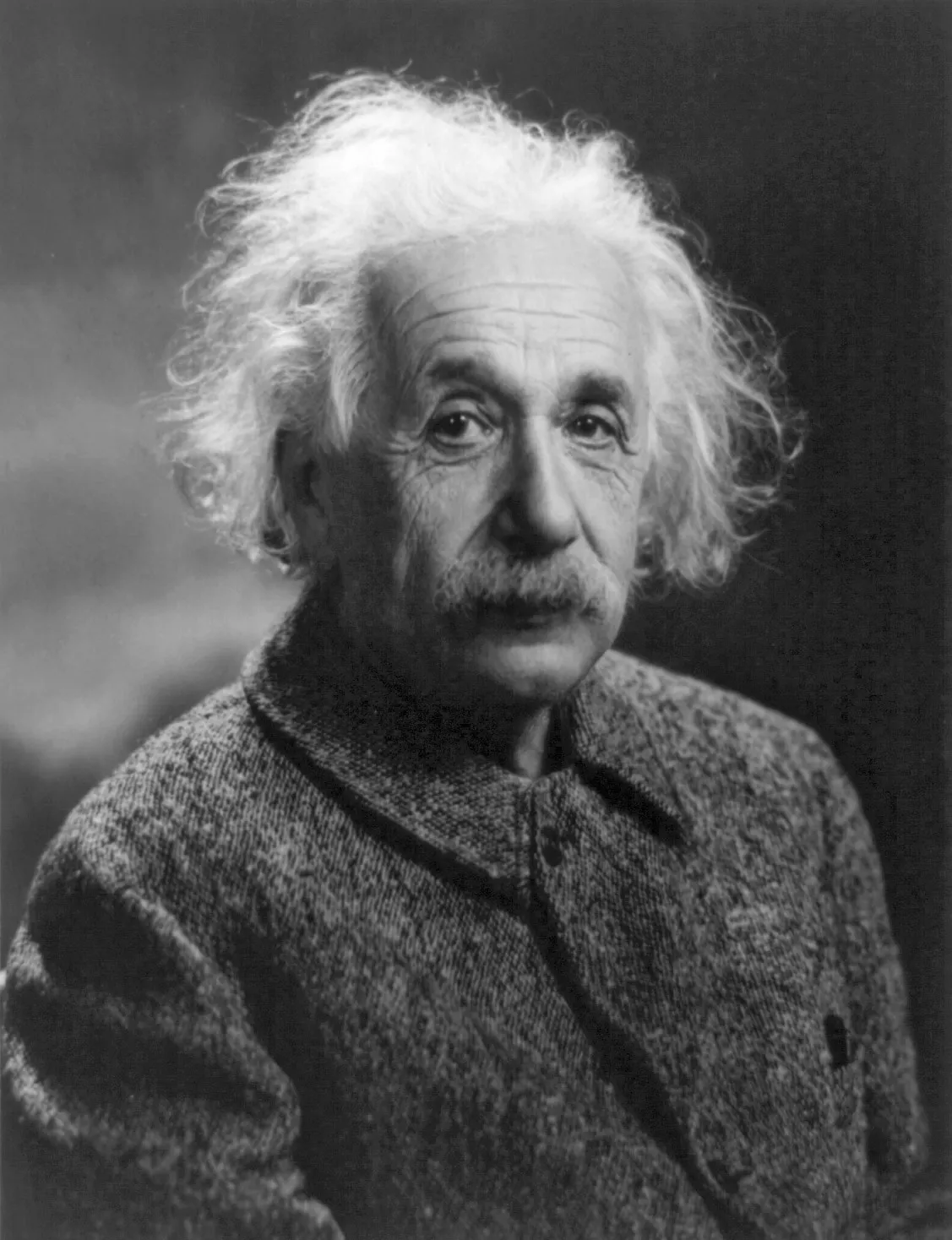
Albert Einstein, born on March 14, 1879, in Ulm, Germany, is arguably the most famous scientist of the 20th century. Known for his groundbreaking contributions to physics, particularly his theory of relativity, Einstein’s work has had a profound impact on our understanding of the universe. His name has become synonymous with genius, and his legacy continues to influence both science and popular culture. This article explores the life, achievements, and enduring significance of Albert Einstein, providing a comprehensive overview of his journey from a curious child in Germany to a global icon of scientific thought.
Early Life and Education
Albert Einstein was born into a middle-class Jewish family in Ulm, in the Kingdom of Württemberg in the German Empire. His father, Hermann Einstein, was an engineer and a salesman, and his mother, Pauline Koch, was a homemaker with a love for music. A year after his birth, the family moved to Munich, where Hermann and his brother Jakob founded an electrical engineering company.
As a child, Einstein exhibited a deep curiosity about the natural world, though he was a late talker. His quiet nature and contemplative demeanor led him to be somewhat isolated from his peers. Despite this, he was highly intelligent and showed an early interest in mathematics and science. His uncle Jakob, who was an engineer, played a significant role in fostering young Albert’s interest in these subjects, introducing him to algebra and geometry.
Einstein’s formal education began at the Luitpold Gymnasium in Munich. However, he found the rigid and authoritarian atmosphere of the school stifling. The traditional methods of instruction did not suit his inquisitive and independent mind, and he often clashed with his teachers. At home, however, Einstein found solace in the violin, an instrument he began playing at the insistence of his mother, and in the scientific books provided by his uncle.
The Move to Switzerland and Higher Education
In 1894, the Einstein family moved to Italy due to the failure of Hermann’s business. Albert was left behind in Munich to finish his education but soon joined his family in Pavia, citing health reasons. Despite not completing his schooling in Germany, Einstein was determined to pursue higher education. He applied to the Swiss Federal Polytechnic in Zurich, now known as ETH Zurich, at the age of 16. Although he excelled in the math and physics sections of the entrance exam, he failed the non-science sections. The director of the Polytechnic, recognizing Einstein’s potential, encouraged him to complete his secondary education at the Canton School in Aargau, Switzerland.
Einstein thrived in the more liberal and supportive environment of the Swiss school system. In 1896, he passed the Swiss matriculation exams and was admitted to the Polytechnic in Zurich. Initially, he planned to study electrical engineering but soon switched his focus to physics and mathematics. During his time at the Polytechnic, Einstein developed close relationships with his fellow students, including his future wife, Mileva Marić, who was also a student of physics.
Einstein graduated in 1900 with a degree in physics, but his unorthodox approach to learning and his clashes with some professors left him without a position at the university. Instead, he took a job as a technical assistant at the Swiss Patent Office in Bern in 1902. This seemingly mundane position turned out to be a blessing in disguise, as it provided Einstein with the time and intellectual freedom to explore his ideas.
The Annus Mirabilis: A Year of Breakthroughs
The year 1905 is often referred to as Einstein’s Annus Mirabilis—his “miracle year”—during which he published four groundbreaking papers that would forever change the course of physics. These papers covered a range of topics, including the photoelectric effect, Brownian motion, special relativity, and the equivalence of mass and energy (expressed in the famous equation ).
-
Photoelectric Effect: In his paper on the photoelectric effect, Einstein proposed that light could be understood as quanta of energy, later called photons. This idea challenged the traditional wave theory of light and provided critical evidence for the emerging field of quantum mechanics. For this work, Einstein was awarded the Nobel Prize in Physics in 1921.
-
Brownian Motion: Einstein’s work on Brownian motion provided empirical evidence for the existence of atoms and molecules. By explaining the erratic movement of particles suspended in a fluid, he bolstered the atomic theory of matter, which had been a subject of debate among scientists.
-
Special Relativity: In his paper “On the Electrodynamics of Moving Bodies,” Einstein introduced the theory of special relativity. This theory revolutionized the understanding of space and time, demonstrating that they are not absolute but relative to the observer’s frame of reference. The implications of this theory were profound, leading to a new understanding of the relationship between energy and mass.
-
Mass-Energy Equivalence: Perhaps the most famous result from Einstein’s work in 1905 was the equation , which demonstrated that mass and energy are interchangeable. This concept would later become a cornerstone of modern physics and play a crucial role in the development of nuclear energy.
Academic Career and the General Theory of Relativity
Einstein’s 1905 papers quickly established him as one of the leading physicists of his time. In 1908, he began his academic career as a lecturer at the University of Bern. By 1911, he had secured a position at the University of Prague, and in 1914, he was appointed director of the Kaiser Wilhelm Institute for Physics in Berlin. This period marked the beginning of Einstein’s most productive years.
In 1915, Einstein presented the general theory of relativity, an extension of his special theory of relativity. The general theory introduced the concept of gravity as a curvature of spacetime caused by mass and energy, a radical departure from Newtonian physics. Einstein’s theory predicted phenomena such as the bending of light by gravity, which was confirmed during a solar eclipse in 1919, catapulting him to international fame.
The general theory of relativity has since become a fundamental part of modern physics, providing the framework for our understanding of cosmology, black holes, and the expansion of the universe. Einstein’s work during this period solidified his reputation as one of the greatest scientific minds in history.
The Rise of Nazism and Einstein’s Move to the United States
Despite his growing fame, Einstein’s life was not without challenges. As a Jew in Germany, he faced increasing hostility with the rise of Adolf Hitler and the Nazi Party. Einstein was outspoken in his opposition to the regime, advocating for peace and denouncing the nationalism and militarism that had taken hold in Germany.
In 1933, as the Nazis came to power, Einstein made the difficult decision to leave Germany. He accepted a position at the Institute for Advanced Study in Princeton, New Jersey, where he would spend the remainder of his career. In the United States, Einstein continued his research but also became more politically active, using his platform to speak out against fascism, racism, and later, the dangers of nuclear weapons.
The Manhattan Project and Einstein’s Legacy
Although Einstein was a lifelong pacifist, he recognized the threat posed by Nazi Germany’s potential development of nuclear weapons. In 1939, he co-signed a letter to President Franklin D. Roosevelt, urging the United States to accelerate its own nuclear research, a move that contributed to the launch of the Manhattan Project. However, Einstein did not directly work on the project, and he later expressed deep regret over the development and use of atomic bombs.
After World War II, Einstein became an advocate for nuclear disarmament and a leading figure in the movement for world peace. He was also a strong supporter of civil rights and was an early member of the NAACP, working alongside figures like W.E.B. Du Bois.
Einstein continued to work on theoretical physics until his death on April 18, 1955, in Princeton. He left behind an unfinished manuscript on the unified field theory, a theory that sought to unify the fundamental forces of physics—a quest that continues to this day.
Einstein’s Cultural Impact and Legacy
Albert Einstein’s influence extends far beyond the realm of science. His name and image have become symbols of intellectual genius, and his contributions to physics have profoundly shaped our understanding of the universe. Einstein’s work laid the foundation for much of modern physics, from the development of quantum mechanics to the exploration of cosmology.
Einstein’s legacy also includes his contributions to philosophy, particularly his thoughts on the nature of reality, time, and the limits of human knowledge. His writings on science and religion, as well as his correspondence with other intellectuals, continue to be studied and admired.
Einstein’s impact on popular culture is also significant. His distinctive appearance—complete with wild hair and a pipe—has become iconic, and he has been depicted in countless films, books, and cartoons. The character of the eccentric genius, often modeled after Einstein, is a staple of popular media, reflecting the lasting impression he has made on the collective imagination.
Conclusion
Albert Einstein’s life and work exemplify the power of curiosity, imagination, and perseverance. From his humble beginnings in Germany to his rise as one of the most celebrated scientists in history, Einstein’s journey is a testament to the importance of challenging conventional wisdom and thinking beyond the boundaries of established knowledge. His contributions to science, philosophy, and global peace have left an indelible mark on the world, and his legacy continues to inspire generations of thinkers and dreamers.
Einstein’s life reminds us that the pursuit of knowledge is not just about solving equations or conducting experiments; it is about seeking a deeper understanding of the universe and our place within it. In a world that continues to grapple with complex challenges, Einstein’s example encourages us to remain curious, question assumptions, and strive for a more just and peaceful society.


