
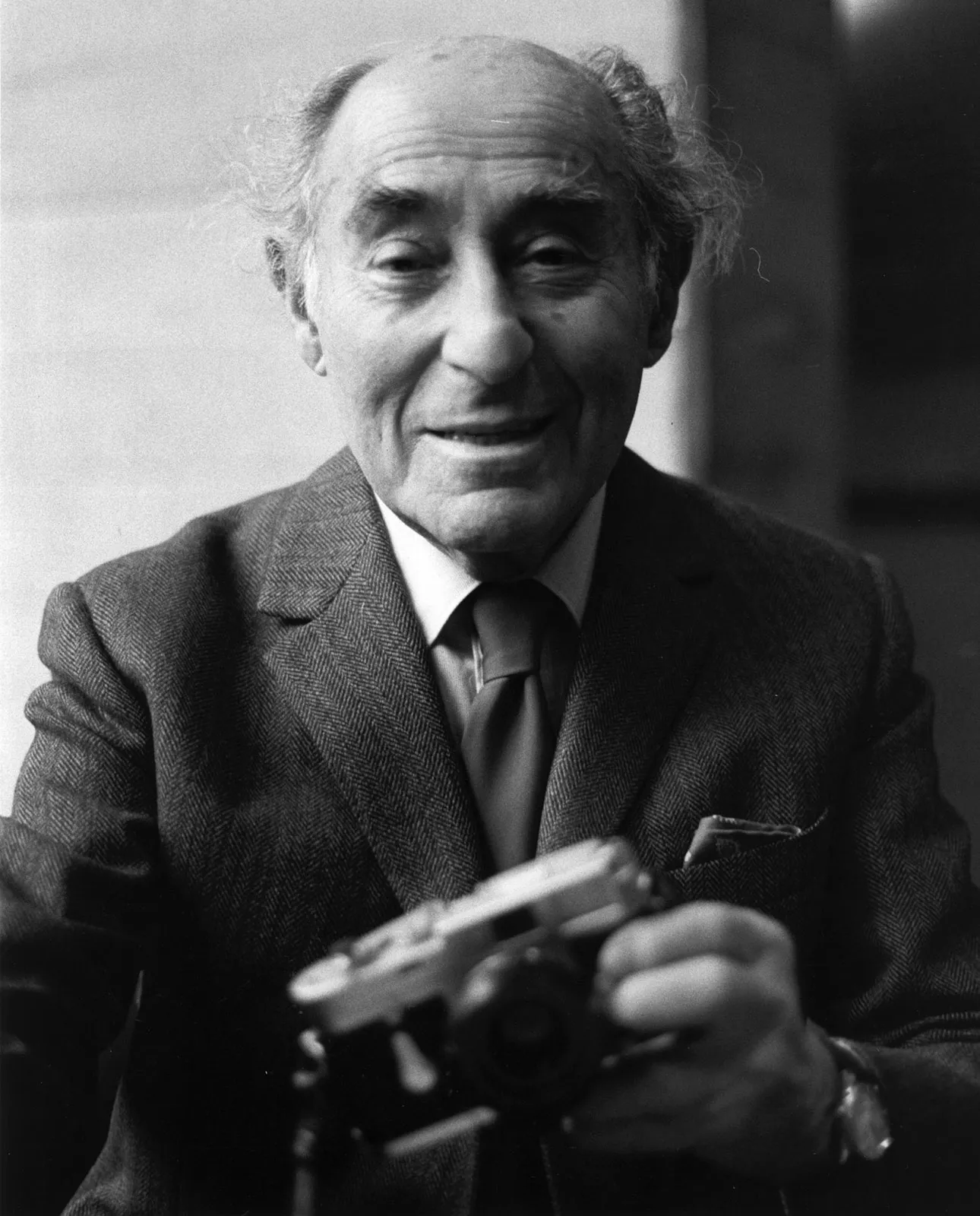
Alfred Eisenstaedt, often hailed as the “father of photojournalism,” is a name synonymous with iconic imagery that has captured the essence of the 20th century. His lens chronicled the highs and lows of a turbulent era, freezing moments in time that continue to resonate with viewers today. This article delves into the life of Alfred Eisenstaedt, exploring his journey from a young German immigrant to a legendary photographer whose work graced the covers of Life magazine, and who became a pioneer in the world of photojournalism.
Early Life and Education
Alfred Eisenstaedt was born on December 6, 1898, in Dirschau, West Prussia, then part of the German Empire (now Tczew, Poland). Growing up in a Jewish family, Eisenstaedt displayed an early interest in photography. His fascination with capturing images was sparked when he received his first camera, an Eastman Kodak Folding camera, at the age of 14. This gift from his uncle would set the course for Eisenstaedt’s life.
Despite his passion, Eisenstaedt’s early career was not in photography. He began working as a belt and button salesman in Berlin after World War I, but his interest in photography persisted. He spent his spare time photographing street scenes and everyday life in Berlin, honing his skills and developing a keen eye for composition and lighting.
Eisenstaedt’s career took a significant turn in 1929 when he sold his first photograph to the Berliner Tageblatt, one of Germany’s leading newspapers. The success of this image, which depicted a woman playing tennis, encouraged Eisenstaedt to pursue photography full-time. His work soon began to appear in other major German publications, establishing him as a prominent photojournalist in the Weimar Republic.
Rise to Fame: The Birth of Photojournalism
The early 1930s were a period of political and social upheaval in Germany. With the rise of the Nazi regime, life became increasingly difficult for Jewish citizens. In 1935, sensing the growing danger, Eisenstaedt emigrated to the United States. This move would mark the beginning of a new chapter in his life and career.
Eisenstaedt’s arrival in America coincided with the golden age of photojournalism. He was one of the first photographers hired by Life magazine, which was launched in 1936. Life quickly became one of the most influential publications in the United States, known for its extensive use of photo essays to tell stories. Eisenstaedt’s work was perfectly suited to this format, and he quickly became one of the magazine’s most prolific photographers.
Eisenstaedt’s ability to capture candid moments that revealed the humanity of his subjects set him apart from his contemporaries. His photographs were not just images; they were stories in themselves. Whether photographing world leaders, celebrities, or ordinary people, Eisenstaedt had a unique talent for capturing the essence of his subjects with a single click of the shutter.
One of his most famous images, taken on August 14, 1945, is of a sailor kissing a nurse in Times Square, New York City, celebrating the end of World War II. This image, known as “V-J Day in Times Square,” became an iconic representation of joy and relief following years of global conflict. The photograph, with its spontaneous energy and emotional depth, remains one of the most recognizable images of the 20th century.
The Life Magazine Era
Eisenstaedt’s tenure at Life magazine spanned nearly four decades, during which he shot over 2,500 assignments and 90 covers. His work took him across the globe, documenting significant historical events, cultural phenomena, and the lives of influential figures. Eisenstaedt’s portfolio is a visual chronicle of the 20th century, capturing everything from the horrors of war to the beauty of everyday life.
One of his notable assignments was covering the Nuremberg Trials in 1945 and 1946, where Nazi war criminals were prosecuted for their atrocities. Eisenstaedt’s images from the trials are haunting reminders of the consequences of war and the importance of justice. His ability to convey the gravity of the moment through his lens is a testament to his skill as a photojournalist.
Eisenstaedt also had a talent for portrait photography. He captured some of the most famous personalities of his time, including Ernest Hemingway, Marilyn Monroe, and John F. Kennedy. His portrait of a young John F. Kennedy, taken during the 1960 presidential campaign, is particularly striking. The photograph, which shows Kennedy deep in thought, became emblematic of the idealism and hope that characterized his presidency.
Another significant aspect of Eisenstaedt’s work was his ability to document cultural and social changes. His photographs of American life in the post-war era provide a window into the optimism and prosperity that defined the period. From the bustling streets of New York City to the quiet moments of family life in suburban America, Eisenstaedt’s images captured the spirit of the age.
Techniques and Style
Alfred Eisenstaedt’s photography was characterized by its naturalness and spontaneity. He preferred to use small, lightweight cameras like the Leica, which allowed him to move quickly and unobtrusively. This approach enabled him to capture candid moments that might have been missed with a larger, more cumbersome camera setup.
Eisenstaedt’s ability to blend into the background and make his subjects feel at ease was one of his greatest strengths as a photographer. He believed that the best photographs were those that captured unguarded moments, where the subject’s true character could be revealed. This philosophy is evident in many of his most famous images, which often show people in moments of joy, contemplation, or vulnerability.
In addition to his candid approach, Eisenstaedt was also a master of composition and lighting. He had an intuitive understanding of how to frame a shot and use light to enhance the mood of an image. Whether shooting in natural light or using artificial sources, Eisenstaedt’s images were always beautifully composed and balanced.
Impact and Legacy
Alfred Eisenstaedt’s impact on photography and journalism is immeasurable. He was a pioneer in the field of photojournalism, helping to establish it as a legitimate and respected form of journalism. His work at Life magazine set the standard for photo essays and influenced generations of photographers who followed in his footsteps.
Eisenstaedt’s ability to tell stories through his images was unparalleled. He had a unique talent for capturing moments that were both intimate and universal, making his work accessible to people from all walks of life. His photographs not only documented history but also shaped the way people understood and remembered it.
In recognition of his contributions to photography, Eisenstaedt received numerous awards and honors throughout his career. In 1989, he was awarded the National Medal of Arts by President George H. W. Bush, one of the highest honors given to artists in the United States. This award was a fitting tribute to a man whose work had such a profound impact on American culture and history.
Even after his retirement from Life magazine in 1972, Eisenstaedt continued to work as a photographer, publishing several books and exhibitions of his work. His photographs remain some of the most enduring images of the 20th century, continuing to inspire and resonate with audiences today.
Conclusion
Alfred Eisenstaedt was more than just a photographer; he was a storyteller, a historian, and an artist. His work transcended the boundaries of traditional photography, capturing the essence of the human experience in a way that few others have achieved. Through his lens, Eisenstaedt documented the triumphs and tragedies of the 20th century, creating a visual legacy that continues to influence and inspire.
Eisenstaedt’s life and work serve as a reminder of the power of photography to shape our understanding of the world. His images, whether of world leaders, celebrities, or ordinary people, reveal the common humanity that connects us all. In a world that is increasingly visual, Eisenstaedt’s work remains as relevant today as it was when it was first created.
As we look back on the life and legacy of Alfred Eisenstaedt, we are reminded of the importance of capturing the moments that define our lives. His photographs are not just images; they are windows into the past, offering us a glimpse of the world as it was, and reminding us of the timeless power of photography to tell stories that resonate across generations.


