
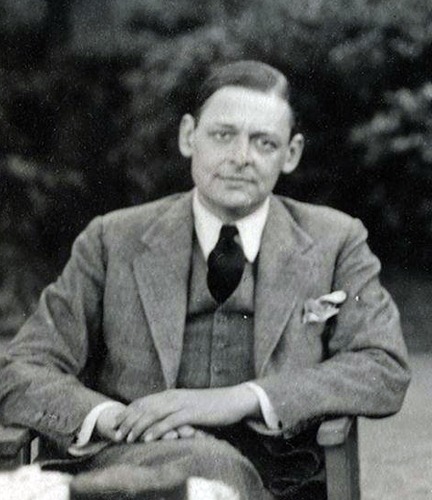
Thomas Stearns Eliot, born on September 26, 1888, in St. Louis, Missouri, was an American-British poet, essayist, publisher, playwright, and literary critic. Widely regarded as one of the most important poets of the 20th century, Eliot’s work remains a cornerstone of modernist literature. His influence extends far beyond poetry, touching on various aspects of literary and cultural criticism. This article explores Eliot’s life, his journey to fame, and the lasting impact of his work on literature and society.
Early Life and Education
Thomas Stearns Eliot was born into a prosperous and socially prominent family in St. Louis. His father, Henry Ware Eliot, was a successful businessman and director of a brick-making company, while his mother, Charlotte Champe Stearns, came from an old New England family. The Eliot family had deep roots in American society, with connections to early settlers in Massachusetts.
From an early age, Eliot showed a keen interest in literature and poetry. By the age of ten, he was already writing poems, some of which were published in his school’s literary magazine. This early exposure to writing set the stage for what would become a prolific career in literature.
In 1906, Eliot enrolled at Harvard University, where he immersed himself in the rich intellectual environment of Boston. At Harvard, he studied a wide range of subjects, including French, German, English literature, medieval history, and philosophy. Eliot’s academic rigor and intellectual curiosity were evident as he delved into the works of Dante Alighieri, whose “Divine Comedy” would later have a profound influence on his poetry. His interest in metaphysical poets and modernist literature began to take shape during these formative years.
The European Influence: Paris and Oxford
After completing his undergraduate studies at Harvard, Eliot continued his education in Europe. In 1911, he enrolled at the Sorbonne in Paris, where he studied under renowned philosophers and immersed himself in the vibrant cultural scene of the city. Paris at the time was a hub of artistic and intellectual activity, and Eliot’s experiences there deepened his appreciation for French literature, particularly the works of Jules Laforgue, a symbolist poet who greatly influenced Eliot’s early writing style.
Eliot’s European education did not end in Paris. He returned to Harvard to pursue a doctoral degree in philosophy, but in 1914, he received a scholarship to study at Merton College, Oxford. This move to England would prove to be a turning point in Eliot’s life, both personally and professionally. It was in England that Eliot would find his voice as a poet and where he would eventually make his permanent home.
Marriage and Early Career Struggles
While studying at Oxford, Eliot met Vivienne Haigh-Wood, a British woman from a well-to-do family. The couple married in 1915, but their marriage was fraught with difficulties from the start. Vivienne suffered from various health issues, both physical and mental, and Eliot soon found himself in a challenging personal situation.
Financially strained and with little support from his family, who disapproved of his academic pursuits, Eliot began teaching to make ends meet. He later found employment at Lloyds Bank in London, where he worked as a clerk. Despite the demands of his job and the pressures of his personal life, Eliot continued to write, and it was during this time that he began to establish himself as a poet.
In 1917, Eliot published his first major work, “Prufrock and Other Observations,” a collection of poems that introduced the world to his unique voice. The title poem, “The Love Song of J. Alfred Prufrock,” is now considered one of the most important poems of the 20th century. It marked the emergence of a new poetic sensibility, one that broke with the romanticism of the 19th century and embraced the fragmented, disjointed nature of modern life.
The Modernist Movement and “The Waste Land”
The early 20th century was a time of significant upheaval in the arts, with the rise of modernism challenging traditional forms and conventions. Eliot became one of the leading figures of this movement, which sought to capture the disorientation and alienation of the modern world. His poetry, characterized by its complex allusions, fragmented structure, and innovative use of language, became a defining feature of modernist literature.
In 1922, Eliot published “The Waste Land,” a poem that would secure his place in literary history. Widely regarded as one of the most important works of modernist literature, “The Waste Land” is a powerful exploration of post-World War I disillusionment and despair. The poem’s fragmented structure, shifting voices, and rich tapestry of references to classical and contemporary texts reflect the chaotic nature of the modern world.
“The Waste Land” was not only a critical success but also a cultural phenomenon. It captured the mood of the time and resonated with readers who were grappling with the aftermath of the war and the breakdown of traditional values. The poem’s famous opening lines, “April is the cruellest month,” became emblematic of the modernist sensibility, encapsulating the sense of loss and disorientation that characterized the era.
Professional Success and Literary Influence
Following the success of “The Waste Land,” Eliot’s reputation as a leading poet and critic grew. In 1923, he became the editor of “The Criterion,” a literary magazine that published some of the most important works of modernist literature. His role as an editor allowed him to shape the direction of contemporary literature and to champion the work of other modernist writers, including James Joyce, Virginia Woolf, and Ezra Pound.
Eliot’s influence extended beyond poetry. He became a prominent literary critic, writing essays that explored the nature of literature, culture, and society. His critical work, including essays such as “Tradition and the Individual Talent” and “The Metaphysical Poets,” had a profound impact on the study of literature and helped to establish the principles of modernist criticism.
In addition to his work as a poet and critic, Eliot also ventured into playwriting. His plays, such as “Murder in the Cathedral” (1935) and “The Cocktail Party” (1949), explored themes of faith, morality, and the human condition. These works demonstrated Eliot’s versatility as a writer and his ability to engage with different forms of literary expression.
Conversion and Personal Transformation
The 1920s were a period of significant personal and spiritual transformation for Eliot. In 1927, he became a British citizen and converted to Anglicanism, a decision that had a profound influence on his later work. His conversion marked a shift in his poetry, as he began to explore themes of religious faith, redemption, and the search for meaning in a secular world.
Eliot’s religious beliefs informed much of his later poetry, including “Ash Wednesday” (1930) and “Four Quartets” (1943). “Four Quartets,” in particular, is considered one of his greatest achievements, a meditation on time, memory, and the divine. The poem reflects Eliot’s deepening faith and his belief in the possibility of spiritual renewal in a fractured world.
Despite his professional success, Eliot’s personal life remained troubled. His marriage to Vivienne continued to deteriorate, and in 1933, he made the difficult decision to separate from her. Vivienne was eventually committed to a mental institution, where she spent the remainder of her life. Her death in 1947 left Eliot with a deep sense of guilt and loss, feelings that would continue to haunt him.
Nobel Prize and Later Life
In 1948, Eliot was awarded the Nobel Prize in Literature, recognizing his “outstanding, pioneer contribution to present-day poetry.” The award cemented his status as one of the most important literary figures of the 20th century and acknowledged the profound impact of his work on modern literature.
In his later years, Eliot continued to write, although his output slowed. He focused on his work as a director at the publishing house Faber and Faber, where he played a crucial role in promoting the work of other writers, including W.H. Auden, Stephen Spender, and Ted Hughes.
Eliot’s final years were marked by a sense of reconciliation and peace. In 1957, he married Valerie Fletcher, a woman 38 years his junior who had been his secretary at Faber and Faber. The marriage brought Eliot much-needed happiness and stability in his later years.
Legacy and Impact
Thomas Stearns Eliot passed away on January 4, 1965, in London, from emphysema. His ashes were interred at St. Michael’s Church in East Coker, Somerset, the village from which his ancestors had emigrated to America. A plaque in the church commemorates his life and work, and in 1967, a memorial stone was placed in the Poets’ Corner of Westminster Abbey in London, honoring his contributions to literature.
Eliot’s legacy as a poet, critic, and playwright remains unparalleled. His work has had a lasting influence on modern literature, shaping the course of 20th-century poetry and criticism. The themes he explored—alienation, spiritual desolation, the search for meaning—continue to resonate with readers and writers today.
Eliot’s contribution to the modernist movement was not only in his own writing but also in his role as a mentor and advocate for other writers. His support for figures like James Joyce and Ezra Pound helped to define the modernist canon, and his critical essays continue to be studied and admired for their insight and clarity.
In conclusion, Thomas Stearns Eliot was a towering figure in 20th-century literature. His work as a poet, critic, and playwright left an indelible mark on the literary world, and his influence continues to be felt today. From his early experiments in modernist poetry to his later meditations on faith and redemption, Eliot’s work speaks to the complexities of the human experience and the enduring power of art to illuminate the world around us.


