
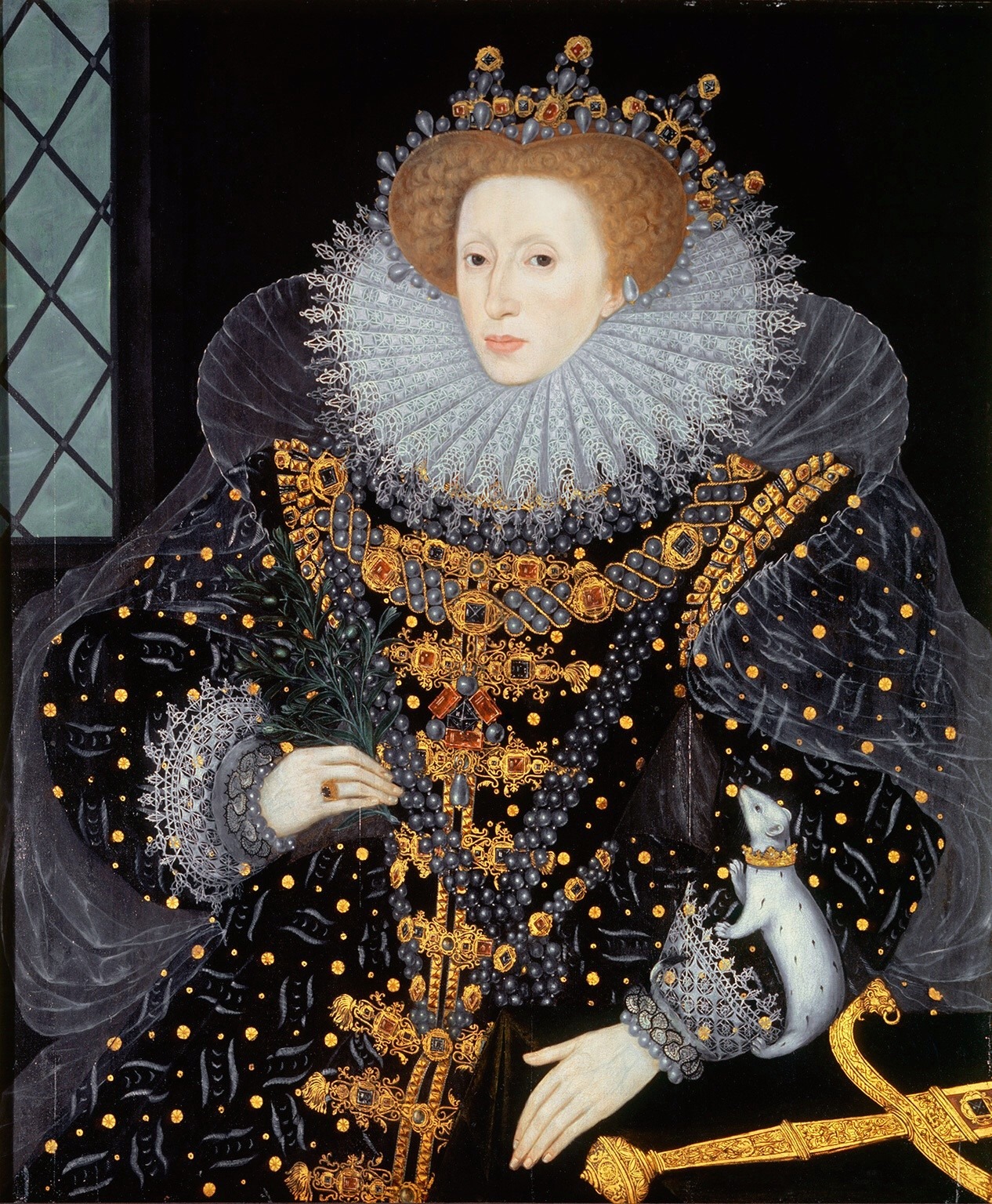
Elisabetta I Tudor, also known as the Virgin Queen, was one of the most remarkable monarchs in English history. Born on September 7, 1533, at the Palace of Placentia in Greenwich, she was the daughter of King Henry VIII and his second wife, Anne Boleyn. Elisabetta’s reign, known as the Elizabethan Era, was marked by a flourishing of English culture, the defeat of the Spanish Armada, and the establishment of England as a major European power. This article provides a comprehensive overview of Elisabetta I’s life, examining her age, fame, and the significant highlights that defined her reign.
Early Life and Background
Elisabetta’s birth was initially celebrated with great hope, but her life took a tumultuous turn when her mother, Anne Boleyn, was executed in 1536 on charges of treason, incest, and witchcraft. Following her mother’s death, Elisabetta was declared illegitimate and removed from the line of succession. She spent her early years at Hatfield House, away from the political intrigues of the Tudor court. Despite the circumstances of her birth, Elisabetta received an excellent education under the guidance of humanist scholars like Roger Ascham. She became fluent in several languages, including Latin, Greek, French, and Italian, and developed a keen understanding of politics and philosophy.
Elisabetta’s fortunes improved when her father married his sixth wife, Catherine Parr. Catherine played a crucial role in restoring Elisabetta to the line of succession through the Third Succession Act of 1543. This act, combined with Elisabetta’s intelligence and charm, positioned her as a potential future monarch, despite her earlier illegitimacy.
Ascent to the Throne
Elisabetta’s path to the throne was fraught with danger. After the death of her father in 1547, her half-brother Edward VI ascended the throne, only to die young in 1553. Edward’s death led to a power struggle, and Elisabetta’s half-sister Mary I, a devout Catholic, became queen. Mary’s reign was marked by a brutal persecution of Protestants, earning her the nickname “Bloody Mary.” During this period, Elisabetta, a Protestant, was viewed with suspicion and even imprisoned in the Tower of London in 1554 on charges of supporting a Protestant rebellion. However, Mary ultimately spared her life, and Elisabetta was released from the Tower after two months and placed under house arrest.
Mary’s marriage to Philip II of Spain further complicated the political landscape, as it intensified fears of a Spanish influence over England. Despite these challenges, Elisabetta maintained her composure and political acumen, which would serve her well when she eventually ascended the throne on November 17, 1558, following Mary’s death from cancer.
The Elizabethan Religious Settlement
One of the first challenges Elisabetta faced as queen was the religious divide that had torn England apart. The country was split between Catholics and Protestants, and Elisabetta needed to find a way to navigate these tensions. In 1559, she introduced the Elizabethan Religious Settlement, which established the Church of England’s independence from Rome and reinstated the Book of Common Prayer. Elisabetta took the title of “Supreme Governor of the Church of England,” a deliberate choice to placate those who believed a woman could not be the head of the Church.
The settlement aimed to create a middle ground between the extremes of Catholicism and Protestantism, and while it faced opposition from both sides, it largely succeeded in stabilizing the religious situation in England. This compromise allowed Elisabetta to focus on other pressing issues, such as securing England’s position on the European stage.
The Challenge of Mary, Queen of Scots
One of the most persistent threats to Elisabetta’s reign came from her cousin, Mary, Queen of Scots. Mary, a Catholic, had a legitimate claim to the English throne and was seen by many English Catholics as the rightful queen. After a series of political and personal misfortunes, including the murder of her second husband, Lord Darnley, and her subsequent marriage to the Earl of Bothwell, Mary was forced to abdicate the Scottish throne in favor of her infant son, James VI. Seeking refuge in England in 1568, Mary became a focal point for Catholic plots against Elisabetta.
Elisabetta was reluctant to execute a fellow queen, but Mary’s involvement in the Babington Plot, a plan to assassinate Elisabetta and place Mary on the English throne, left her with little choice. Mary was tried and executed for treason in 1587, a decision that deeply troubled Elisabetta but was deemed necessary for the security of her realm.
One of the most defining moments of Elisabetta’s reign was the defeat of the Spanish Armada in 1588. The Armada, a massive fleet sent by Philip II of Spain, was intended to overthrow Elisabetta and restore Catholicism to England. The conflict was the culmination of years of political and religious tension between England and Spain, exacerbated by English support for the Dutch Revolt against Spanish rule and English privateers, like Sir Francis Drake, attacking Spanish ships.
Elisabetta’s leadership during this crisis was pivotal. She famously addressed her troops at Tilbury, declaring, “I know I have the body of a weak and feeble woman, but I have the heart and stomach of a king, and of a king of England too.” The English navy, aided by unfavorable weather conditions for the Spanish fleet, achieved a decisive victory. The defeat of the Armada was celebrated across England and solidified Elisabetta’s reputation as a formidable ruler. It also marked the beginning of England’s dominance as a naval power, which would continue to grow in the centuries to come.
The Elizabethan Golden Age
Elisabetta’s reign is often referred to as the Elizabethan Golden Age, a period marked by a flourishing of English arts, exploration, and culture. This era saw the rise of some of the most celebrated figures in English history, including playwrights like William Shakespeare and Christopher Marlowe, poets like Edmund Spenser, and explorers like Sir Walter Raleigh and Sir Francis Drake.
Under Elisabetta’s patronage, the arts thrived. The period is particularly noted for the development of English drama, with the construction of theaters like The Globe and the production of plays that continue to be celebrated today. The queen herself was an avid supporter of the arts and often attended performances. This cultural flourishing contributed to a sense of national pride and identity, with Elisabetta at its center as the symbol of England’s greatness.
The era was also marked by significant achievements in exploration. English explorers ventured to the New World, establishing colonies and expanding trade routes. Sir Francis Drake became the first Englishman to circumnavigate the globe, and Sir Walter Raleigh attempted to establish the first English colony in North America at Roanoke. These ventures laid the groundwork for England’s later expansion into a global empire.
Personal Life and Legacy
Despite her many suitors and the expectations of her advisors, Elisabetta never married, earning her the title of the Virgin Queen. Her decision not to marry was both a personal and political one. Marriage could have weakened her authority by aligning her too closely with a foreign power or a domestic noble family, potentially causing internal divisions. By remaining single, Elisabetta maintained control over her own destiny and kept the focus on her as the sole ruler of England.
Elisabetta’s personal life, like her reign, was marked by a mix of triumph and tragedy. She enjoyed the company of several close male courtiers, most notably Robert Dudley, Earl of Leicester, and later Robert Devereux, Earl of Essex. Her relationship with Essex ended in tragedy when he led a failed rebellion against her and was subsequently executed for treason in 1601. Elisabetta was deeply affected by his betrayal, and his execution is said to have weighed heavily on her in her later years.
As Elisabetta aged, she became increasingly reflective and melancholic. The death of her closest advisors and friends, combined with the pressures of ruling, took a toll on her. She passed away on March 24, 1603, at the age of 69, at Richmond Palace. Her death marked the end of the Tudor dynasty, as she left no direct heir. The throne passed to James VI of Scotland, the son of Mary, Queen of Scots, uniting the crowns of England and Scotland.
Elisabetta was buried in Westminster Abbey, alongside her half-sister Mary I. Her tomb bears the inscription, “Partners both in throne and grave, here rest we two sisters, Elizabeth and Mary, in hope of our resurrection.”
Historical Context and Nuances
To fully appreciate Elisabetta I’s achievements and her impact on history, it is essential to understand the broader historical context of her reign. The 16th century was a period of religious turmoil, political intrigue, and international conflict. Elisabetta navigated these challenges with remarkable skill, balancing the demands of governance with the expectations of her people.
The Elizabethan Religious Settlement was a pragmatic response to the religious divisions that had plagued England for decades. By creating a moderate Protestant Church, Elisabetta avoided the extremes of both Catholicism and Puritanism, which allowed for a degree of religious tolerance that helped to stabilize the nation.
Internationally, Elisabetta’s reign was characterized by the complex interplay of alliances and enmities with other European powers. Her refusal to marry allowed her to maintain England’s independence and avoid entanglements in foreign wars. The defeat of the Spanish Armada was not just a military victory but a statement of England’s growing power and influence on the global stage.
Culturally, the Elizabethan Era was a time of innovation and creativity. The works of Shakespeare and his contemporaries are still celebrated today, and the period’s contributions to literature, theater, and exploration have left a lasting legacy.
Conclusion
Elisabetta I was a queen who defied the expectations of her time. Her intelligence, political acumen, and determination allowed her to navigate the complex challenges of her reign and leave an indelible mark on history. The Elizabethan Era is remembered as a golden age of English culture and power, with Elisabetta herself symbolizing the strength and resilience of her nation.
Her legacy is one of leadership, cultural patronage, and the establishment of England as a major European power. Elisabetta’s life and reign continue to be the subject of study and admiration, serving as a testament to the enduring impact of a queen who ruled with wisdom, courage, and grace.


