
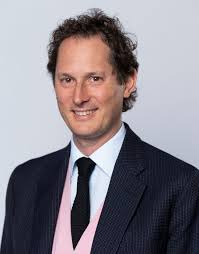
John Elkann is a prominent figure in the global business world, known for his pivotal role in the Fiat Chrysler Automobiles (FCA) group and his leadership within the powerful Agnelli family. As the heir to one of Italy’s most influential dynasties, Elkann has navigated the complex landscape of international business, steering the family’s vast empire through times of significant change. This article provides a comprehensive look at John Elkann’s life, from his early years to his rise to prominence, offering detailed insights into his career, the historical context that shaped him, and the key milestones that have defined his journey.
Early Life and Education
John Philip Jacob Elkann was born on April 1, 1976, in New York City. He is the eldest son of Margherita Agnelli and Alain Elkann, a well-known Italian journalist and author. The Agnelli family, often referred to as the “Kennedys of Italy,” has long been synonymous with power, wealth, and influence, primarily through their control of Fiat, one of the world’s largest automotive companies.
John’s early life was marked by the cosmopolitan nature of his upbringing. He grew up between New York, Paris, and Italy, which gave him a unique perspective on global cultures and business practices. He attended the Lycée Victor Duruy in Paris, a prestigious French high school, where he developed a strong foundation in science and mathematics. Despite his grandfather Gianni Agnelli’s wishes for him to attend Bocconi University in Milan, John chose to study engineering at the Politecnico di Torino, Italy’s leading technical university. He graduated in 2000 with a degree in industrial engineering, completing a thesis on online auctions—a topic that highlighted his early interest in the intersection of technology and business.
Early Career and Introduction to Fiat
John Elkann’s entry into the world of business was not simply handed to him despite his family’s vast wealth and influence. His early career was characterized by a hands-on approach to learning the ropes of the industry. During his university years, Elkann took on various internships that exposed him to the realities of manufacturing and business operations. In 1996, he worked in a Magneti Marelli factory in Birmingham, England, assembling car lights. The following year, he was on the production line at Fiat’s Panda factory in Tychy, Poland, where he gained firsthand experience in the automotive industry.
In 1997, following the tragic death of his cousin Giovanni Alberto Agnelli, who was initially expected to lead Fiat, Gianni Agnelli identified John as his successor. This decision thrust John into the spotlight, with significant responsibilities placed on his shoulders at a young age. At just 21 years old, he was appointed to the board of directors of both Fiat and the Agnelli family’s holding company, Giovanni Agnelli & C. S.a.p.az. His early involvement in these boards was a critical learning period, where he began to understand the complexities of managing a global enterprise.
Rising Through the Ranks
By 2001, John Elkann had joined General Electric’s Corporate Audit Staff, where he gained valuable experience working in Europe, the United States, and Asia. This role provided him with a broader understanding of corporate governance and the operational challenges faced by multinational corporations. His time at GE further honed his business acumen, preparing him for the significant responsibilities that awaited him at Fiat.
The early 2000s were a tumultuous time for Fiat. The company was struggling financially, and its future was uncertain. In 2003, after the deaths of both his grandfather Gianni Agnelli and his uncle Umberto Agnelli, John Elkann was thrust into a leadership role within the company. At just 27 years old, he began working closely with the management team to develop a strategy to save the iconic Italian automaker from potential bankruptcy.
In 2004, Elkann played a crucial role in the decision to appoint Sergio Marchionne as CEO of Fiat. Marchionne’s leadership would prove to be transformative for the company. His bold moves, including the successful merger with Chrysler, helped turn Fiat from a struggling enterprise into a global automotive powerhouse. Elkann’s ability to recognize Marchionne’s potential and support his vision was a testament to his leadership and strategic thinking.
Personal Life and Marriage
On September 4, 2004, John Elkann married Lavinia Borromeo Arese Taverna, a member of the aristocratic Borromeo family. The wedding, held at the chapel on Isola Madre, one of the Borromean Islands on Lake Maggiore, was a high-profile event attended by numerous dignitaries and celebrities. The couple’s union was seen as a merging of two of Italy’s most influential families, further solidifying Elkann’s place in the upper echelons of Italian society.
John and Lavinia have three children: Leone Mosé, born in 2006; Oceano Noah, born in 2007; and Vita Talita, born in 2012. The Elkann family has remained relatively private, with John and Lavinia maintaining a low-key presence in the media despite their high-profile status.
Leadership at Fiat and Exor
In 2008, John Elkann was elected chairman of IFIL, the Agnelli family’s investment vehicle, which later merged with IFI to form Exor, one of the largest and most diversified holding companies in Europe. Under Elkann’s leadership, Exor has expanded its portfolio to include significant investments in companies such as PartnerRe, The Economist Group, and Ferrari, among others. His strategic vision has been instrumental in transforming Exor into a global investment powerhouse.
In 2010, Elkann was appointed chairman of Fiat Group, succeeding Luca Cordero di Montezemolo. This role placed him at the helm of one of the world’s most iconic automotive brands, overseeing the company’s operations during a period of significant change. Under his leadership, Fiat completed its merger with Chrysler, creating Fiat Chrysler Automobiles (FCA), a move that expanded the company’s global reach and solidified its position as a leading player in the automotive industry.
Elkann’s leadership style is often described as pragmatic and forward-thinking. He has a deep understanding of the automotive industry and a keen sense of the importance of innovation and adaptability in maintaining competitiveness in a rapidly changing market. His ability to navigate the complexities of global business, while staying true to the legacy of the Agnelli family, has earned him respect in both the business world and beyond.
The Formation of Fiat Chrysler Automobiles (FCA)
The formation of FCA was one of the most significant achievements in John Elkann’s career. The merger with Chrysler was a bold move that many industry observers initially questioned. However, under Elkann’s leadership and Marchionne’s operational expertise, the merger proved to be a resounding success. It allowed Fiat to tap into the North American market and provided Chrysler with the resources and management needed to recover from its financial struggles.
The creation of FCA was more than just a business transaction; it represented a new chapter in the history of both Fiat and Chrysler. The combined entity became the world’s seventh-largest automaker, with a diverse portfolio of brands including Jeep, Dodge, Ram, Alfa Romeo, and Maserati. Elkann’s vision and strategic acumen were key to making this merger a reality, and his ability to see beyond short-term challenges to the long-term potential of the combined company was instrumental in its success.
Challenges and Triumphs in the 2010s
The 2010s were a decade of significant change and challenge for John Elkann. In 2013, he was named one of the world’s most influential young leaders by Fortune Magazine, reflecting his growing influence in the global business community. However, the decade was also marked by personal and professional challenges.
In 2018, following the sudden illness and subsequent death of Sergio Marchionne, Elkann was appointed chairman of Ferrari, another iconic brand within the Agnelli family’s portfolio. This role came with its own set of challenges, as Ferrari is not just a luxury car manufacturer but a symbol of Italian excellence and innovation. Elkann’s leadership at Ferrari has been focused on maintaining the brand’s legacy while also steering it towards a future defined by sustainability and technological advancement.
Throughout the decade, Elkann also faced the challenge of navigating the rapidly changing landscape of the automotive industry. The rise of electric vehicles, autonomous driving technology, and changing consumer preferences have all posed significant challenges to traditional automakers like FCA. However, Elkann’s forward-thinking approach and willingness to embrace change have positioned the company to adapt and thrive in this new environment.
Expanding Influence Through Exor
Under John Elkann’s leadership, Exor has grown into one of the most significant and diversified holding companies in the world. The company’s portfolio includes investments in industries ranging from automotive to media, insurance, and luxury goods. Elkann’s ability to identify and capitalize on investment opportunities has been a key driver of Exor’s success.
One of Exor’s most high-profile investments was its acquisition of a controlling stake in The Economist Group in 2015. This move reflected Elkann’s interest in media and his belief in the importance of independent journalism in today’s world. The investment in The Economist was not just a financial decision; it was also a statement about the role of media in society and the need for responsible, fact-based reporting.
Elkann’s leadership of Exor has also been marked by a commitment to innovation and sustainability. The company has invested in new technologies and industries that reflect the changing landscape of the global economy. Elkann’s vision for Exor is one of a company that is not only financially successful but also socially responsible and forward-thinking.
Conclusion
John Elkann’s life and career are a testament to his ability to navigate the complexities of global business while maintaining the legacy of one of the world’s most influential families. From his early years learning the ropes in Fiat factories to his current role as a global business leader, Elkann has demonstrated a unique blend of pragmatism, innovation, and strategic thinking.
As the head of Exor and a key figure in the global automotive industry, Elkann’s influence extends far beyond the companies he leads. His commitment to innovation, sustainability, and responsible leadership positions him as a leading figure in the business world, and his story is far from over. As he continues to steer the Agnelli family’s empire into the future, John Elkann remains a figure of enduring importance in the worlds of business, finance, and beyond.


