
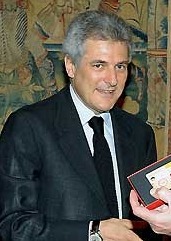
Alain Elkann is a name that resonates with intellectual depth, cultural influence, and a complex personal history that intertwines with some of the most prominent figures in modern Italian society. Born on March 23, 1950, in New York City, Elkann is a journalist, author, and cultural figure whose life and work have left a significant mark on both Italian and international culture. This article explores the life, age, fame, and significant highlights of Alain Elkann, offering detailed insights into his career, contributions to literature and journalism, and the broader historical and cultural context that has shaped his journey.
Early Life and Family Background
Alain Elkann was born into a family that was as cosmopolitan as it was influential. His father was French, and his mother was Italian, both of Jewish heritage. This multicultural and multilingual upbringing played a crucial role in shaping Elkann’s worldview and intellectual pursuits. Growing up in a household that straddled different cultures and languages, Elkann became fluent in several languages, including French, Italian, and English, a skill that would serve him well in his future career as a writer and journalist.
Elkann’s education began in Europe, where he pursued a degree in law at the prestigious University of Geneva. This academic background provided him with a solid foundation in critical thinking and analysis, skills that he would later apply to his work in journalism and literature. However, Elkann’s true passion lay in the world of culture, ideas, and the written word, interests that would come to define his professional life.
Literary Career and Influences
Alain Elkann’s literary career is notable not just for the quality of his writing but also for the breadth of his intellectual interests. He is often regarded as a disciple of the renowned Italian writer Alberto Moravia, one of the most important literary figures of the 20th century. Elkann’s relationship with Moravia was both personal and professional, and it significantly influenced his approach to writing and storytelling. Together, they published several works, and Elkann has often cited Moravia as a major influence on his literary style.
Elkann’s body of work spans a wide range of genres, including novels, essays, and interviews. Some of his most notable works include Vita di Moravia (Life of Moravia), a biography of his mentor, Rotocalco, Delitto a Capri (Crime in Capri), and Vendita all’asta (Auction Sale). These works showcase Elkann’s ability to blend narrative storytelling with cultural critique, offering readers both entertainment and intellectual engagement.
In addition to his novels, Elkann has also written extensively on religion, particularly Judaism and Islam. His books Essere ebreo (Being Jewish), co-authored with Elio Toaff, and Essere musulmano (Being Muslim) explore the complexities of religious identity in the modern world. These works reflect Elkann’s deep interest in the intersections of faith, culture, and society, themes that recur throughout his writing.
Journalism and Media Presence
Alain Elkann is perhaps best known for his work as a journalist. Over the years, he has contributed to numerous publications, including La Stampa, one of Italy’s leading newspapers. His journalistic work is characterized by its intellectual rigor and his ability to engage with a wide range of topics, from politics and culture to religion and social issues.
Elkann’s interviews are particularly renowned for their depth and insight. His interview series, Interviste 1989-2000, features conversations with some of the most influential figures of the late 20th century, including politicians, writers, artists, and religious leaders. These interviews are more than just journalistic exercises; they are dialogues that explore the thoughts and ideas of some of the world’s most interesting minds, providing readers with a unique window into the thinking of cultural and intellectual leaders.
In addition to his print journalism, Elkann has also made a significant impact on Italian television. For many years, he hosted the cultural program Bookstore on La7, where he discussed literature, ideas, and cultural trends with guests from various fields. His presence on television helped to bring intellectual discourse into the homes of ordinary Italians, making complex ideas accessible to a broader audience.
Cultural Contributions and Public Roles
Beyond his work as a writer and journalist, Alain Elkann has played an important role in the promotion of culture and the arts in Italy and abroad. He has held several prominent positions in cultural institutions, including serving as the president of the Museo Egizio in Turin, one of the most important museums of Egyptian antiquities in the world. His leadership at the museum was marked by efforts to modernize the institution and increase public engagement with its collections.
Elkann has also been involved in the broader cultural life of Italy through his work with various foundations and cultural organizations. He served as the president of the Foundation for Italian Art and Culture in New York, an organization dedicated to promoting Italian culture in the United States. Additionally, he has been a member of the Italian Academy at Columbia University in New York, where he has contributed to fostering cultural exchange between Italy and the U.S.
In recognition of his contributions to culture, Elkann has been an advisor to several Italian Ministers of Cultural Heritage, providing guidance on cultural policy and the promotion of Italy’s rich artistic and historical heritage. His work in this area reflects his deep commitment to the preservation and promotion of culture as a vital part of national identity.
Personal Life and Family
Alain Elkann’s personal life is closely intertwined with the Agnelli family, one of Italy’s most powerful and influential dynasties. In 1975, Elkann married Margherita Agnelli, the daughter of Gianni Agnelli, the legendary head of Fiat. The marriage brought Elkann into the inner circle of one of the most prominent families in Italy, further raising his public profile.
The couple had three children: John Elkann, who is now the chairman of Fiat Chrysler Automobiles (FCA) and one of the most influential figures in the global automotive industry; Lapo Elkann, a well-known entrepreneur and fashion designer; and Ginevra Elkann, a film producer and director. The Elkann children have continued the family’s legacy of influence and success, each in their respective fields.
Despite his public persona, Alain Elkann has maintained a relatively private personal life. His marriage to Margherita Agnelli ended in divorce in 1981, and while his children have often been in the spotlight, Elkann himself has remained somewhat more reserved. Nevertheless, his role as a father to some of Italy’s most high-profile individuals has only added to the public’s interest in his life and work.
Nuances and Historical Context
Alain Elkann’s life and career cannot be fully understood without considering the broader historical and cultural context in which he has operated. Born in the aftermath of World War II, Elkann’s early life was shaped by the complexities of the post-war world, including the challenges faced by Jewish communities in Europe and the rise of new intellectual movements.
His work often reflects the tensions and contradictions of the modern world, particularly in his explorations of identity, religion, and culture. Elkann’s writing is marked by a deep understanding of history and a sensitivity to the ways in which the past continues to shape the present. His interest in religion, for example, can be seen as part of a broader effort to grapple with the role of faith in a secularizing world, while his literary work often explores themes of memory, loss, and the search for meaning in a rapidly changing society.
Moreover, Elkann’s career has spanned a period of significant change in the media landscape. From the rise of television to the advent of digital media, Elkann has adapted to these changes while maintaining a commitment to thoughtful and in-depth journalism. His ability to engage with new forms of media, while staying true to the values of traditional journalism, is a testament to his versatility and enduring relevance in the cultural sphere.
Legacy and Impact
Alain Elkann’s legacy is one of intellectual curiosity, cultural engagement, and a commitment to exploring the complexities of the human experience. Through his writing, journalism, and cultural work, he has made a significant contribution to the intellectual life of Italy and beyond. His ability to navigate the worlds of literature, journalism, and television, while maintaining a thoughtful and reflective approach to his work, has earned him a place among the most respected cultural figures of his generation.
As a writer, Elkann has enriched the literary landscape with works that explore deep and often difficult questions about identity, culture, and the human condition. As a journalist, he has provided readers with thoughtful and engaging commentary on the issues of the day. And as a cultural figure, he has played a key role in promoting and preserving the rich cultural heritage of Italy.
Elkann’s influence extends beyond the borders of Italy, through his work with cultural institutions in the United States and his contributions to global cultural dialogue. His ability to bridge different cultures and intellectual traditions has made him a unique and influential voice in contemporary culture.
Conclusion
Alain Elkann’s life is a testament to the power of ideas, the importance of cultural engagement, and the value of intellectual curiosity. From his early years in a multilingual and multicultural household to his career as a writer, journalist, and cultural leader, Elkann has consistently sought to explore and understand the complexities of the world around him. His work continues to inspire and challenge readers, viewers, and audiences around the world, making him one of the most important cultural figures of our time.


