
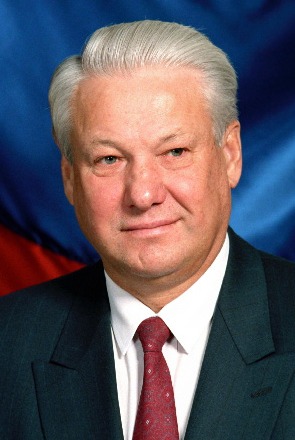
Boris Yeltsin, the first President of the Russian Federation, is a figure whose life and legacy have left an indelible mark on modern history. Born on February 1, 1931, in the small village of Bukta, within the Soviet Union, Yeltsin’s journey from a modest upbringing to becoming a pivotal figure in the dissolution of the USSR and the formation of modern Russia is a story of political courage, reform, and controversy.
Early Life and Education
Boris Nikolayevich Yeltsin was born into a humble family during a time of significant hardship in the Soviet Union. The country was under the iron grip of Joseph Stalin, and the rural population faced extreme poverty. Despite the challenging circumstances of his upbringing, Yeltsin exhibited remarkable intellectual abilities, particularly in the sciences. This aptitude earned him a place at the prestigious Ural State Technical University (formerly known as the Ural Polytechnic Institute), where he pursued studies in construction engineering.
Yeltsin’s academic journey laid the foundation for his future career, which began in the field of construction. He worked as an engineer and then as a manager in various construction projects, gaining a reputation for his efficiency and leadership. However, it wasn’t long before Yeltsin’s ambitions transcended the confines of his engineering career, leading him toward the turbulent waters of Soviet politics.
Political Ascent: From Communist Party Member to Reformer
In 1961, Yeltsin joined the Communist Party of the Soviet Union (CPSU), a necessary step for anyone aspiring to a significant role in Soviet public life. His membership in the party marked the beginning of his political ascent. By the 1970s, Yeltsin had established himself as a rising star within the CPSU, becoming the First Secretary of the Sverdlovsk Regional Committee—a position that made him the de facto governor of the Sverdlovsk region.
During this period, the Soviet Union was grappling with economic stagnation and political corruption. The rigid centralization of power, coupled with a sprawling bureaucratic system, stifled innovation and led to widespread inefficiency. Yeltsin’s time in Sverdlovsk was marked by efforts to improve the region’s economy and infrastructure, but he soon grew frustrated with the systemic corruption and the limitations imposed by the central government.
Yeltsin’s discontent with the status quo became more pronounced in the early 1980s. He began to advocate for more significant reforms within the Soviet system, aligning himself with the emerging wave of reformers within the CPSU. This movement gained momentum under the leadership of Mikhail Gorbachev, who, in 1985, became the General Secretary of the Communist Party and initiated a series of reforms known as Perestroika (restructuring) and Glasnost (openness).
A Champion of Reform: Clashing with the Soviet Establishment
In 1985, Gorbachev appointed Yeltsin as the head of the Moscow City Committee of the Communist Party, effectively making him the leader of the capital city’s party organization. This position placed Yeltsin at the heart of Soviet power, where he was expected to support Gorbachev’s reform agenda. However, Yeltsin quickly became disillusioned with the slow pace of reform and the entrenched opposition within the party.
Yeltsin’s growing impatience with the conservative elements of the CPSU came to a head in 1987 during a plenary meeting of the Central Committee. In a bold move that shocked the Soviet establishment, Yeltsin openly criticized the party leadership, accusing them of obstructing Gorbachev’s reforms and perpetuating corruption. This act of defiance led to his removal from the Moscow party leadership and his reassignment to a less prominent role as the deputy minister for construction.
Though Yeltsin’s political career appeared to be on the decline, his willingness to challenge the status quo resonated with many Soviet citizens who were frustrated with the country’s economic difficulties and the inefficacy of its leaders. In 1989, Yeltsin made a dramatic political comeback when he was elected to the newly formed Congress of People’s Deputies, the highest legislative body in the Soviet Union. His election marked a turning point in his career and in Soviet politics, as he used his new platform to push for more radical reforms.
The Collapse of the Soviet Union and the Rise of the Russian Federation
The late 1980s and early 1990s were a period of immense upheaval in the Soviet Union. The reforms initiated by Gorbachev had unleashed forces that the Soviet leadership could not control. Nationalist movements gained strength in the republics that made up the Soviet Union, and demands for greater autonomy or outright independence grew louder. Amid this chaos, Yeltsin emerged as a leading advocate for Russian sovereignty, positioning himself as a defender of Russian interests against the central Soviet government.
In June 1991, Yeltsin achieved a historic victory when he was elected as the first President of the Russian Soviet Federative Socialist Republic (RSFSR), the largest republic within the Soviet Union. His election, which was conducted through direct popular vote, gave him a powerful mandate to pursue his vision of a sovereign Russia.
Yeltsin’s presidency coincided with the final months of the Soviet Union’s existence. The failed coup attempt by hardline communists in August 1991, which sought to depose Gorbachev and halt the reforms, only hastened the USSR’s demise. Yeltsin played a pivotal role in resisting the coup, famously standing on a tank outside the Russian parliament building and calling on the people to defend democracy. His defiance made him a hero to many and solidified his leadership as the Soviet Union collapsed.
By the end of 1991, the Soviet Union had dissolved, and the Russian Federation emerged as its largest successor state. Yeltsin, as the President of Russia, now faced the daunting task of leading the country through one of the most challenging transitions in its history.
Economic Reforms and Political Challenges
Yeltsin’s early years as President of Russia were marked by ambitious efforts to transform the country’s economy from a state-controlled system to a market economy. These reforms, often referred to as “shock therapy,” included the rapid privatization of state-owned enterprises, the liberalization of prices, and the removal of trade barriers. The goal was to create a capitalist economy that could compete on the global stage.
However, the reality of these reforms was far more complex. While they succeeded in dismantling the Soviet command economy, they also led to significant economic hardship for ordinary Russians. Inflation soared, wiping out savings; unemployment rose as unprofitable enterprises closed; and social inequality widened dramatically. The rapid pace of privatization also led to the emergence of a new class of oligarchs, who amassed vast wealth by acquiring state assets at bargain prices.
The economic turmoil of the 1990s eroded Yeltsin’s popularity and led to widespread disillusionment with the new Russian state. Political instability was compounded by Yeltsin’s frequent health problems, which some attributed to his heavy drinking. Despite these challenges, Yeltsin managed to maintain his grip on power, in part by leveraging his control over the security services and the media.
One of the most controversial aspects of Yeltsin’s presidency was his handling of the conflict in Chechnya. In 1994, Yeltsin ordered Russian troops to intervene in the breakaway republic of Chechnya, which had declared independence from Russia following the collapse of the Soviet Union. The resulting war was brutal and costly, with widespread human rights abuses committed by both sides. The conflict, which dragged on until 1996, ended in a humiliating defeat for Russia and further damaged Yeltsin’s standing at home and abroad.
Legacy and the Transfer of Power
By the late 1990s, Yeltsin’s health had deteriorated significantly, and his political authority was waning. The Russian economy remained fragile, and many of the democratic gains of the early 1990s had been eroded by corruption and authoritarian tendencies within the government. In August 1999, Yeltsin made a decisive move by appointing Vladimir Putin, a former KGB officer and then head of the Federal Security Service (FSB), as Prime Minister. Yeltsin viewed Putin as his chosen successor, believing that the younger, more vigorous leader could restore stability to Russia.
On December 31, 1999, Yeltsin shocked the world by announcing his resignation as President of Russia, effective immediately. In a televised address, Yeltsin expressed his regret for the hardships that the Russian people had endured during his tenure and called on them to support Putin in the upcoming presidential elections. With his resignation, Yeltsin became the first Russian leader to voluntarily step down from power, setting an important precedent for the peaceful transfer of power in the country.
After leaving office, Yeltsin largely withdrew from public life, though he occasionally made headlines with his candid reflections on his presidency and the challenges Russia faced. He passed away on April 23, 2007, at the age of 76, due to heart complications.
Historical Context and Modern Relevance
Boris Yeltsin’s life and career are inextricably linked with one of the most transformative periods in Russian and global history. He rose to power at a time when the Soviet Union, one of the world’s two superpowers, was unraveling under the weight of its internal contradictions. Yeltsin’s defiance of the Soviet establishment and his role in the dissolution of the USSR marked the end of the Cold War era and the beginning of a new, uncertain chapter in world history.
Yeltsin’s legacy is a complex one. On the one hand, he is credited with dismantling the Soviet state and laying the groundwork for a democratic Russia. His leadership during the August 1991 coup attempt demonstrated his commitment to democratic principles, and his decision to step down voluntarily in 1999 was a significant moment in Russian political history.
On the other hand, Yeltsin’s economic reforms and the social dislocation they caused have been the subject of much criticism. The 1990s were a time of great hardship for many Russians, and the long-term effects of the rapid privatization process are still felt today. Additionally, Yeltsin’s handling of the Chechen conflict and his reliance on authoritarian methods to maintain control have left a mixed legacy.
Today, Boris Yeltsin is remembered as a pivotal figure in the transition from Soviet communism to Russian capitalism. His life’s work reflects the challenges and contradictions of this period, and his legacy continues to influence the course of Russian history.
Conclusion
Boris Yeltsin’s journey from a rural village in the Soviet Union to the presidency of a newly independent Russia is a testament to his determination, political acumen, and willingness to embrace change. His leadership during one of the most turbulent periods in Russian history helped to shape the modern Russian state, but it also highlighted the difficulties of transitioning from a totalitarian regime to a democratic society.
Yeltsin’s life and legacy offer valuable lessons about the complexities of political reform, the dangers of unchecked power, and the importance of resilience in the face of adversity. As Russia continues to grapple with its post-Soviet identity, the impact of Boris Yeltsin’s presidency will remain a subject of debate and reflection for generations to come.


