
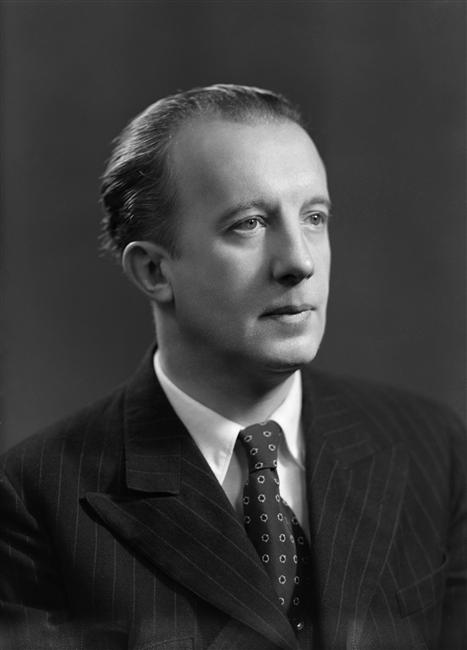
Paul Éluard, born Eugène Émile Paul Grindel on December 14, 1895, in Saint-Denis, France, remains one of the most influential poets of the 20th century. His life, marked by both personal turmoil and artistic triumphs, has left an indelible mark on the world of poetry, particularly within the realms of surrealism and political activism.
Early Life and Health Struggles
Paul Éluard’s early life was characterized by fragile health. His father, Clément Grindel, worked as an accountant, while his mother supplemented the family income with small sewing jobs. Éluard’s health issues began in childhood and culminated in a significant diagnosis of tuberculosis when he was just 16 years old. In 1902, he was sent to a sanatorium in Switzerland, where he spent a considerable amount of time recovering.
During this period of isolation, Éluard began to write poetry, finding solace and expression in the written word. It was also in this sanatorium that he met Helena Dmitrievna Diakinava, a young Russian woman who would become his muse and first love. He affectionately named her Gala, a name that would resonate throughout his poetry.
Literary Beginnings and World War I
Éluard published his first collection of poems, Loisirs, Pierrot, Les cinq rondels de tou jeune homme, in 1913 under the name Paul Eugène Éluard, adopting his maternal grandmother’s surname. However, his early career was soon interrupted by the outbreak of World War I in 1914. Éluard was drafted as a nurse on the front lines, where he witnessed the horrors of war firsthand. These experiences deeply affected him, both emotionally and physically, and they found expression in his work. His poetry during this period, notably the collection Le devoir (1917), reflects his profound disillusionment with the war and its impact on humanity.
Gala returned to France in 1916, and the two were married in 1917. The following year, their only child, Cécile, was born. Gala continued to be a central figure in Éluard’s poetry, inspiring several of his works during this period.
Surrealism and Artistic Evolution
In the years following the war, Éluard’s work began to attract the attention of the literary avant-garde in Paris. He became associated with the Dada movement, a group of artists and writers who sought to challenge traditional notions of art and culture. However, Éluard’s tenure with the Dadaists was short-lived. By 1920, he had moved on to the surrealist movement, where he found a more congenial artistic home.
Surrealism, with its emphasis on the unconscious mind and the exploration of dreams, provided Éluard with the ideal framework for his poetic expression. His work during this period, including the collections Capitale de la douleur (1926) and La rose publique (1934), showcases his mastery of surrealist techniques, particularly his use of vivid, often startling imagery to evoke deep emotional responses.
Personal Turmoil and Artistic Success
Despite his professional success, Éluard’s personal life was fraught with difficulties. His relationship with Gala began to deteriorate in the late 1920s, culminating in her leaving him for the Spanish surrealist painter Salvador Dalí in 1930. This betrayal deeply wounded Éluard, but it also marked the beginning of a new chapter in his life.
That same year, Éluard met Maria Benz, an Alsatian woman whom he affectionately called Nusch. Nusch would become Éluard’s second great love and a central figure in his later work. Their relationship was intense and passionate, and Nusch appeared in many of his poems during the 1930s and 1940s.
Éluard’s poetry from this period reflects his evolving political consciousness. As fascism spread across Europe, he became increasingly involved in political activism. He joined the French Communist Party and used his poetry as a tool for resistance against the Nazi occupation of France during World War II. His collection Poésie et Vérité (1942), published clandestinely, includes the famous poem “Liberté,” which became a rallying cry for the French Resistance. The poem was even dropped from British planes over occupied France, symbolizing hope and defiance in the face of tyranny.
Post-War Recognition and Tragedy
After the war, Éluard was celebrated as a national hero for his role in the resistance. His poetry, which had provided solace and inspiration to many during the darkest days of the war, was now widely recognized and appreciated. However, his personal life was once again marred by tragedy. In 1946, Nusch died suddenly from a cerebral hemorrhage, leaving Éluard devastated. He channeled his grief into his poetry, producing the poignant collection Le temps déborde (1947) as a tribute to her memory.
Final Years and Legacy
In the years following Nusch’s death, Éluard struggled with depression and thoughts of suicide. However, he found some solace in his relationship with Dominique, a woman he met in 1949. They married in 1951, and Dominique became the muse for Éluard’s final collection of love poems, Le Phénix (1951).
Éluard’s health, never robust, continued to decline, and in 1952 he suffered a fatal heart attack. He passed away on November 18, 1952, leaving behind a rich and varied body of work that continues to influence poets and readers around the world.
The Legacy of Paul Éluard
Paul Éluard’s legacy is vast and multifaceted. As a leading figure in the surrealist movement, he helped to define the aesthetic principles that would shape much of 20th-century literature and art. His work is characterized by its emotional intensity, its innovative use of language, and its deep engagement with the political and social issues of his time.
Éluard’s poetry, while deeply personal, also resonates with universal themes of love, loss, and the search for meaning in a world often marked by chaos and suffering. His ability to blend the personal with the political, the intimate with the universal, has ensured that his work remains relevant and powerful even today.
In addition to his literary achievements, Éluard’s role as a resistance fighter during World War II has cemented his place in French history as a symbol of courage and defiance. His poem “Liberté” continues to be celebrated as one of the great works of French literature, embodying the spirit of resistance against oppression.
Conclusion
Paul Éluard’s life was one of contrasts: from fragile health to immense creative output, from personal betrayals to profound love, and from despair to political activism. His work, marked by its emotional depth and technical brilliance, continues to inspire and move readers around the world. As a poet, Éluard captured the complexities of the human experience, and his legacy as one of the 20th century’s greatest poets is secure.


