
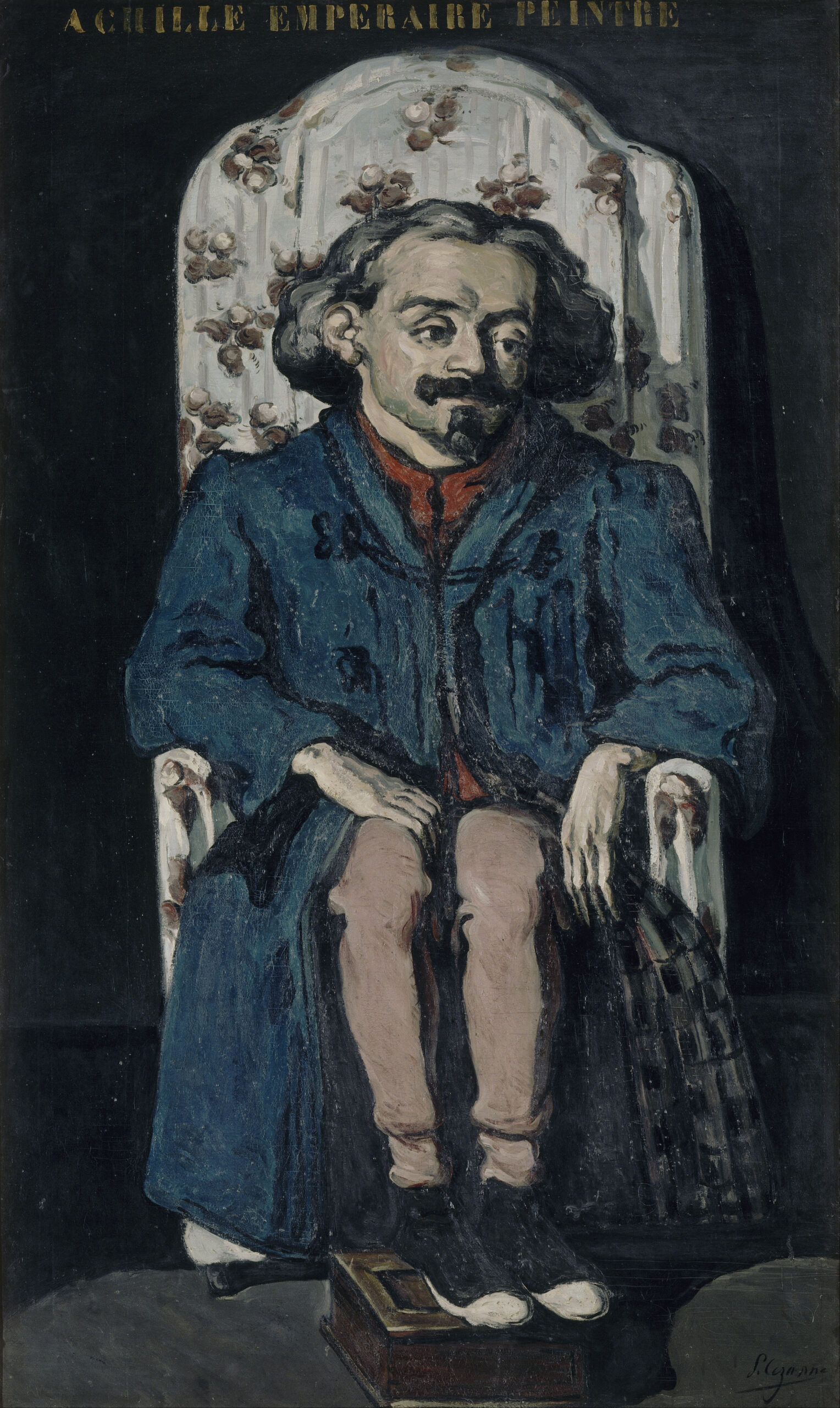
Achille Emperaire, born Jean Joseph Achille Emperaire on September 16, 1829, in Aix-en-Provence, France, was a French painter whose life and career were marked by both artistic brilliance and personal misfortune. Despite his significant contributions to the art world, Emperaire remained relatively obscure during his lifetime. His work, characterized by its bold use of form and color, aligns closely with the Impressionist movement, particularly with his friend and compatriot, Paul Cézanne. This article delves into the life, fame, and key highlights of Achille Emperaire’s career, providing detailed insights into his artistic legacy and the historical context in which he lived.
Early Life and Artistic Beginnings
Achille Emperaire was born into modest circumstances in Aix-en-Provence, a town that would later become closely associated with his name. From a young age, Emperaire showed a keen interest in art, but his path to becoming a painter was fraught with difficulties. He suffered from a physical deformity, possibly a form of dwarfism, which affected his growth and caused him lifelong challenges both physically and socially.
Despite these hardships, Emperaire pursued his passion for art. He studied at the École des Beaux-Arts in Aix-en-Provence, where he honed his skills in drawing and painting. His early works reflected his classical training, with a particular emphasis on portraiture and still life. However, Emperaire’s style began to evolve as he became increasingly influenced by the burgeoning Impressionist movement.
Friendship with Paul Cézanne
One of the most significant relationships in Emperaire’s life was his friendship with Paul Cézanne, another native of Aix-en-Provence who would go on to become one of the most celebrated figures in modern art. The two artists shared a deep mutual respect and influenced each other’s work in profound ways. Cézanne’s innovative approach to form and color had a lasting impact on Emperaire, encouraging him to explore new artistic techniques and themes.
Cézanne and Emperaire’s friendship was also rooted in their shared outsider status within the French art world. Both artists struggled to gain recognition during their lifetimes, often facing rejection from the official art institutions of the time, such as the Salon de Paris. This rejection only strengthened their resolve to pursue their unique artistic visions, even if it meant working in relative obscurity.
Artistic Style and Contributions
Achille Emperaire’s work is characterized by its bold use of form and a distinct preference for curvilinear shapes, which set him apart from many of his contemporaries. His paintings often feature intense, saturated colors and a strong emphasis on the physicality of his subjects. Emperaire was particularly drawn to the human figure, and his portraits are notable for their psychological depth and emotional intensity.
One of Emperaire’s most famous works is his self-portrait, which was painted in a style that reflected both his personal struggles and his defiance against societal norms. The portrait, which shows Emperaire seated with a dignified yet melancholic expression, captures the essence of an artist who, despite his physical limitations and societal marginalization, maintained a profound sense of self-worth and artistic purpose.
Emperaire’s work also extended to landscapes and still lifes, where his approach to composition and color revealed his deep understanding of the natural world and his ability to convey its beauty in new and unexpected ways. His paintings often depicted the countryside around Aix-en-Provence, with its rugged terrain and vibrant light, rendered in a style that was both realistic and imbued with a sense of personal emotion.
Challenges and Lack of Recognition
Despite his talent, Achille Emperaire’s career was overshadowed by personal misfortune and a lack of commercial success. His physical deformity and unconventional appearance led to social isolation and limited opportunities within the art world. The French art establishment, which was heavily influenced by academic traditions, largely ignored Emperaire’s work, and he struggled to gain the recognition that many of his peers received.
Emperaire’s financial situation was often precarious, and he lived much of his life in poverty. He was forced to sell his paintings for minimal amounts, and many of his works were either lost or remained in private collections, unknown to the broader public. This lack of recognition during his lifetime was a source of deep frustration for Emperaire, who believed strongly in the value and significance of his work.
The Influence of Impressionism
Although Achille Emperaire is not as widely recognized as some of his contemporaries, his work is closely aligned with the principles of Impressionism. The movement, which emerged in the late 19th century, was characterized by a focus on light, color, and everyday subjects, often depicted in a loose, expressive style. Emperaire’s approach to painting, particularly his use of vibrant colors and fluid forms, reflects these key aspects of Impressionism.
Emperaire’s friendship with Cézanne also placed him in the orbit of the broader Impressionist movement, even though he never fully participated in the formal exhibitions that defined the group. Nevertheless, his work embodies the spirit of innovation and experimentation that was central to Impressionism, and his contributions to the movement, though less recognized, are significant.
Legacy and Posthumous Recognition
Achille Emperaire passed away on January 8, 1898, in his hometown of Aix-en-Provence. He was 67 years old. At the time of his death, Emperaire was largely unknown outside of a small circle of friends and fellow artists, and his work remained in relative obscurity for many years.
However, the legacy of Achille Emperaire began to gain recognition in the years following his death, largely due to the efforts of Paul Cézanne and other artists who admired his work. Cézanne, who had painted a famous portrait of Emperaire, often spoke of his friend’s talent and the injustices he faced. This portrait, which depicts Emperaire seated on a grand throne-like chair, is a powerful tribute to the artist’s dignity and perseverance.
Today, Emperaire’s work is appreciated for its originality and its contribution to the development of modern art. His paintings can be found in several museums and private collections, where they are studied and admired by art historians and enthusiasts alike. Although he did not achieve fame during his lifetime, Emperaire’s work has earned a place in the history of French art, recognized for its unique vision and emotional depth.
Conclusion: The Art and Life of Achille Emperaire
Achille Emperaire’s life is a testament to the challenges and rewards of pursuing one’s artistic vision in the face of adversity. Despite his physical limitations and the many obstacles he encountered, Emperaire remained committed to his art, creating works that continue to resonate with audiences today.
His friendship with Paul Cézanne, his alignment with the Impressionist movement, and his distinctive style all contribute to a legacy that, while overshadowed during his lifetime, has come to be appreciated in the context of modern art. Achille Emperaire’s story is one of resilience, creativity, and the enduring power of art to transcend the limitations of the human condition.
As we reflect on the life and work of Achille Emperaire, we are reminded of the importance of recognizing and celebrating the contributions of artists who, despite facing significant challenges, have left an indelible mark on the world of art. Emperaire’s legacy is one of quiet strength and unyielding dedication to his craft, qualities that continue to inspire and inform the study of art history.


