
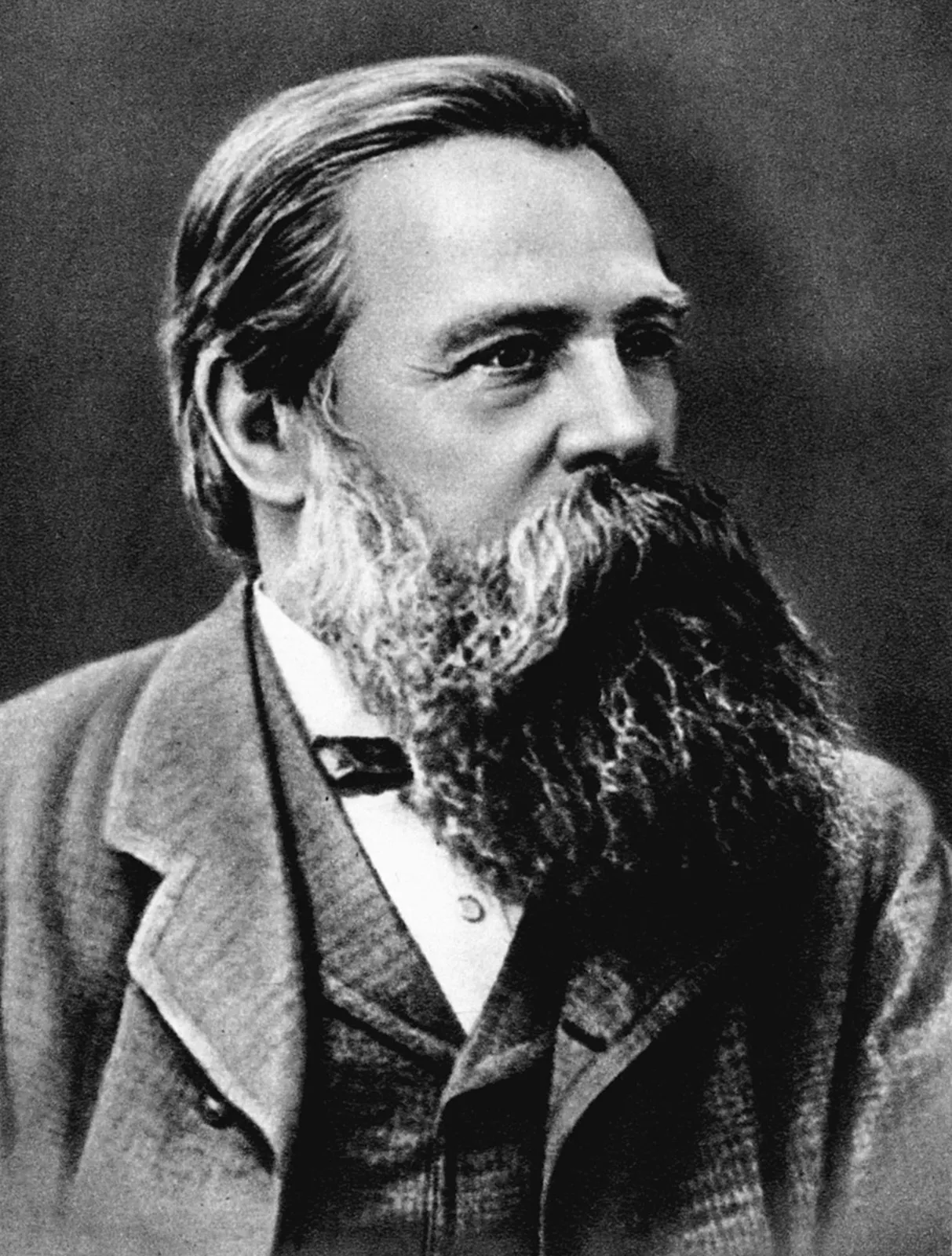
Friedrich Engels, born on November 28, 1820, in Barmen, Germany, was a revolutionary thinker, philosopher, and social scientist. Known for his collaboration with Karl Marx, Engels played a crucial role in the development of Marxist theory and the critique of capitalist society. His contributions to political philosophy and his influence on socialist movements around the world have left an enduring legacy. This article delves into the life, work, and historical significance of Friedrich Engels, offering detailed insights into his journey, his intellectual development, and the impact he had on the world.
Early Life and Education
Friedrich Engels was born into a prosperous family, with his father owning a textile manufacturing business. This privileged background provided Engels with a unique perspective on the capitalist system, as he witnessed the contradictions and inequalities inherent in industrial society from an early age. Despite his family’s wealth, Engels was exposed to the harsh realities of life for the working class, which would later fuel his passion for social justice.
In 1837, at the age of 17, Engels was withdrawn from school by his father, who adhered to the Pietist religious movement, which discouraged secular education and worldly pursuits. This decision marked the end of Engels’ formal education, but it did not dampen his intellectual curiosity. Instead, Engels began working in his father’s business, gaining firsthand experience of the capitalist system that he would later critique so fiercely.
While working in Bremen in 1838, Engels became deeply involved in political and philosophical discussions. He was particularly influenced by the Young Hegelians, a group of radical thinkers who sought to challenge traditional religious and political authority. Engels also developed an interest in literature, music, and poetry, further broadening his intellectual horizons.
First Steps into Political Activism
Engels’ early experiences in the business world, combined with his growing political awareness, led him to become increasingly critical of the social and economic conditions in Germany. He began writing articles for the “Telegraph für Deutschland,” a newspaper that provided a platform for his emerging political views. One of his early works, “Letters from Wuppertal,” offered a scathing critique of the living and working conditions of the factory workers in the Wuppertal region. Engels highlighted the exploitation of child labor and the brutal conditions faced by the working class, setting the stage for his lifelong commitment to the cause of workers’ rights.
During this period, Engels also wrote a critical analysis of the German poet Friedrich Schiller and a critique of the playwright August von Kotzebue, demonstrating his literary talents and his ability to engage with cultural and philosophical debates.
In 1841, Engels moved to Berlin to fulfill his military service. While in Berlin, he continued to write, focusing on the political ideas of Friedrich Hegel and Friedrich Schelling. Engels criticized Hegel for abandoning progressive political ideals in favor of conservative principles, and he took issue with Schelling’s embrace of mysticism and dogma. These critiques reflected Engels’ growing commitment to a materialist and dialectical approach to philosophy, which would later form the basis of his collaboration with Karl Marx.
The Move to England and Meeting Karl Marx
After completing his military service, Engels moved to Manchester, England, in 1842 to work at a branch of his father’s textile business, Ermen & Engels. It was in Manchester, one of the centers of the Industrial Revolution, that Engels was exposed to the extreme poverty and squalor experienced by the working class. This experience had a profound impact on him, solidifying his resolve to fight against the injustices of the capitalist system.
During his time in Manchester, Engels met Mary Burns, an Irish working-class woman who became his companion and provided him with further insights into the lives of the poor and oppressed. Engels also established connections with leading socialists and radicals in England, including Robert Owen, the founder of the cooperative movement, and Julian Harney, the editor of the “Northern Star,” a newspaper associated with the Chartist movement.
In 1844, while returning to Germany, Engels stopped in Paris, where he met Karl Marx for the first time. This meeting marked the beginning of one of the most significant intellectual partnerships in history. Engels and Marx quickly became close friends and collaborators, sharing a common vision of a society free from exploitation and oppression. They began working together on a series of writings that would lay the foundation for Marxist theory.
Collaboration with Karl Marx: The Communist Manifesto
The collaboration between Engels and Marx reached its zenith with the publication of “The Communist Manifesto” in 1848. Commissioned by the Communist League, a revolutionary socialist organization, the manifesto outlined the principles of communism and called for the overthrow of the bourgeoisie by the proletariat. The manifesto famously begins with the words, “A spectre is haunting Europe—the spectre of communism.”
In “The Communist Manifesto,” Engels and Marx argued that history is the history of class struggles, and that the bourgeoisie, through its control of the means of production, had subjugated the proletariat. They contended that the only way to end this exploitation was through a revolution led by the working class, which would establish a dictatorship of the proletariat and pave the way for a classless, communist society.
The publication of the manifesto coincided with a wave of revolutionary uprisings across Europe in 1848, often referred to as the “Springtime of Nations.” Engels and Marx actively participated in these movements, with Engels returning to Germany to join the revolutionary struggle in the Rhineland. He and Marx co-edited the “Neue Rheinische Zeitung,” a radical newspaper that supported the revolution and called for the overthrow of the existing political order.
However, the revolutions of 1848 ultimately failed, and the forces of reaction regained control across Europe. Engels and Marx were forced to flee Germany, eventually settling in England, where they would continue their work as revolutionaries and theorists.
Later Works and Contributions to Marxism
Following the failure of the 1848 revolutions, Engels returned to Manchester, where he resumed his work at the family business. Despite his responsibilities in the business world, Engels remained deeply committed to the cause of socialism. He continued to write extensively, contributing to Marx’s seminal work, “Das Kapital,” and authoring several important works of his own.
One of Engels’ most significant contributions during this period was his book “The Condition of the Working Class in England,” published in 1845. Based on his observations in Manchester, the book provided a detailed and harrowing account of the lives of the working class in England. Engels described the appalling conditions in the factories, the overcrowded slums, and the widespread poverty and disease that plagued the urban poor. The book was a powerful indictment of the capitalist system and a call to arms for the working class to rise up and demand their rights.
Engels also played a key role in the development of Marxist theory, particularly in the areas of historical materialism and dialectical materialism. He worked closely with Marx to refine and articulate the principles of Marxism, which would go on to influence socialist movements around the world.
After Marx’s death in 1883, Engels took on the responsibility of editing and publishing the remaining volumes of “Das Kapital.” He also continued to write and engage with the international socialist movement, playing a leading role in the establishment of the Second International in 1889. The Second International was a federation of socialist parties and trade unions from various countries, and it played a crucial role in the spread of socialist ideas and the organization of the working class.
Legacy and Historical Impact
Friedrich Engels’ contributions to political philosophy, economics, and social theory have had a profound and lasting impact on the world. His work, particularly in collaboration with Karl Marx, laid the foundations for modern socialism and communism. The ideas he helped to develop have inspired countless movements for social justice, labor rights, and political revolution.
Engels’ analysis of capitalism, with its emphasis on class struggle and the exploitation of labor, remains relevant to this day. His writings continue to be studied and debated by scholars, activists, and political leaders around the world. Engels’ vision of a society based on equality, justice, and the common ownership of the means of production continues to resonate with those who seek to challenge the inequalities and injustices of the modern world.
Engels’ legacy is not without controversy, however. The application of Marxist theory in various countries during the 20th century led to the establishment of regimes that often diverged from the democratic and emancipatory ideals that Engels and Marx had envisioned. The association of Marxism with authoritarianism and repression has led to a reevaluation of Engels’ ideas in recent years. Nonetheless, Engels remains a towering figure in the history of political thought, and his work continues to inspire and challenge those who seek to understand and transform the world.
Conclusion: The Enduring Influence of Friedrich Engels
Friedrich Engels was a thinker, writer, and activist whose life and work left an indelible mark on the history of political thought. From his early experiences in the industrial heartlands of Germany and England to his collaboration with Karl Marx on “The Communist Manifesto” and “Das Kapital,” Engels played a central role in the development of Marxist theory and the critique of capitalism.
Engels’ insights into the nature of class struggle, his analysis of the conditions of the working class, and his commitment to the cause of socialism have made him a key figure in the history of the labor movement and the fight for social justice. His work continues to be relevant in the 21st century, as debates about inequality, capitalism, and the future of socialism persist.
As we reflect on the life and legacy of Friedrich Engels, we are reminded of the power of ideas to shape the course of history. Engels’ vision of a world free from exploitation and oppression remains a powerful and inspiring ideal, one that continues to resonate with those who seek to build a more just and equitable society.


