
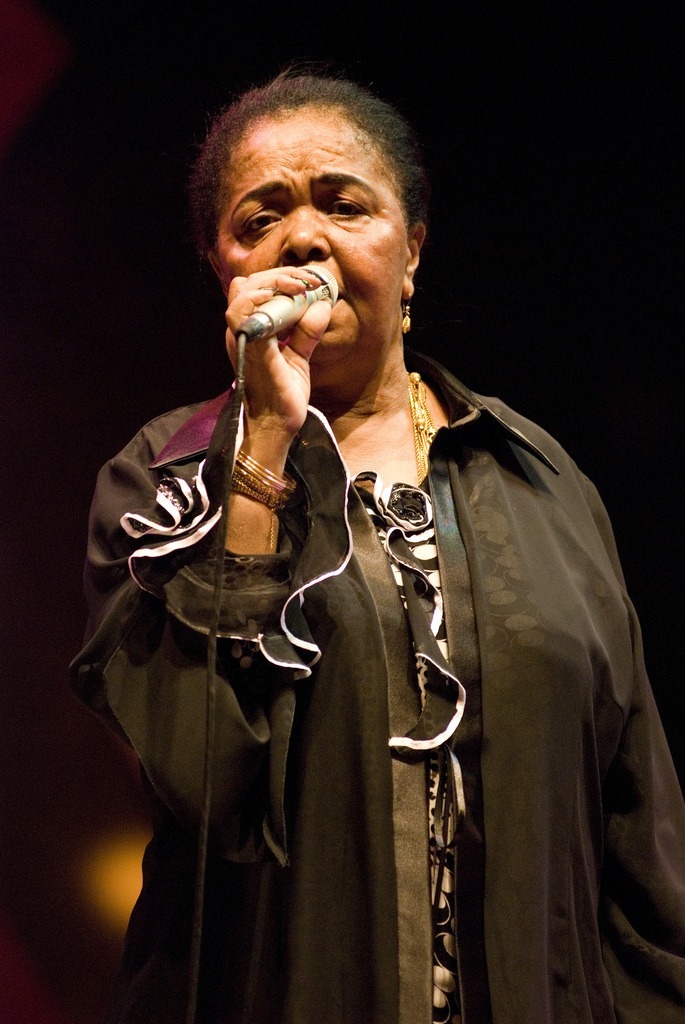
Introduction to Cesaria Evora
Cesaria Evora, often referred to as the “Barefoot Diva,” is a name synonymous with the soulful and melancholic rhythms of morna, a music genre that uniquely blends African percussion with Portuguese fado, Brazilian music, and British sea shanties. Born on August 27, 1941, in Mindelo, on the island of São Vicente, Cape Verde, Evora’s journey to international stardom was anything but conventional. Her life story is a testament to resilience, passion, and the transcendent power of music.
Early Life and Struggles
Growing up in Cape Verde, a small island nation off the coast of West Africa, Cesaria Evora’s early years were marked by economic hardship. São Vicente, where she was born, was a melting pot of cultures due to its role as a colonial trading port. This cultural diversity deeply influenced Evora’s musical development, exposing her to various styles and rhythms from a young age.
Evora’s family life was challenging. Her father, who passed away when she was just seven, left the family struggling to make ends meet. As a result, she was sent to an orphanage at the age of ten, where she received basic education but was also introduced to music, learning to sing as part of the institution’s choir. This early exposure to music planted the seeds of what would later become her lifelong career.
By the time she was in her teens, Evora was already performing in local bars and on Cape Verdean radio. Despite her growing popularity in her homeland, the prospect of a professional singing career seemed out of reach. Cape Verde’s isolation and limited resources made it difficult for artists to gain international recognition.
The Journey to Fame
Evora’s break came in 1988 when José da Silva, a young Frenchman of Cape Verdean descent, discovered her while she was performing in a bar. Da Silva, recognizing her extraordinary talent, persuaded her to move to Paris and record an album. At the age of 47, Cesaria Evora embarked on a journey that would change her life forever. Her first album, “La Diva Aux Pieds Nus” (“The Barefoot Diva”), was released that same year. The title referred to her habit of performing without shoes, a nod to her humble beginnings and solidarity with the poor.
The album was a modest success, especially among the Cape Verdean diaspora, but it didn’t immediately catapult her to stardom. It was her second album, “Distino di Belata,” released two years later, that began to attract a wider audience. The album featured a mix of traditional morna and more upbeat coladeira songs, showcasing Evora’s versatility as a singer.
However, it was not until the release of “Mar Azul” in 1991 that Evora began to gain significant attention in Europe. The album was well-received, especially in France, where it was heavily promoted by Radio France and other European stations. Her concerts at the New Morning Club in Paris were sold out, attracting a diverse audience that included both Cape Verdeans and Europeans.
International Breakthrough: “Miss Perfumado”
The pivotal moment in Cesaria Evora’s career came with the release of her 1992 album, “Miss Perfumado.” This album became a massive success, selling over 300,000 copies worldwide. It featured some of her most iconic songs, including “Sodade,” which became a signature tune and an anthem for the Cape Verdean diaspora. “Miss Perfumado” showcased Evora’s deep, emotive voice and her ability to convey profound emotion through her music.
The success of “Miss Perfumado” catapulted Evora to international fame. Critics compared her to legendary jazz and blues singers like Billie Holiday, noting the raw emotion and authenticity in her performances. Evora’s music, steeped in the traditions of Cape Verde, resonated with audiences around the world, transcending language and cultural barriers.
Her newfound fame led to collaborations with prominent artists, including Caetano Veloso, a Brazilian music icon who accompanied her on stage in São Paulo in what was considered a historic performance. Veloso’s endorsement further solidified her status as a global music star. Her influence extended beyond the Lusophone world, reaching audiences in Spain, Belgium, Switzerland, Africa, and the Caribbean.
Grammy Recognition and Global Tours
In the mid-1990s, Cesaria Evora’s popularity continued to soar. She signed a contract with BMG through Lusafrica, her record label, and released the anthology “Sodade, Les Plus Belles Mornas de Cesaria Evora” in 1994. The compilation was well-received and helped introduce her music to an even broader audience.
That same year, she released the album “Cesaria,” which went on to achieve gold status in France and became an international success, particularly in the United States. The album earned her a Grammy Award nomination, a significant milestone for any artist, but especially for one from such a small and isolated country as Cape Verde.
Evora’s connection with her audience was unparalleled. She was known for her love of performing live, and despite her relatively late start in the music industry, she embarked on numerous international tours. Her first tour of the United States was met with critical acclaim and attracted a diverse fan base, including celebrities like Madonna, David Byrne, and Branford Marsalis. These tours helped to solidify her reputation as one of the world’s leading world music artists.
Later Career and Continued Success
As Evora’s career progressed, she continued to record and perform at a frenetic pace. Her collaboration with Goran Bregović, a renowned composer of Balkan music, on the song “Ausencia” for the soundtrack of the film “Underground,” directed by Emir Kusturica, further expanded her international appeal. This collaboration, along with a grueling tour schedule that took her to France, Switzerland, Belgium, Brazil, Germany, Hong Kong, Italy, Sweden, the United States, Canada, Senegal, Côte d’Ivoire, and the United Kingdom, demonstrated her global reach.
In the late 1990s, Evora’s influence in the world music scene was undeniable. She was celebrated not only for her music but also for her distinctive style and persona. Often performing barefoot as a tribute to the poor of Cape Verde, Evora became a symbol of resilience and authenticity. Her humility, despite her global success, endeared her to fans worldwide.
Her album “Café Atlantico,” released in 1999, continued to receive critical acclaim, further solidifying her legacy. The album was a celebration of the diverse influences that shaped her music, from the Portuguese fado to the Brazilian samba, reflecting the rich cultural tapestry of her homeland.
Health Challenges and Final Years
Despite her success, Cesaria Evora faced significant health challenges in the latter part of her life. In 2008, she suffered a stroke while on tour in Australia, which forced her to take a temporary break from performing. However, she made a remarkable recovery and returned to the stage, much to the delight of her fans.
In 2010, she released her final album, “Cesaria Evora &,” a collection of duets with various international artists. The album was a testament to her enduring appeal and her ability to connect with musicians from different genres and backgrounds.
However, her health continued to decline, and in September 2011, Evora announced her retirement from the music industry. Just a few months later, on December 17, 2011, Cesaria Evora passed away in her hometown of Mindelo, Cape Verde, at the age of 70. Her death was a significant loss to the world of music, but her legacy lives on through her recordings and the countless artists she inspired.
Legacy and Impact
Cesaria Evora’s contribution to music goes beyond her recordings and performances. She played a crucial role in bringing Cape Verdean music to the world stage, making morna and coladeira globally recognized genres. Her music, deeply rooted in the culture and history of Cape Verde, resonated with people worldwide, transcending language and cultural differences.
Evora’s success also had a profound impact on Cape Verde, raising awareness of the country and its culture. She became a cultural ambassador for Cape Verde, helping to put the small island nation on the map and inspiring a new generation of Cape Verdean musicians to pursue their dreams.
Today, Cesaria Evora is remembered as one of the greatest voices in world music. Her story is one of perseverance, talent, and the power of music to connect people across the globe. She remains a beloved figure in Cape Verde and continues to be celebrated by fans around the world.
In the years since her passing, Evora’s music has continued to inspire new audiences. Her recordings are still widely listened to, and her influence can be seen in the work of many contemporary artists. She has been posthumously honored with numerous awards and tributes, ensuring that her legacy will endure for generations to come.


