
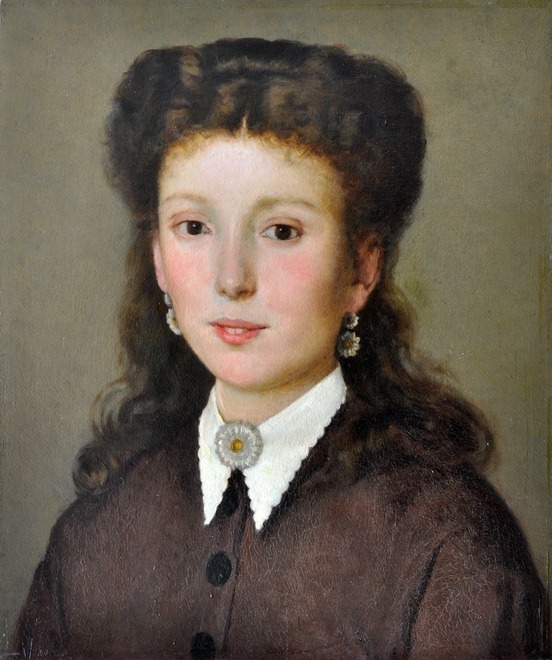
Maria Virginia Fabroni, born on December 2, 1851, in Tredozio, a small town in the province of Forlì-Cesena, Italy, is a historical figure whose life and work have left an indelible mark on Italian literature and culture. Fabroni’s story is one of passion for poetry, a struggle for personal autonomy, and a commitment to the ideals of the Risorgimento, the movement that led to the unification of Italy. Her short but impactful life has been a source of inspiration and scholarly interest, particularly in the context of women’s roles in 19th-century Italy.
Early Life and Education
Born into an affluent family, Maria Virginia Fabroni’s early life was marked by privilege but also by the expectations and constraints typical of her era. Her father, Giuseppe Fabroni, was a physician who valued education, which led him to send Maria Virginia to the Conservatorio S. Anna in Pisa when she was just 11 years old. The Conservatorio, a prestigious institution with noble traditions, offered her a comprehensive education that included music, particularly the study of the harpsichord, from which she would graduate in 1868.
However, it was during her years in Pisa that Fabroni discovered her true passion: literature, and more specifically, poetry. While she excelled in her musical studies, it was the world of Italian literature that captivated her. She immersed herself in the works of Italy’s greatest poets, including Dante Alighieri, Francesco Petrarca, and Torquato Tasso, as well as more contemporary figures like Ugo Foscolo, Alessandro Manzoni, and Giacomo Leopardi. This early exposure to the literary giants of Italy fueled her own poetic ambitions and set the stage for her future contributions to Italian letters.
Early Literary Success and the Risorgimento Influence
Maria Virginia Fabroni’s literary career began at an impressively young age. In 1869, at just 18 years old, she published her first collection of poems titled Ricordo. This collection, composed largely during her time at the Conservatorio, was dedicated to Cavaliere Ingegnere Paolo Folini, the president of the Conservatorio, who had recognized and nurtured her intellectual talents.
The publication of Ricordo was not just an artistic achievement but also a testament to Fabroni’s growing involvement in the intellectual circles of the time. Pisa, being a university city, provided her with the opportunity to engage with broader cultural and political ideas, particularly those of the Risorgimento—a movement dedicated to the unification of Italy. Fabroni’s poetry began to reflect the ideals of this movement, characterized by a deep sense of patriotism and a commitment to civil rights. Her correspondence with prominent intellectuals and artists of the period, such as Niccolò Tommaseo and Giannina Milli, as well as her interactions with the composer Errico Petrella and the painter Silvestro Lega, further enriched her intellectual development.
A Poet’s Struggle for Autonomy
Maria Virginia Fabroni’s poetry was not only a reflection of her literary influences but also a means of asserting her personal autonomy in a society that placed significant restrictions on women. Her father, Giuseppe Fabroni, despite his support for her education, sought to arrange a marriage for her with a man she did not love. This was a common practice in 19th-century Italy, where marriages were often arranged to consolidate family wealth and social standing rather than based on personal affection.
Fabroni’s resistance to this arranged marriage was not just a personal rebellion but also an act of defiance against the societal norms of her time. Her poetry became a vehicle for expressing her desire for personal freedom and her belief in the autonomy of women. This stance was particularly bold in a period when filial obedience was highly valued, and women’s roles were largely confined to the domestic sphere.
Despite the challenges, Fabroni’s resolve to live according to her own principles did not waver. She managed to secure an engagement to the man she loved, setting the date for their wedding. Tragically, this happiness was short-lived. On August 10, 1878, just three months before her wedding, Maria Virginia Fabroni passed away from tuberculosis at the age of 26.
Literary Contributions and Legacy
Maria Virginia Fabroni’s literary output, though limited by her untimely death, has left a lasting legacy. Her poems are characterized by a deep emotional intensity and a commitment to the ideals of freedom and national unity. Among her most famous works are A Italia and Tre fiori colti sulla rocca di Solferino, both of which reflect her patriotic fervor and her support for the unification of Italy.
Her poem A Italia is a passionate plea for national unity, celebrating the achievements of the Risorgimento and condemning the forces that sought to divide the newly unified nation. Tre fiori colti sulla rocca di Solferino is similarly inspired by the events of the Italian Wars of Independence, with a focus on the sacrifices made by those who fought for Italy’s freedom.
Fabroni’s work was not only appreciated in her lifetime but has also been the subject of scholarly study in the years since her death. Her poetry has been recognized for its historical significance, particularly in its advocacy for the unification of Italy and its reflection of the social and political climate of the time.
In an article from the early 1900s, journalist Giovanni Mini wrote about Fabroni’s remarkable intellect and poetic talent:
“… the miraculous intelligence, the precocious development, and the fervent imagination, combined with the rare virtues of a delicate and gentle soul, soon made her revered and worthy of a place of honor among the chosen poetesses of her time, and of the highest esteem in the literary world. While still alive, she heard people speak of her with feelings of great astonishment, about her intellectual wonders; and, not yet eighteen years old, she received enviable applause from the press and the most prominent scholars of contemporary Italy, with whom she later had a close relationship, so much so that she was included in several Academies not only in Tuscany but also in Italy.“
Historical Context and Social Impact
Maria Virginia Fabroni’s life and work must be understood within the broader context of 19th-century Italy, a period marked by significant social, political, and cultural changes. The Risorgimento, which culminated in the unification of Italy in 1861, was not just a political movement but also a cultural one. It sought to forge a new national identity, one that was inclusive of all Italians, regardless of regional differences.
In this context, Fabroni’s poetry can be seen as part of the broader effort to define what it meant to be Italian in a newly unified nation. Her work celebrated the achievements of the Risorgimento and articulated a vision of Italy that was united, free, and progressive. This was a vision that resonated with many of her contemporaries, who were grappling with the challenges of building a new nation.
Fabroni’s commitment to personal autonomy and her advocacy for women’s rights, though not as explicitly political as her nationalist writings, were also significant. In a society where women’s roles were largely confined to the domestic sphere, Fabroni’s insistence on her right to choose her own path was a radical act. Her life and work have since been recognized as an important part of the history of women’s rights in Italy.
Conclusion
Maria Virginia Fabroni’s life, though tragically short, was one of remarkable achievement and enduring influence. As a poet, she contributed to the cultural life of 19th-century Italy, using her work to celebrate the ideals of the Risorgimento and to advocate for the rights of women. Her poetry, characterized by its emotional depth and intellectual rigor, continues to be studied and appreciated today.
Fabroni’s legacy is a testament to the power of art to effect change, both in the personal and political spheres. Her life story, marked by a fierce commitment to personal freedom and a deep love for her country, remains an inspiration to those who seek to understand the complexities of Italy’s past and the role of women in shaping its history.


