
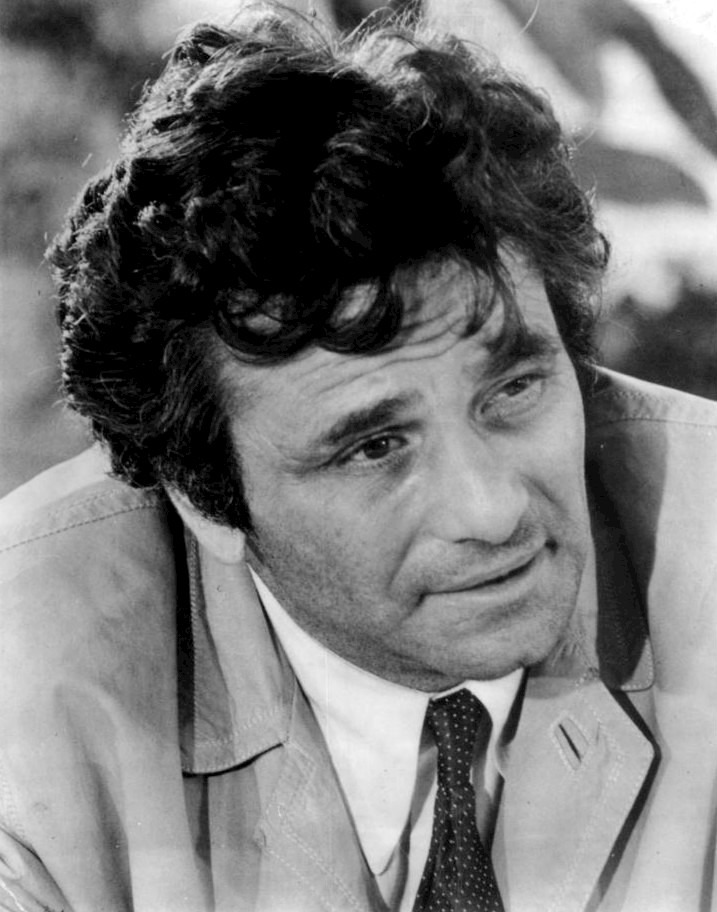
Peter Falk was an iconic American actor best known for his portrayal of the rumpled yet brilliant detective, Lieutenant Columbo, in the long-running television series “Columbo.” Born on September 16, 1927, in New York City, Falk’s career spanned several decades, and he became one of the most beloved and recognizable figures in television history. His work, both on the small and big screens, left an indelible mark on American culture.
Early Life and Education
Peter Michael Falk was born to Michael and Madeline Falk in New York City. His father owned a clothing and dry goods store, while his mother was an accountant and buyer. Peter’s early life was marked by a significant challenge: at the age of three, he was diagnosed with retinoblastoma, a rare form of eye cancer, which led to the removal of his right eye. This resulted in his distinctive appearance, characterized by a glass eye and a slight squint, which would later become a part of his screen persona.
Despite this early setback, Falk was determined to lead a normal life. He attended Ossining High School in New York, where he was active in sports and even served as the president of his class. After high school, Falk attended Hamilton College in upstate New York but later transferred to the New School for Social Research in Manhattan. He eventually earned a Bachelor of Arts degree in political science from the New School and later a Master of Public Administration degree from Syracuse University. His academic pursuits initially led him to a job as a management analyst for the Connecticut State Budget Bureau.
A Shift to Acting
Falk’s career path took an unexpected turn when he decided to pursue acting. Dissatisfied with his government job, Falk began studying acting at the White Barn Theatre in Westport, Connecticut. Encouraged by his teacher, Falk quit his job and moved to New York City to pursue acting full-time. He studied under renowned acting coach Eva Le Gallienne and began to build a career in theater.
Falk’s stage career took off in the 1950s, where he gained experience in Off-Broadway productions and summer stock theater. His natural talent and unique screen presence soon caught the attention of television and film producers. By 1957, Falk had made his television debut, appearing in numerous live dramas that were a staple of the era’s TV programming.
Breakthrough in Television and Film
Peter Falk’s breakthrough in film came with his performance in Nicholas Ray’s 1958 film “Wind Across the Everglades.” However, it was his role as a gangster in the 1960 film “Murder, Inc.” that truly brought him critical acclaim. Falk’s portrayal of the vicious killer Abe Reles earned him an Academy Award nomination for Best Supporting Actor. He followed this success with another Oscar nomination for his role in “Pocketful of Miracles” (1961), directed by Frank Capra.
Despite his success in film, Falk found his true calling on television. In 1967, he was cast as Lieutenant Columbo, a role that would define his career. The character of Columbo, with his unassuming demeanor, shabby raincoat, and relentless pursuit of justice, became one of the most iconic figures in television history. The first episode of “Columbo” aired as part of the “NBC Mystery Movie” series in 1971, and the show quickly became a hit. Falk’s portrayal of the detective, who outwitted criminals with his deceptively simple questioning, resonated with audiences and made him a household name.
Columbo’s success was due in large part to Falk’s performance, which blended humor, intelligence, and an everyman quality that made the character endearing and relatable. The series ran from 1971 to 1978 and was revived several times in the following decades, with new episodes airing as late as 2003. Falk won four Primetime Emmy Awards for his portrayal of Columbo, cementing his place in television history.
Collaborations with John Cassavetes
While “Columbo” made Falk a television star, he continued to pursue challenging roles in film, often collaborating with his close friend, the acclaimed director John Cassavetes. The two worked together on several projects, including “Husbands” (1970), “A Woman Under the Influence” (1974), and “Mikey and Nicky” (1976). These films showcased Falk’s range as an actor, allowing him to explore complex characters and deep emotional narratives.
In “Husbands,” Falk, along with Cassavetes and Ben Gazzara, played one of three middle-aged men who go on a reckless spree after the death of a close friend. The film was notable for its improvisational style and raw emotional depth, characteristics that became hallmarks of Cassavetes’ work. “A Woman Under the Influence,” in which Falk played the husband of a woman struggling with mental illness, was another critical success and earned Cassavetes an Academy Award nomination for Best Director.
Falk’s collaborations with Cassavetes were some of the most artistically rewarding of his career. The director’s approach to filmmaking, which emphasized improvisation and emotional honesty, brought out some of Falk’s finest performances and showcased his ability to delve into complex and troubled characters.
Iconic Roles and Cultural Impact
Beyond “Columbo,” Peter Falk’s filmography includes a variety of roles that demonstrate his versatility as an actor. He appeared in comedies such as “The In-Laws” (1979), where he played a CIA operative opposite Alan Arkin, and the cult classic “Murder by Death” (1976), a parody of detective fiction in which Falk played a Sam Spade-like detective named Sam Diamond.
One of Falk’s most memorable roles outside of Columbo was in Wim Wenders’ “Wings of Desire” (1987), a critically acclaimed German film in which Falk played a fictionalized version of himself. In the film, Falk is revealed to be a former angel who has chosen to become human, a character that added a metaphysical layer to his screen persona. The film’s success led to a sequel, “Faraway, So Close!” (1993), in which Falk reprised his role.
Falk also lent his voice to the beloved 1987 film “The Princess Bride,” where he played the role of the kindly grandfather who narrates the story to his sick grandson. His warm, engaging narration added a layer of charm and nostalgia to the film, making it a favorite among audiences of all ages.
Personal Life and Later Years
Peter Falk was married twice. His first marriage was to Alice Mayo in 1960, with whom he adopted two daughters, Catherine and Jackie. The couple divorced in 1976. In 1977, Falk married actress Shera Danese, who appeared alongside him in several episodes of “Columbo.” The couple remained married until Falk’s death.
In his later years, Falk continued to work in television and film, though his health began to decline in the mid-2000s. In 2008, it was reported that Falk was suffering from Alzheimer’s disease, a diagnosis that brought an end to his acting career. As his condition worsened, his family became embroiled in a legal battle over his care, which highlighted the difficulties faced by families dealing with Alzheimer’s.
Peter Falk passed away on June 23, 2011, at the age of 83, at his home in Beverly Hills. His death marked the end of a remarkable career that had touched the lives of millions of people around the world. Falk’s portrayal of Columbo had become so iconic that the character was included in various “greatest TV characters of all time” lists, solidifying his legacy as one of television’s most enduring figures.
Legacy and Cultural Influence
Peter Falk’s legacy extends far beyond his role as Lieutenant Columbo. His ability to bring depth and humanity to every character he portrayed made him one of the most respected actors of his generation. Falk’s work in film, particularly his collaborations with John Cassavetes, demonstrated his commitment to the craft of acting and his willingness to take on challenging and unconventional roles.
Falk’s impact on popular culture is undeniable. The character of Columbo has become a cultural icon, inspiring parodies, homages, and references in countless television shows, films, and other media. Falk’s portrayal of the detective—unassuming, persistent, and brilliant—resonated with audiences because it broke the mold of the traditional television detective. Columbo was not a hero because of his physical prowess or his ability to outgun the bad guys, but because of his intellect, his humility, and his unwavering sense of justice.
Moreover, Falk’s success as an actor with a visible disability—his glass eye—challenged traditional notions of Hollywood leading men and opened doors for more diverse representations in film and television. Falk’s performances were a testament to the idea that talent and determination can overcome physical limitations and that true character shines through regardless of appearance.
Conclusion
Peter Falk’s life and career were marked by a series of remarkable achievements that spanned the worlds of television, film, and theater. From his early days in New York to his iconic role as Lieutenant Columbo, Falk’s work has left a lasting impression on audiences and has become an integral part of American cultural history. His legacy continues to inspire actors, filmmakers, and fans, reminding us of the enduring power of a well-crafted character and the impact one actor can have on the world.
Falk’s portrayal of Columbo, with all its nuances and quirks, remains a benchmark for television detectives and a beloved figure for millions. As an actor, he brought authenticity, depth, and a unique charm to every role, ensuring his place among the greats of Hollywood. Peter Falk’s contributions to entertainment will be remembered for generations to come, as his characters continue to captivate and entertain audiences around the world.


