
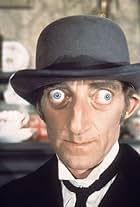
Marty Feldman, a name synonymous with unique humor and unforgettable on-screen presence, has left an indelible mark on the world of comedy. Born in the East End of London in 1934, Feldman’s journey from a jazz trumpet enthusiast to one of the most iconic comedians in history is as compelling as it is inspiring. This article delves into the life and career of Marty Feldman, exploring his rise to fame, the challenges he faced, and the legacy he left behind.
Early Life and Background
Marty Feldman was born to a Jewish family in London, England. His father was a tailor, and his upbringing in the bustling, culturally rich East End of London shaped much of his comedic style. From a young age, Feldman exhibited a strong inclination towards the performing arts, initially gravitating towards music, specifically jazz. By the time he was 15, he had already left school to pursue his passion for playing the trumpet.
However, as fate would have it, Feldman’s true calling was not in music but in comedy. His early exposure to the vibrant entertainment scene in London, coupled with his innate sense of humor, gradually shifted his focus towards the stage. Feldman was particularly influenced by the surreal and absurdist styles of comedic legends like Buster Keaton and the Marx Brothers, who would later serve as inspirations for his own brand of humor.
The Road to Fame
Marty Feldman’s entry into the world of comedy was gradual but steady. His first significant break came when he teamed up with two friends to form a comedy trio called “Morris, Marty, and Mitch.” The trio’s act was heavily influenced by the zany, offbeat humor of the Marx Brothers, which resonated well with audiences. Their performances, filled with sharp wit and surreal elements, set the stage for Feldman’s future success.
In 1954, Feldman met Barry Took, a fellow comedian and writer. The two immediately struck up a creative partnership, collaborating on various comedy scripts for radio shows. Their most notable early work was for the show “Educating Archie,” a popular radio program of the time. Feldman’s sharp writing and keen sense of humor soon earned him a reputation as one of the most promising comedy writers in Britain.
By the late 1950s, Feldman had become a key member of a team of writers who were responsible for generating ideas for some of the most popular radio shows of the era. His work on “The Army Game” and “Bootsie and Snudge” not only showcased his writing talent but also cemented his place in the British comedy scene. These shows, which eventually transitioned from radio to television, helped Feldman gain a wider audience and set the stage for his transition to television comedy.
Transition to Television and International Fame
The 1960s marked a significant turning point in Marty Feldman’s career. His work with the BBC on various television programs brought him to the forefront of British comedy. His unique style—marked by surreal, absurdist humor and a distinctive physical appearance—quickly made him a household name.
Feldman’s first major television success was “At Last the 1948 Show,” a comedy sketch series that he co-wrote and starred in. The show, which also featured future Monty Python members John Cleese, Graham Chapman, and Tim Brooke-Taylor, was a critical and commercial success. It not only showcased Feldman’s comedic genius but also served as a launching pad for several future comedy legends.
Despite his rising fame in Britain, Feldman had yet to make a significant impact on the American entertainment scene. This changed in the late 1960s when he made his U.S. television debut on “The Dean Martin Show.” His appearances on the show were well-received, and Feldman quickly became a favorite among American audiences. This success led to the creation of his own television show, “The Marty Feldman Comedy Machine,” which further solidified his status as an international comedy star.
Physical Challenges and Iconic Look
One of the most distinctive aspects of Marty Feldman’s appearance was his eyes. Due to a severe thyroid condition known as Graves’ disease, Feldman’s eyes protruded in a way that gave him a unique, somewhat exaggerated look. Rather than hide this physical anomaly, Feldman embraced it, using it to enhance his comedic persona.
His appearance became one of his most recognizable features, contributing to his on-screen success. Feldman’s eyes, combined with his expressive face and physical comedy, made him a standout performer in a crowded field of comedians. His ability to turn what could have been a debilitating condition into a comedic asset is a testament to his resilience and creativity.
Marty Feldman and “Young Frankenstein”
While Feldman had already achieved considerable success in both Britain and the United States, it was his role in Mel Brooks’ 1974 film “Young Frankenstein” that truly catapulted him to international stardom. In the film, Feldman played Igor, the hunchbacked assistant to Dr. Frankenstein, portrayed by Gene Wilder.
Feldman’s portrayal of Igor was nothing short of legendary. His performance, characterized by his deadpan delivery, physical comedy, and that unforgettable look, became one of the most memorable aspects of the film. “Young Frankenstein” was a critical and commercial success, and Feldman’s role in it remains one of the most iconic in the history of comedy cinema.
Directorial Ventures and Later Career
Buoyed by the success of “Young Frankenstein,” Feldman ventured into directing. His first film as a director was “The Last Remake of Beau Geste” (1977), a parody of the classic adventure film “Beau Geste.” The film received mixed reviews but showcased Feldman’s versatility and willingness to push comedic boundaries.
Feldman continued to work in both television and film throughout the late 1970s and early 1980s. His other notable works include “The Adventures of Sherlock Holmes’ Smarter Brother” (1975) and “Silent Movie” (1976), both of which were directed by Mel Brooks and featured Feldman in prominent roles. While these films did not achieve the same level of success as “Young Frankenstein,” they further cemented Feldman’s status as a comedy icon.
Tragic End and Legacy
Marty Feldman’s life was tragically cut short when he died of a heart attack in 1982 while filming the movie “Yellowbeard” in Mexico. He was only 48 years old. Despite his relatively short career, Feldman left behind a rich legacy that continues to influence comedians and entertainers to this day.
Feldman’s unique brand of humor, characterized by its surreal and absurd elements, set him apart from his contemporaries. His willingness to embrace his physical appearance and turn it into a comedic asset made him a trailblazer in the world of comedy. Even decades after his death, Feldman’s work remains relevant, and his influence can be seen in the work of comedians and filmmakers who continue to push the boundaries of comedy.
Conclusion
Marty Feldman was more than just a comedian; he was a pioneer who redefined what it meant to be funny. His ability to blend physical comedy with sharp wit and surreal humor made him a standout performer in both British and American entertainment. Despite the challenges he faced, including his battle with Graves’ disease, Feldman never let anything stand in the way of his passion for comedy.
His roles in “Young Frankenstein” and other films remain some of the most memorable in comedy history, and his influence continues to be felt in the world of entertainment. Marty Feldman’s life and career are a testament to the power of perseverance, creativity, and the ability to find humor in even the most challenging of circumstances.
In the end, Marty Feldman’s legacy is one of laughter, and his contributions to the world of comedy will be remembered for generations to come.


