
Elena Ferrante is one of the most enigmatic and celebrated authors in contemporary literature. Her novels, particularly the Neapolitan Quartet, have captivated readers around the world and have earned her a place among the most influential literary figures of the 21st century. Yet, despite her fame, Ferrante remains an elusive figure, shrouded in mystery due to her steadfast commitment to anonymity. This article delves into the life, work, and impact of Elena Ferrante, providing a comprehensive exploration of her journey from a mysterious novelist to an international literary icon.
Early Life and Background
Elena Ferrante is believed to have been born on April 5, 1943, in Naples, Italy. However, given the pseudonymous nature of her identity, many details about her early life remain speculative. Naples, with its rich history and vibrant culture, plays a central role in Ferrante’s works, serving not only as the backdrop but also as a character in itself, influencing the lives, identities, and choices of her protagonists.
Ferrante’s formative years in Naples are likely to have been steeped in the cultural and social complexities of post-war Italy, which is reflected in the depth and authenticity of the characters and settings she crafts. Her work shows a profound understanding of the struggles, hopes, and dynamics of life in a city marked by its contrasts.
Literary Influences and Early Writing
Ferrante’s writing is heavily influenced by the works of Italian literary giants such as Elsa Morante, whose novelistic style and exploration of complex female characters resonate strongly in Ferrante’s own narratives. Many literary critics have speculated that Ferrante’s pseudonym may be a tribute to Morante, as the first and last letters of their names align, symbolizing a connection between the two.
Her love for literature and deep engagement with classical and contemporary works are evident in her writing. Ferrante’s novels are rich with intertextual references, drawing on a wide range of literary traditions, from Italian realism to modernist explorations of identity and selfhood.
The Mystery Behind the Name
Elena Ferrante is not just a name; it is a persona carefully constructed to separate the author’s personal life from her literary work. Ferrante has consistently maintained that her books should speak for themselves and that the identity of the author is irrelevant to the interpretation of the work. This decision to remain anonymous has intrigued readers and critics alike, leading to widespread speculation about her true identity.
Despite numerous attempts to unmask her, Ferrante’s real identity remains unconfirmed. Some theories suggest that she could be Anita Raja, a translator and the wife of Italian writer Domenico Starnone. Others propose that she could be a collective of writers, rather than a single individual. However, these remain speculations, and Ferrante’s publisher has neither confirmed nor denied these claims, adding to the intrigue surrounding her.
Early Literary Success
Elena Ferrante’s debut novel, L’amore molesto (Troubling Love), was published in 1992 and immediately established her as a formidable voice in Italian literature. The novel, which explores the complex relationship between a mother and daughter, is set against the backdrop of Naples and delves into themes of memory, identity, and the often painful ties that bind families. The novel won the Premio Procida-Isola di Arturo-Elsa Morante and the Oplonti d’argento, cementing Ferrante’s reputation as a significant new literary talent.
The success of L’amore molesto led to its adaptation into a film directed by Mario Martone, which was screened at the 48th Cannes Film Festival in 1995. The film brought Ferrante’s work to a broader audience and marked the beginning of her rise to international prominence.
Building a Literary Empire: The 2000s
In the early 2000s, Ferrante published I giorni dell’abbandono (The Days of Abandonment), a harrowing exploration of a woman’s emotional collapse after her husband leaves her. The novel is unflinching in its portrayal of despair, anger, and the disintegration of the protagonist’s sense of self. It was adapted into a film in 2005, directed by Roberto Faenza and starring Margherita Buy and Luca Zingaretti. The film premiered at the 62nd Venice International Film Festival, further amplifying Ferrante’s growing influence in both literary and cinematic circles.
Ferrante’s next novel, La figlia oscura (The Lost Daughter), was published in 2006 and continued to explore themes of motherhood, identity, and the psychological underpinnings of human relationships. This novel was another critical success, deepening Ferrante’s reputation as a master of psychological fiction.
In 2003, Ferrante also published La frantumaglia, a collection of letters, essays, and interviews that offers insights into her thoughts on writing, her relationship with her characters, and her decision to remain anonymous. The title, which translates to “The Fragmentation,” reflects the central themes of disintegration and the fracturing of identity that permeate her work.
The Neapolitan Quartet: A Global Phenomenon
Elena Ferrante’s most significant contribution to contemporary literature is undoubtedly the Neapolitan Quartet, a series of four novels that follow the lives of two women, Elena and Lila, from their childhood in a poor neighborhood in Naples to their adulthood, as they navigate the challenges of love, ambition, and friendship.
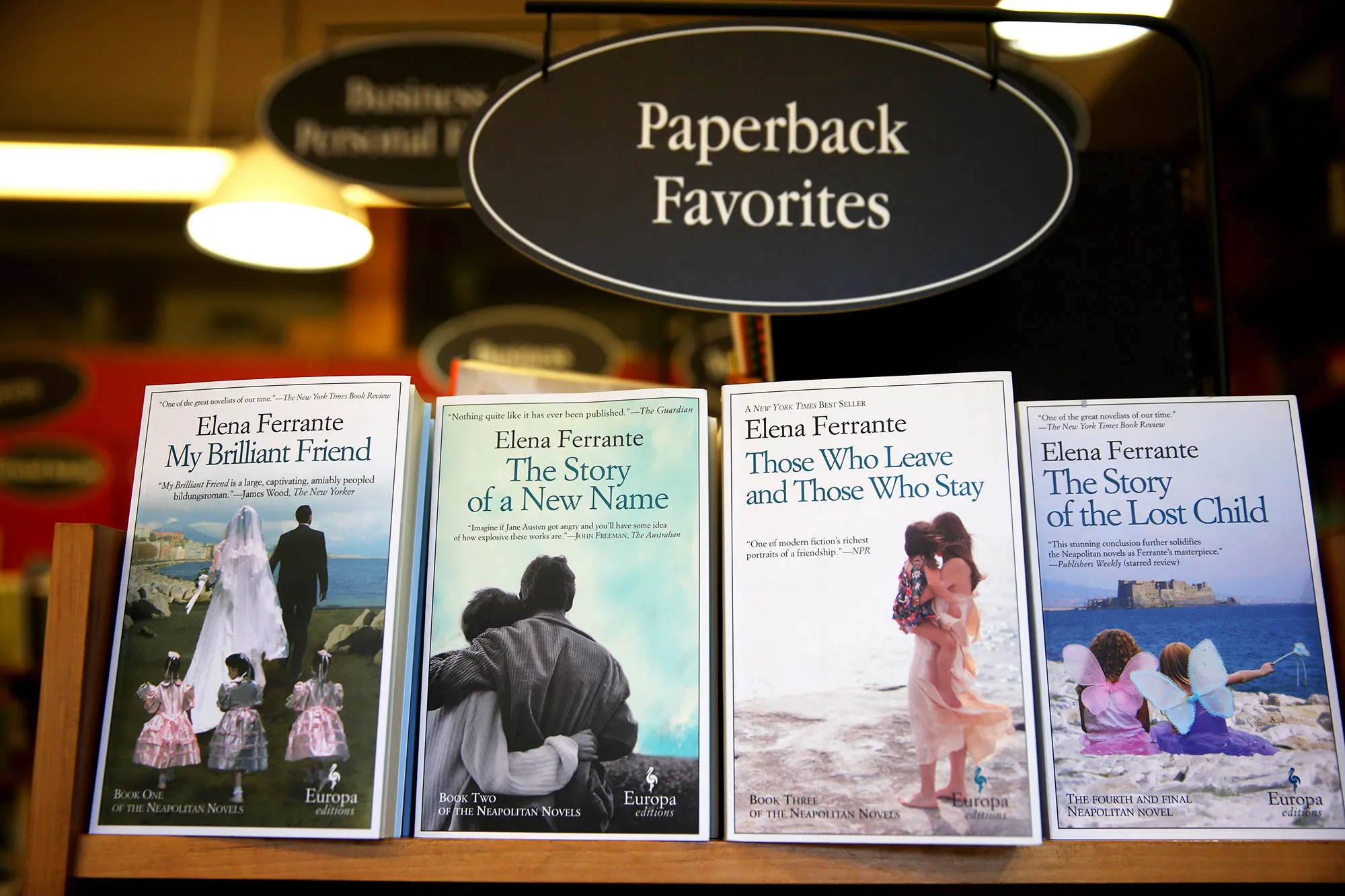
The series begins with L’amica geniale (My Brilliant Friend), published in 2011, and continues with Storia del nuovo cognome (The Story of a New Name), Storia di chi fugge e di chi resta (Those Who Leave and Those Who Stay), and Storia della bambina perduta (The Story of the Lost Child). The novels have been translated into over 40 languages and have sold millions of copies worldwide, making Ferrante an international literary sensation.
The Neapolitan Quartet is lauded for its detailed portrayal of female friendship, its exploration of social and political issues in post-war Italy, and its deep psychological insight. The novels capture the complexities of life in Naples, the struggles of growing up in a patriarchal society, and the enduring impact of class, gender, and historical context on individual lives.
Critical Acclaim and Recognition
The Neapolitan Quartet has been recognized with numerous awards and honors, and has sparked widespread critical acclaim. In 2014, Ferrante was named one of the “100 Most Influential Thinkers” by Foreign Policy magazine, and in 2016, Time magazine included her in its list of the “100 Most Influential People in the World” in the category of artists.
The novels’ success also led to the creation of a highly acclaimed television adaptation, produced by HBO and RAI, which premiered in 2018. The series brought Ferrante’s work to an even wider audience, further solidifying her status as a cultural phenomenon.
The Ongoing Mystery of Identity
Despite the global fame and critical acclaim, Elena Ferrante remains committed to her anonymity. Her decision to stay out of the public eye has sparked endless debate and curiosity, with many questioning how such a powerful literary voice can remain hidden in an age where visibility and celebrity often go hand in hand with success.
Ferrante has defended her choice, stating that her books are “self-sufficient organisms” that do not require the presence of their author to be understood or appreciated. In her collection La frantumaglia, Ferrante explains that her anonymity allows her to write with complete freedom, unencumbered by the expectations or judgments that come with public recognition.
The mystery surrounding Ferrante’s identity has become an integral part of her allure, adding a layer of intrigue to her already compelling narratives. While some critics argue that the focus on her anonymity detracts from her literary achievements, others believe that it enhances the experience of reading her work, allowing readers to engage with her stories on a deeper, more personal level.
Ferrante in the 2020s: Continuing the Legacy
Elena Ferrante’s influence continues to grow, as she publishes new works and her earlier novels find new audiences. In 2019, she published La vita bugiarda degli adulti (The Lying Life of Adults), a novel that explores the complexities of adolescence, identity, and family dynamics in contemporary Naples. The book was met with critical acclaim and further cemented Ferrante’s reputation as one of the most important voices in modern literature.
Ferrante’s work has also continued to inspire adaptations. In 2021, an American film adaptation of her novel La figlia oscura (The Lost Daughter) was released, directed by Maggie Gyllenhaal in her feature directorial debut. The film, starring Olivia Colman and Dakota Johnson, was well-received and highlighted Ferrante’s enduring influence on both literature and film.
Ferrante’s more recent publications include L’invenzione occasionale (2019), a collection of essays, and I margini e il dettato (2021), further showcasing her versatility as a writer and her ability to engage with different genres and forms of expression.
The Enduring Legacy of Elena Ferrante
Elena Ferrante’s legacy is one of literary excellence, mystery, and profound impact. Her works have resonated with readers across the globe, offering a deep exploration of human relationships, identity, and the social and cultural forces that shape our lives. Ferrante’s ability to craft complex, multifaceted characters and narratives that capture the essence of the human experience has earned her a place among the great literary figures of our time.
As readers continue to discover and engage with her novels, the question of Elena Ferrante’s true identity remains secondary to the power of her words and the universality of her themes. Whether or not her real name is ever revealed, Ferrante’s contribution to literature will endure, continuing to inspire, challenge, and captivate readers for generations to come.


