
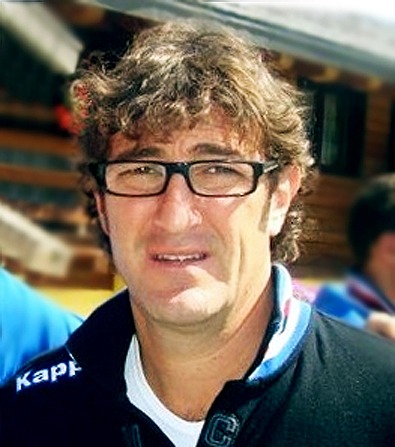
Ciro Ferrara, born on February 11, 1967, in Naples, Italy, is a name synonymous with Italian football. Known for his exceptional defensive skills, Ferrara’s career spanned nearly two decades, during which he became a symbol of both Napoli and Juventus, two of Italy’s most storied football clubs. His transition from player to coach and later to a television personality illustrates the multifaceted nature of his career. This article delves into the life, career, and enduring influence of Ciro Ferrara, offering insights into the key moments that shaped his legacy in football and beyond.
Early Life and Beginnings in Football
Ciro Ferrara was born and raised in the Posillipo district of Naples, an area known for its scenic beauty and cultural heritage. From a young age, Ferrara exhibited a natural talent for football, particularly as a defender. His early years in youth football were promising, but his journey faced a significant setback when, at the age of 14, he encountered a severe bone problem that left him temporarily wheelchair-bound. This period of adversity tested Ferrara’s resolve, but his passion for football remained undiminished.
After recovering, Ferrara returned to the sport with renewed determination. His resilience paid off when, on May 5, 1985, he made his Serie A debut for Napoli in a match against Juventus. This debut marked the beginning of a professional career that would see Ferrara rise to become one of the most respected defenders in Italian football.
Rise to Prominence with Napoli
Ferrara’s early years at Napoli coincided with one of the most successful periods in the club’s history. In the 1986-1987 season, Ferrara played a crucial role in helping Napoli secure both the Serie A title and the Coppa Italia, marking the club’s first-ever league championship. This era was also defined by the presence of Diego Armando Maradona, widely regarded as one of the greatest footballers of all time. Maradona and Ferrara developed a strong bond, both on and off the pitch, with Maradona often referring to Ferrara as one of his closest friends in the football world.
In 1989, Napoli added another prestigious title to their collection by winning the UEFA Cup, the club’s first major European trophy. Ferrara’s contributions were instrumental in this victory, including scoring a decisive goal during the tournament. His performances during these years solidified his reputation as one of the best defenders in Italy.
By 1990, Ferrara had become a central figure at Napoli, leading the team to another Serie A title and the Supercoppa Italiana. Following Maradona’s departure from the club, Ferrara was recognized as the team’s new leader, becoming the captain and a symbol of the club’s fighting spirit. Over ten seasons with Napoli, Ferrara made 247 appearances in Serie A, establishing himself as a club legend.
Move to Juventus and Continued Success
In 1994, Ferrara’s career took a new turn when he joined Juventus, a move that reunited him with coach Marcello Lippi, who had previously managed him at Napoli. Ferrara’s arrival at Juventus marked the beginning of a new chapter of success. He quickly became an indispensable part of the team, known for his consistent performances and leadership on the field.
During his time at Juventus, Ferrara was part of one of the most formidable defensive partnerships in football, teaming up with Uruguayan defender Paolo Montero. Together, they formed a defensive wall that was pivotal to Juventus’ domestic and international success.
In 1996, Juventus won the UEFA Champions League, defeating Ajax in a dramatic final that was decided by a penalty shootout. This victory was one of the highlights of Ferrara’s career, as it cemented his status as one of Europe’s top defenders. Over the next decade, Ferrara continued to collect silverware with Juventus, winning six Serie A titles, multiple Coppa Italia titles, and other domestic and international trophies.
However, one of these Serie A titles was later revoked following the Calciopoli scandal, a match-fixing scandal that rocked Italian football in the mid-2000s. Despite this, Ferrara’s legacy as a key figure in Juventus’ dominance during the 1990s and early 2000s remained intact.
In May 2005, after an illustrious career that spanned two decades and included over 500 appearances in Serie A, Ferrara decided to retire from professional football. His final match was played against Parma, a fitting end to a career marked by excellence and professionalism.
Transition to Coaching
Like many footballers of his caliber, Ferrara’s transition from playing to coaching was a natural progression. Shortly after retiring, he joined the coaching staff of the Italian national team under Marcello Lippi, with whom he had shared many successes at Juventus. This role provided Ferrara with valuable experience, culminating in Italy’s triumph at the 2006 FIFA World Cup in Germany.
In 2009, Ferrara was appointed head coach of Juventus, taking over from Claudio Ranieri. His tenure as Juventus manager started positively, with the team showing promise in the early part of the season. However, as the season progressed, results began to falter, leading to Ferrara’s dismissal in January 2010 after the team was eliminated from the Coppa Italia and missed out on qualifying for the Champions League.
Despite this setback, Ferrara’s coaching career continued. Later in 2010, he was appointed head coach of the Italy U21 national team, replacing Pierluigi Casiraghi. Ferrara’s time with the U21 team lasted two years, during which he focused on developing young talent for the future of Italian football.
In 2012, Ferrara took on a new challenge as the head coach of Sampdoria. However, his time with the club was short-lived, as a series of poor results led to his dismissal in December of the same year. Following this, Ferrara decided to step away from coaching and focus on other opportunities.
Life After Football: Media and Television
After stepping down from his coaching roles, Ciro Ferrara transitioned into a career as a football pundit and television personality. His deep knowledge of the game, combined with his engaging personality, made him a sought-after commentator and analyst. Ferrara has worked with several Italian television networks, including DAZN, where he provides insights and analysis on football matches and broader sports topics.
In addition to his work as a football pundit, Ferrara has also ventured into the world of reality television. In 2019, he participated in “Amici Celebrities,” an Italian talent show, showcasing his versatility beyond the football field. In 2022, Ferrara further expanded his television career by participating in the reality show “Pechino Express” alongside his son, Giovanbattista Ferrara. Their participation in the show brought Ferrara back into the public eye, demonstrating his adaptability and willingness to take on new challenges.
Author and Advocate
Ciro Ferrara is also an author. In 2020, he published the book “Ho visto Diego e dico ‘o vero,” which translates to “I Saw Diego and I Tell the Truth.” The book is a heartfelt tribute to his friend and former teammate, Diego Maradona, who passed away in November 2020. Maradona himself wrote the preface for the book, highlighting the deep bond they shared during their time together at Napoli. In the book, Ferrara reflects on his experiences with Maradona, both on and off the pitch, offering readers a unique insight into one of football’s most iconic figures.
Beyond his contributions to football and media, Ferrara is deeply involved in charitable work. In 2005, alongside his friend and former teammate Fabio Cannavaro, Ferrara founded a non-profit organization aimed at helping underprivileged children in Naples. The foundation focuses on providing support and opportunities to children from disadvantaged backgrounds, reflecting Ferrara’s commitment to giving back to his community.
Personal Life and Legacy
Ciro Ferrara’s personal life has seen its share of ups and downs. He was married to Paola Pallonetto for twenty years, with whom he has three children. The couple divorced in 2017. Despite the challenges in his personal life, Ferrara remains a devoted father and continues to maintain strong ties to his family.
Ferrara’s legacy in Italian football is undeniable. As a player, he was known for his tenacity, intelligence, and leadership on the field. His ability to read the game and make crucial interceptions made him one of the best defenders of his generation. As a coach, although his managerial career was less successful, Ferrara’s impact on the development of young players and his contributions to the Italian national team during the 2006 World Cup remain significant.
In the broader context of Italian sports and media, Ciro Ferrara is a respected figure whose opinions and insights are valued by fans and professionals alike. His transition from football to media and television has allowed him to stay connected to the sport he loves while also exploring new avenues for personal and professional growth.
Conclusion
Ciro Ferrara’s journey from the streets of Naples to the pinnacle of European football is a testament to his talent, determination, and resilience. Whether as a player, coach, or media personality, Ferrara has consistently demonstrated a deep passion for football and a commitment to excellence. His story is one of overcoming adversity, achieving greatness, and continuing to evolve both personally and professionally.
As Ferrara continues to engage with the world of football and beyond, his influence and legacy are sure to inspire future generations. His life and career serve as a reminder of the power of perseverance and the importance of staying true to one’s roots, no matter how far one’s journey may take them.


