
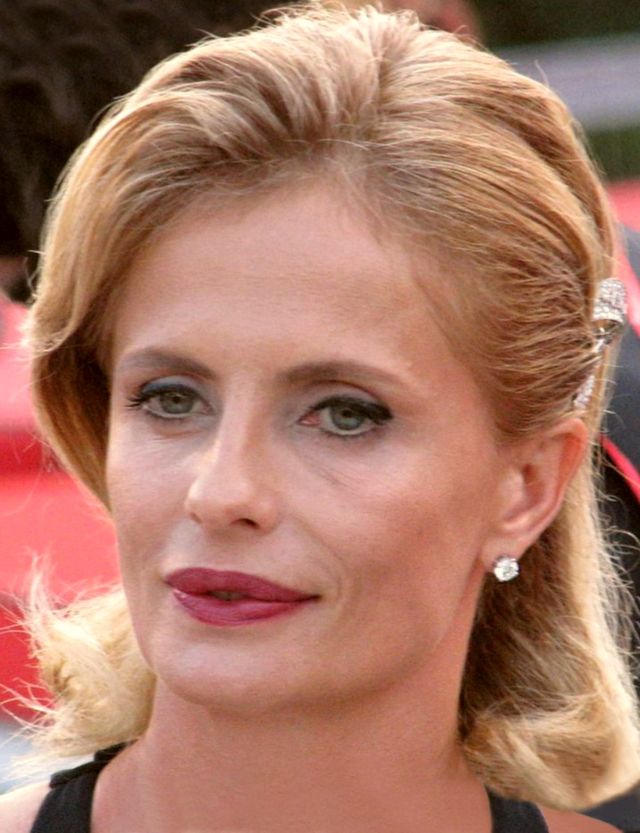
Isabella Ferrari, born Isabella Fogliazza on March 31, 1964, in Ponte dell’Olio, Piacenza, Italy, is one of the most esteemed actresses in Italian cinema and television. Over the course of her extensive career, Ferrari has transitioned from being a popular teen idol to a critically acclaimed actress known for her versatility and depth. This article delves into the life, career, and achievements of Isabella Ferrari, offering a detailed look at how she has navigated the entertainment industry, her rise to fame, and the significant roles that have shaped her legacy.
Early Life and Beginnings in Show Business
Isabella Ferrari grew up in a small town in the province of Piacenza. Her early years were marked by a fascination with the world of cinema and television, which led her to pursue a career in acting. Ferrari’s break into the entertainment industry came at a young age, propelled by her striking looks and natural talent. In 1981, she made her television debut on the popular variety show “Sotto le Stelle,” hosted by Gianni Boncompagni. This early exposure brought her into the limelight and set the stage for her future success.
At the age of 17, Ferrari won the title of Miss Teenager, a recognition that further cemented her status as a rising star. Her beauty and charisma made her an instant favorite with the Italian public, and she quickly became a sought-after actress for film and television roles. However, Ferrari was acutely aware of the limitations that came with her early success. The entertainment industry often pigeonholed young actresses into specific roles, and Ferrari was determined to avoid being typecast.
Breakthrough in Cinema: “Sapore di Mare”
Isabella Ferrari’s big break in cinema came in 1982 with the film “Sapore di Mare,” directed by Carlo Vanzina. The film, set in the 1960s, was a nostalgic comedy that captured the essence of Italian youth culture during that era. Ferrari played the role of Selvaggia, a sweet and innocent young woman who experiences the highs and lows of first love. The film was a massive success, resonating with audiences and solidifying Ferrari’s place as a beloved figure in Italian cinema.
Following the success of “Sapore di Mare,” Ferrari reprised her role in the sequel, “Sapore di Mare 2 – Un anno dopo” (1983). While these films brought her widespread recognition, Ferrari quickly realized the dangers of being typecast as the “girl-next-door” or the “innocent beauty.” She was keenly aware that these roles, while popular, could limit her opportunities to explore more challenging and diverse characters.
Breaking the Mold: Transition to Serious Roles
In the mid-1980s, Isabella Ferrari made a conscious decision to pursue more complex and demanding roles, determined to prove her range as an actress. She began taking on projects that allowed her to showcase her dramatic abilities, moving away from the light-hearted comedies that had initially made her famous.
One of the first films that marked this transition was “Cronaca di un amore violato” (1995), directed by Giacomo Battiato. The film, based on the book “Diario di uno stupratore” by Anna Maria Pellegrino, dealt with the harrowing subject of sexual violence. Ferrari’s portrayal of a woman grappling with the aftermath of assault was both powerful and poignant, earning her critical acclaim and signaling her arrival as a serious actress.
This period also saw Ferrari collaborate with some of Italy’s most respected filmmakers. In 1996, she starred alongside Sergio Castellitto in “Hotel Paura,” a film that explored themes of fear, trauma, and survival. The following year, she appeared in the French production “K,” a film that delved into the lingering shadows of Nazism in modern society. These roles demonstrated Ferrari’s willingness to tackle difficult and often controversial subjects, further distancing herself from the roles of her early career.
Critical Acclaim: “Romanzo di un giovane povero”
One of the defining moments of Isabella Ferrari’s career came in 1995 when she starred in “Romanzo di un giovane povero,” directed by the legendary Ettore Scola. The film, a drama about corruption and moral decay in contemporary Italy, featured Ferrari in a supporting role that earned her widespread praise. Her performance was recognized at the Venice Film Festival, where she was awarded the prestigious Coppa Volpi for Best Supporting Actress.
This accolade was a turning point for Ferrari, affirming her status as one of Italy’s most talented and versatile actresses. It also opened the door to a wider range of roles, allowing her to continue exploring characters with depth and complexity.
Expanding Her Horizons: International Productions and Television Success
As Isabella Ferrari’s reputation grew, so did the opportunities available to her. In the late 1990s and early 2000s, she began to take on roles in international productions, further expanding her horizons. In 1998, she appeared in “Dolce far niente,” an Italian-French co-production set in the 19th century. The film was a departure from her earlier work, showcasing her ability to adapt to different genres and historical settings.
Around the same time, Ferrari became a familiar face on Italian television, starring in several popular series. Her role as Giovanna Scalise, a sensitive yet determined police commissioner in the hit series “Distretto di Polizia,” endeared her to millions of viewers. The show was a massive success, and Ferrari’s portrayal of Scalise was widely praised for its depth and realism. This role not only solidified her status as a leading actress in Italy but also demonstrated her ability to connect with audiences on the small screen.
Ferrari’s success on television continued with other high-profile roles in series such as “Provincia Segreta.” Her work in television further diversified her portfolio, allowing her to reach new audiences and maintain her relevance in an ever-evolving industry.
Notable Film Roles and Collaborations
Isabella Ferrari’s filmography is rich with collaborations with some of Italy’s most esteemed directors and actors. In 2008, she starred in “Caos Calmo,” directed by Antonello Grimaldi and based on the novel by Sandro Veronesi. The film featured a controversial and widely discussed scene between Ferrari and actor-director Nanni Moretti. The scene, which involved a graphic sexual encounter, sparked debate and media attention, further showcasing Ferrari’s willingness to take risks and push boundaries in her work.
The same year, Ferrari worked with acclaimed director Ferzan Ozpetek in the film “Un giorno perfetto,” which was screened in competition at the Venice Film Festival. The film, a dark and intense drama, provided Ferrari with yet another opportunity to demonstrate her range as an actress. Her performance was met with critical acclaim, reinforcing her reputation as one of Italy’s most talented and fearless performers.
Continued Success and Legacy
Over the years, Isabella Ferrari has continued to evolve as an actress, taking on roles that challenge her and allow her to grow. Her career is marked by a commitment to quality and a refusal to be confined by the expectations of others. Whether in film or television, Ferrari has consistently chosen projects that resonate with her, often gravitating towards stories that explore complex human emotions and societal issues.
Ferrari’s ability to balance her film and television careers is a testament to her versatility and work ethic. She has successfully navigated the often treacherous waters of the entertainment industry, maintaining her relevance and popularity while continually pushing herself as an artist.
Personal Life and Influence
Isabella Ferrari’s personal life has also been a subject of public interest. She was married to director Renato De Maria, with whom she has two children. Ferrari has always been private about her personal life, choosing to focus the spotlight on her work rather than her private affairs. This discretion has allowed her to maintain a level of control over her public image, further enhancing her reputation as a serious and dedicated actress.
In addition to her work on screen, Ferrari has been involved in various charitable causes, using her platform to raise awareness about issues close to her heart. Her influence extends beyond the entertainment industry, as she continues to inspire young actors and actresses with her commitment to her craft and her willingness to take on challenging roles.
Conclusion
Isabella Ferrari’s journey from a teenage beauty queen to one of Italy’s most respected actresses is a story of talent, determination, and resilience. Over the course of her career, she has proven herself to be much more than just a pretty face, earning critical acclaim and numerous awards for her performances. Her ability to navigate the complexities of the entertainment industry while staying true to her artistic vision is a testament to her strength and perseverance.
As she continues to work in film and television, Ferrari’s legacy as a versatile and fearless actress is secure. Her contributions to Italian cinema and television have left an indelible mark, and her influence will undoubtedly continue to be felt for years to come. Isabella Ferrari is not just an actress; she is an icon of Italian culture, a symbol of what it means to pursue one’s passions with grace, determination, and unwavering commitment.


