
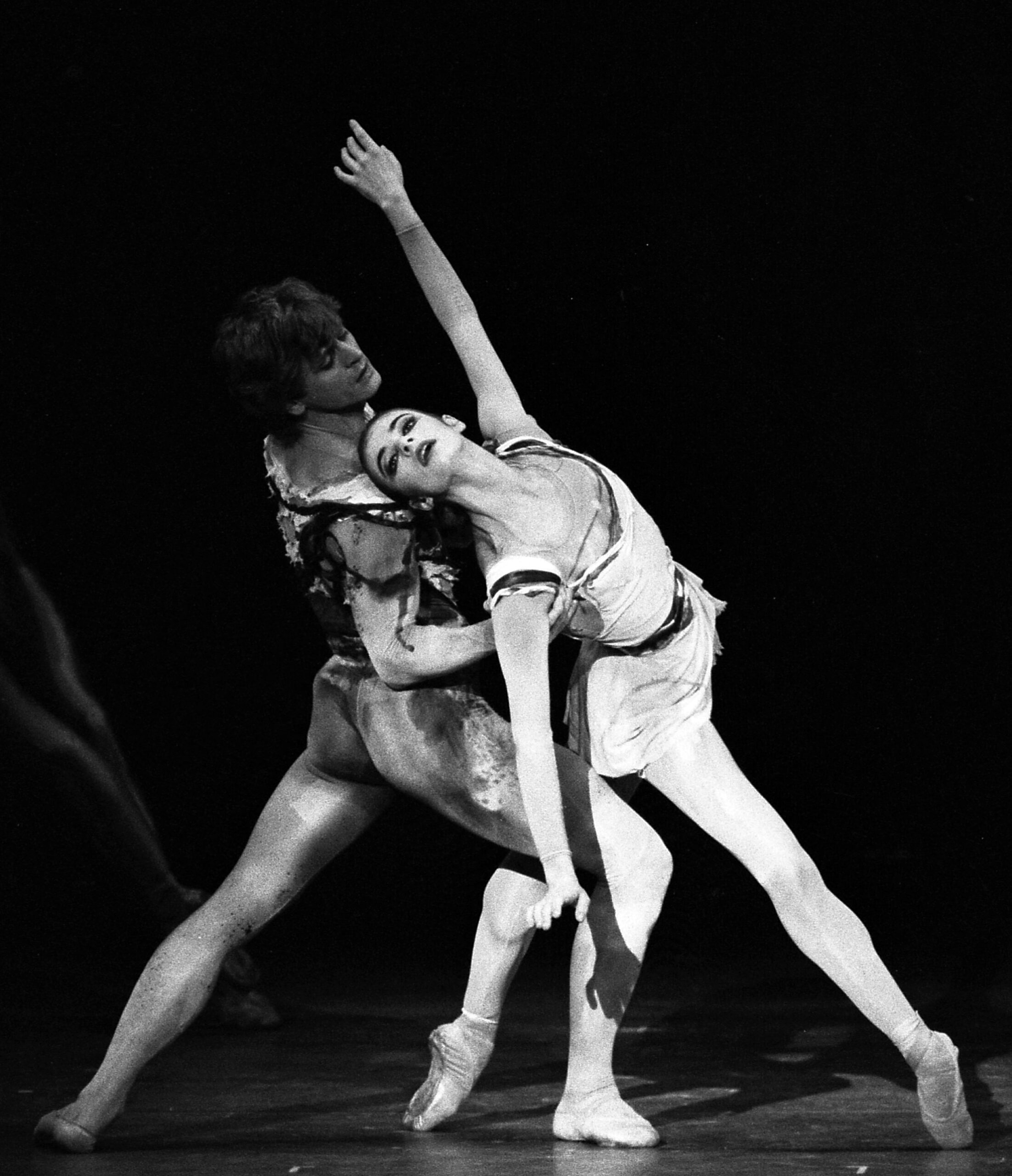
Alessandra Ferri, born on May 6, 1963, in Milan, Italy, is an internationally renowned ballerina celebrated for her extraordinary talent, emotional depth, and longevity in the world of ballet. Ferri’s career has been marked by her ability to convey profound emotion through dance, making her one of the most revered and beloved figures in ballet. Her journey from a young student at the La Scala Theatre Ballet School to becoming a principal dancer with some of the world’s most prestigious ballet companies is a testament to her dedication, passion, and unparalleled skill.
Early Life and Training
Alessandra Ferri’s love for dance began at an early age. Growing up in Milan, she enrolled at the Scuola di Ballo del Teatro alla Scala, where she began her formal ballet training. Her natural talent and determination quickly became evident, and at the age of fifteen, Ferri was awarded a scholarship from the British Council to continue her studies at the Royal Ballet School in London. This opportunity allowed her to hone her craft under the tutelage of some of the best instructors in the world, setting the stage for her future success.
Ferri’s time at the Royal Ballet School was transformative. She immersed herself in the rigorous training and absorbed the rich traditions of the Royal Ballet. Her hard work paid off when, at just seventeen years old, she was accepted into the company of the Royal Ballet, a significant achievement that marked the beginning of her professional career.
Rise to Fame: The Royal Ballet and International Acclaim
Alessandra Ferri’s rise to fame was swift and well-deserved. In 1983, just a few years after joining the Royal Ballet, she was promoted to the rank of principal dancer—a remarkable accomplishment for someone not yet twenty years old. This promotion was a recognition of her exceptional talent, technical prowess, and the emotional intensity she brought to her performances.
That same year, Ferri’s talent was acknowledged on an international level. She was named “Ballerina of the Year” by both The New York Times and Dance and Dancers magazine, and she received the prestigious Sir Laurence Olivier Award for her contributions to ballet. These accolades solidified her status as one of the leading dancers of her generation.
Ferri’s time with the Royal Ballet was marked by her performances in a wide range of roles, from the classics like “Giselle” and “Swan Lake” to contemporary works that showcased her versatility as a dancer. Her ability to embody complex characters and convey deep emotion through her movements made her a favorite with audiences and critics alike.
Transition to the American Ballet Theatre
In 1985, Alessandra Ferri made a significant career move when she accepted an invitation from Mikhail Baryshnikov to join the American Ballet Theatre (ABT) as a principal dancer. This transition marked a new chapter in her career and expanded her influence in the world of ballet. At ABT, Ferri continued to take on challenging and diverse roles, further establishing her reputation as one of the most talented and expressive dancers of her time.
Ferri’s collaboration with ABT allowed her to perform in major cities around the world, bringing her artistry to a global audience. Her performances in ballets like “Romeo and Juliet,” “Manon,” and “Giselle” were particularly acclaimed, with Ferri often praised for the depth of emotion she brought to these iconic roles. Her portrayal of Juliet in “Romeo and Juliet,” in particular, became one of her signature roles, and she was widely regarded as one of the finest interpreters of this character in ballet history.
Cinema and Further Achievements
Alessandra Ferri’s talents were not confined to the stage. In the late 1980s, she made her film debut in Herbert Ross’s “Giselle (The Dancers),” a cinematic adaptation of the classic ballet. This venture into film allowed Ferri to bring her unique style and emotional depth to a new medium, further broadening her artistic reach.
In 1992, Ferri reached another milestone in her career when she was appointed as prima ballerina assoluta at the Teatro alla Scala in Milan, her home city. This prestigious title is reserved for only the most distinguished and accomplished dancers, and Ferri’s appointment was a testament to her outstanding contributions to the world of ballet. That same year, she became the first Italian ballerina to be invited to perform with the Paris Opera Ballet, starring in “Carmen,” a role that showcased her dramatic flair and technical mastery.
Ferri continued to collaborate with some of the world’s most prestigious ballet companies throughout the 1990s. In 1996, she performed in “Notre-Dame de Paris” with the Paris Opera Ballet, further cementing her international reputation. She also maintained a close relationship with ABT, where she continued to take on leading roles in a variety of productions.
Personal Life and Artistic Collaborations
In addition to her illustrious career, Alessandra Ferri’s personal life has also been closely followed by fans and the media. In 1997, she married the renowned photographer Fabrizio Ferri, with whom she collaborated on several artistic projects. The couple published a book titled “Aria,” which featured photographs of Alessandra taken by Fabrizio in Pantelleria, Italy. The book was a unique fusion of photography and dance, capturing the beauty and elegance of Ferri’s movements in a series of stunning images.
In 1998, Ferri gave birth to her first daughter, Matilde, and a few years later, in 2002, she welcomed her second daughter, Emma. Despite the demands of motherhood, Ferri continued to dance, balancing her family life with her commitment to her art.
Ferri’s collaboration with her husband extended beyond photography. In 1999, she starred in the short film “Prélude,” directed by Fabrizio Ferri and featuring musician Sting. The film was presented at the Venice International Film Festival, adding another dimension to Ferri’s already diverse career.
Later Career and Retirement
In the early 2000s, Alessandra Ferri continued to perform at the highest levels of the ballet world. In 2000, she was invited to perform “Manon” with the Kirov Ballet at the Mariinsky Theatre in St. Petersburg, Russia, one of the most prestigious venues in the world. This performance was yet another highlight in a career filled with remarkable achievements.
However, in 2007, at the age of 44, Ferri made the decision to retire from the stage. Her final performance took place in Taormina, Italy, where she danced in a farewell production that was both a celebration of her illustrious career and a poignant goodbye to the stage. Following her retirement, Ferri took on the role of Artistic Director of the Dance Program at the Festival dei Due Mondi in Spoleto, where she continued to contribute to the world of dance through her experience and expertise.
Despite stepping away from the stage, Ferri’s passion for dance never waned. In 2013, she separated from her husband and began to explore new artistic collaborations. One of the most significant of these was with British choreographer Wayne McGregor. In 2015, she returned to the stage to perform in “Woolf Works,” a ballet inspired by the writings of Virginia Woolf, choreographed by McGregor for the Royal Ballet. Ferri’s performance in “Woolf Works” was met with critical acclaim, and she was awarded the Laurence Olivier Award for Excellence in Dance, reaffirming her status as one of the greatest dancers of her generation.
Ferri continued to perform “Woolf Works” in subsequent years, proving that age was no barrier to her artistic expression. Her ability to convey emotion and tell a story through dance remained as powerful as ever, and audiences were captivated by her performances.
Recent Years and Continuing Influence
Alessandra Ferri’s influence on the world of ballet continues to be felt, even as she transitions into the later stages of her career. On January 1, 2019, she performed alongside Roberto Bolle in the televised special “Danza con me” on Raiuno, showcasing her enduring talent and grace. Her appearance on the show was a reminder of her significant contributions to dance and her lasting appeal to audiences.
Ferri’s legacy is not only defined by her performances but also by her impact on the next generation of dancers. She has become a mentor and inspiration to young dancers, sharing her knowledge and experience with those who aspire to follow in her footsteps. Her dedication to the art of ballet, her commitment to excellence, and her ability to continually reinvent herself have made her a role model in the dance community.
Conclusion: The Enduring Legacy of Alessandra Ferri
Alessandra Ferri’s career is a testament to the power of passion, dedication, and artistic expression. From her early days as a student in Milan to her status as one of the world’s most celebrated ballerinas, Ferri’s journey has been marked by a relentless pursuit of excellence and a deep love for the art of dance.
Her ability to convey emotion through movement, combined with her technical mastery and versatility, has made her a standout performer in the ballet world. Ferri’s collaborations with leading choreographers and ballet companies have resulted in some of the most memorable performances in modern ballet history.
As she continues to inspire and mentor the next generation of dancers, Alessandra Ferri’s legacy as a dancer, artist, and cultural icon is assured. Her contributions to ballet have left an indelible mark on the art form, and her influence will continue to be felt for many years to come.


