
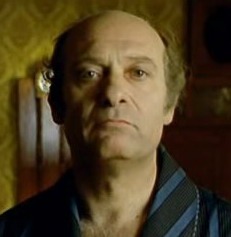
Turi Ferro, born Salvatore Ferro in Catania, Italy, in late December 1920, is a name synonymous with the golden age of Italian theater. Known for his profound connection to Sicilian culture and his exceptional ability to bring characters to life on stage, Ferro’s legacy is one of dedication, passion, and an undying love for his craft. This article explores the life and career of Turi Ferro, highlighting his contributions to theater and cinema, his influence on Italian culture, and the significant moments that defined his journey.
Early Life and Passion for Theater
Turi Ferro’s life began in Catania, Sicily, during the final days of December 1920. However, due to an administrative error, his birth was officially recorded on January 21, 1921. Growing up in a culturally rich environment, Ferro was deeply influenced by his father, who was an amateur actor. This early exposure to the performing arts ignited a passion in young Turi that would shape the rest of his life.
As a child, Ferro was involved in local theatrical productions, performing in various small venues where he brought to life works by renowned Sicilian authors such as Giovanni Verga. His performances in these early years were a testament to his innate talent and his deep connection to the stories of his homeland. Encouraged by his father to pursue a stable career while nurturing his passion for acting, Ferro obtained a teaching diploma. However, his love for the stage proved too strong to resist, and he soon dedicated himself fully to the theater.
The Dawn of a Theatrical Career
Turi Ferro’s professional theatrical career began in the late 1940s. In 1948, alongside his wife, Ide Carrara, Ferro joined the “Compagnia Rosso Di San Secondo Roma,” marking the start of a journey that would see him become one of Italy’s most respected actors. The couple’s partnership, both on and off the stage, was a cornerstone of Ferro’s career, and together they brought numerous iconic characters to life.
In the 1950s, Ferro’s career gained significant momentum as he immersed himself in the works of Luigi Pirandello, one of Italy’s most celebrated playwrights and a Nobel laureate in literature. Ferro’s interpretation of Pirandello’s characters was nothing short of masterful, capturing the existential themes and the complex nature of human identity that are central to Pirandello’s work. His portrayal of Cotrone in “I Giganti Della Montagna,” a play often referred to as Pirandello’s “great unfinished work,” remains one of his most memorable performances.
Founding the Ente Teatrale Sicilia
In 1957, Turi Ferro, together with his wife, founded “L’Ente Teatrale Sicilia,” an organization dedicated to promoting Sicilian theater and bringing together the region’s finest actors. This initiative was a reflection of Ferro’s deep commitment to his cultural roots and his desire to preserve and promote the rich theatrical traditions of Sicily. The ensemble included renowned actors such as Michele Abruzzo, Rosina Anselmi, and Umberto Spadaro, who collectively elevated the status of Sicilian theater on the national stage.
One notable absence from the company was Salvo Randone, a reclusive and highly respected actor who had previously brought Pirandello’s works to life. Despite Ferro’s efforts to include Randone, the latter chose to remain in the shadows, avoiding the spotlight that Ferro’s company was beginning to attract.
A Versatile Actor: From Pirandello to Sciascia
Turi Ferro was not just an actor; he was a chameleon who could seamlessly adapt to various roles and genres. While his early career was heavily influenced by Pirandello, Ferro also explored the works of other significant Italian authors. His performances in plays based on the writings of Leonardo Sciascia, another iconic Sicilian writer, further cemented his reputation as a versatile and deeply connected artist.
Ferro brought to life Sciascia’s tales of Sicilian life, capturing the essence of the island’s complex social and political landscape. Plays such as “Gli Zii Di Sicilia,” “Candido,” and “Il Giorno Della Civetta” allowed Ferro to explore themes of corruption, power, and morality, resonating deeply with audiences who were familiar with the challenges facing Sicilian society.
His ability to switch between the tragic and the comedic, the personal and the political, demonstrated his extraordinary range as an actor. Whether he was portraying the existential dilemmas of Pirandello’s characters or the stark realities of Sciascia’s Sicily, Ferro’s performances were always marked by a profound understanding of the human condition.
The Legacy of Sicilian Theater
Turi Ferro’s contributions to Sicilian theater cannot be overstated. His performances of Giovanni Verga’s works, including “I Malavoglia” and “Mastro Don Gesualdo,” brought the struggles and triumphs of Sicilian life to the forefront of Italian culture. Ferro’s portrayals were deeply empathetic, allowing audiences to connect with the characters on a personal level.
Moreover, Ferro’s adaptations of Vitaliano Brancati’s novels, such as “Don Giovanni In Sicilia” and “Il Bell’Antonio,” showcased his ability to translate literary works into powerful stage performances. His collaboration with Andrea Camilleri, the creator of the beloved Inspector Montalbano series, further highlighted his commitment to bringing contemporary Sicilian stories to the stage.
Ferro’s impact on Sicilian theater was not limited to his performances. He was also instrumental in nurturing the next generation of actors and playwrights, ensuring that the rich traditions of Sicilian theater would continue to thrive long after his own career had ended.
Transition to Film and Television
While Turi Ferro’s heart remained on the stage, he also made significant contributions to Italian cinema and television. His film debut came in 1961 with “Un Uomo da Bruciare,” directed by Paolo and Vittorio Taviani, where he starred alongside Gian Maria Volonté. The film, a gritty drama set in Sicily, showcased Ferro’s ability to bring the same intensity and authenticity to the screen that he was known for on stage.
In 1965, Ferro appeared in the critically acclaimed film “Io La Conoscevo Bene,” directed by Antonio Pietrangeli. Starring alongside cinema legends such as Ugo Tognazzi, Stefania Sandrelli, and Nino Manfredi, Ferro’s performance was widely praised, further establishing his reputation as a versatile actor capable of excelling in any medium.
Ferro’s contributions to television were equally significant. In the mid-1960s, he starred in adaptations of some of his most famous theatrical performances, including “Mastro Don Gesualdo” and “I Malavoglia.” These televised productions brought Ferro’s work to a broader audience, allowing people across Italy to experience the depth and power of his performances.
Later Years and Continued Dedication to the Stage
Despite his success in film and television, Turi Ferro never lost his passion for the stage. Throughout the 1970s and 1980s, he continued to perform in major theatrical productions, often returning to the works of Pirandello, Sciascia, and Verga. His ability to connect with audiences, regardless of the medium, was a testament to his enduring talent and his unwavering commitment to his craft.
In 1979, Ferro appeared in the film “Ernesto,” directed by Salvatore Samperi, where he starred alongside Michele Placido. The film, a poignant exploration of identity and desire, was another opportunity for Ferro to showcase his remarkable range as an actor.
Ferro’s career continued well into the 1990s, as he remained active in the theater scene, performing in works that celebrated his Sicilian heritage. His performances were marked by a deep understanding of the characters he portrayed and a profound respect for the stories he was telling.
A Final Curtain Call: Legacy and Influence
Turi Ferro passed away on May 11, 2001, in his hometown of Catania, at the age of 80. His death marked the end of an era in Italian theater, but his legacy lives on through the countless performances he gave and the actors he inspired. Ferro was a true artist, dedicated not only to his craft but also to the cultural heritage of Sicily. His work remains a vital part of Italian theater, and his influence can still be seen in the performances of actors who continue to draw inspiration from his example.
One of the most poignant tributes to Ferro came from Roberto Benigni, who had cast him as Geppetto in his film adaptation of “Pinocchio.” After Ferro’s passing, Benigni described him as “Candido, tragico, umile e alto. Era il Geppetto dei miei sogni. Continuerò a sognarlo. Era un attore di stratosferica bellezza. Il suo volto poteva abitare con la medesima forza paesaggi reali e luoghi fiabeschi.” These words capture the essence of Turi Ferro: a man whose talent transcended the boundaries of the stage and screen, leaving an indelible mark on the world of Italian arts.
Conclusion: The Timeless Artistry of Turi Ferro
Turi Ferro’s life and career are a testament to the power of dedication, passion, and an unyielding love for one’s craft. From his early days in small Sicilian theaters to his celebrated performances in some of Italy’s most prestigious venues, Ferro’s journey was one of constant growth and exploration. His deep connection to Sicilian culture, his mastery of the theatrical art form, and his ability to bring complex characters to life have ensured that his legacy will endure for generations to come.
As we reflect on Turi Ferro’s contributions to the world of theater and beyond, it is clear that his influence will continue to be felt for many years. His performances remain a source of inspiration for actors, directors, and audiences alike, and his commitment to preserving and promoting Sicilian culture is a model for all who follow in his footsteps. Turi Ferro was more than an actor; he was a cultural icon, a master of his craft, and a true son of Sicily.


