
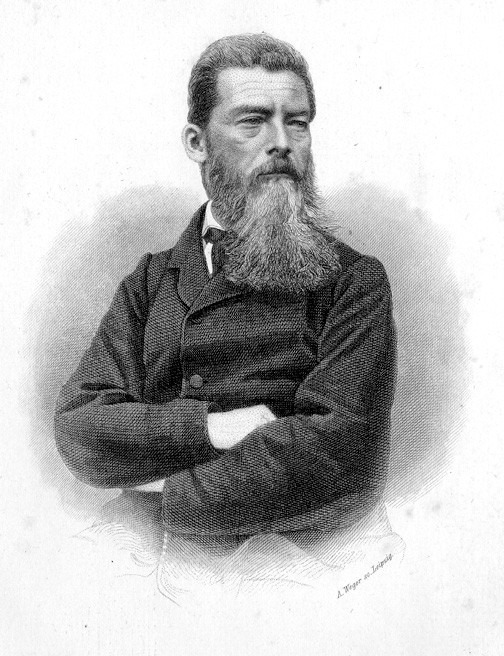
Ludwig Andreas Feuerbach, born on July 28, 1804, in Landshut, Bavaria, was a prominent German philosopher whose ideas and writings left a profound impact on the philosophical and theological discourses of the 19th century. Best known for his critical analyses of religion and his influence on subsequent thinkers such as Karl Marx and Friedrich Engels, Feuerbach’s life was marked by intellectual rigor, personal struggle, and an enduring legacy in the world of philosophy. This article delves into the life and achievements of Ludwig Feuerbach, exploring his philosophical contributions, the historical context of his work, and the enduring significance of his ideas.
Early Life and Academic Pursuits
Ludwig Feuerbach was born into a large and intellectually stimulating family as the fourth child of Paul Johann Anselm Ritter von Feuerbach, a distinguished jurist and professor of law. Growing up in such an environment, Feuerbach was exposed to the world of ideas from a young age, which shaped his intellectual development and future career.
Feuerbach initially pursued theological studies at the University of Heidelberg with the intention of entering the clergy. However, his academic path took a decisive turn when he encountered the philosophy of Georg Wilhelm Friedrich Hegel, under the guidance of his teacher Carl Daub. Hegel’s dialectical method and his profound impact on contemporary thought captivated Feuerbach, prompting him to abandon his theological aspirations and instead immerse himself in the study of philosophy.
In 1824, Feuerbach moved to Berlin to study under Hegel himself. This period was crucial for Feuerbach, as it not only solidified his commitment to philosophy but also exposed him to the intellectual currents that would shape his future work. Despite his enthusiasm, Feuerbach faced financial difficulties, which forced him to transfer to the University of Erlangen, where he continued his studies in a more economically viable environment. At Erlangen, he expanded his knowledge by studying natural sciences such as botany and physiology, which would later influence his philosophical ideas.
Early Writings and Philosophical Development
Feuerbach’s early philosophical work was marked by a deep engagement with Hegelian thought. His doctoral thesis, which he submitted to Hegel for approval, explored the idea of pantheism and the possibility of philosophy replacing religion as the primary mode of understanding existence. This thesis reflected Feuerbach’s growing conviction that traditional religious beliefs were increasingly untenable in the face of modern philosophical and scientific developments.
In 1830, Feuerbach published his first major work, Gedanken über Tod und Unsterblichkeit (Thoughts on Death and Immortality), under a pseudonym. This text, which critiqued the concept of personal immortality, argued that the belief in an afterlife was a manifestation of human egoism rather than a reflection of objective truth. Feuerbach posited that after death, individuals would merge into a universal consciousness, thereby rejecting the idea of individual immortality. The controversial nature of this work, which challenged fundamental religious doctrines, led to significant backlash. Feuerbach was identified as the author, and as a result, he was forced to abandon his academic career at Erlangen.
Despite the professional setback, Feuerbach continued to write and develop his philosophical ideas. Over the next decade, he published several works that explored the relationship between philosophy, religion, and science. Among these were Geschichte der neueren Philosophie (History of Modern Philosophy, 1833) and Abelard und Heloise (1834), which demonstrated his deep engagement with the history of philosophy and his growing skepticism toward traditional religious beliefs.
The Essence of Christianity and the Break with Hegelianism
Feuerbach’s most famous work, Das Wesen des Christentums (The Essence of Christianity), published in 1841, marked a turning point in his career and in the history of Western thought. In this book, Feuerbach argued that the concept of God was a projection of human nature. According to Feuerbach, the attributes that people ascribe to God—such as love, wisdom, and power—are, in fact, idealized qualities of humanity itself. Thus, in worshipping God, humans are, in effect, worshipping an idealized version of themselves.
This radical re-interpretation of religion challenged the foundations of Christian theology and positioned Feuerbach as a leading figure in the left-Hegelian movement, which sought to apply Hegel’s dialectical method to critique religion and society. The Essence of Christianity had a profound impact on contemporary thinkers, including Karl Marx, who would later incorporate Feuerbach’s ideas into his own critique of religion and ideology.
Feuerbach’s work was not merely a critique of religion; it also proposed a humanistic philosophy that emphasized the importance of human relationships and the material conditions of life. He believed that by understanding religion as a human creation, individuals could free themselves from the illusions of divine authority and instead focus on creating a more just and compassionate society.
Political Involvement and Later Life
The revolutionary fervor of the 1840s provided Feuerbach with an opportunity to engage more directly with political and social issues. In 1848, during the wave of democratic revolutions that swept across Europe, Feuerbach participated in the Democratic Congress in Frankfurt as a representative of the left-wing democrats. His involvement in the revolutionary movement reflected his belief in the need for political reform and the separation of church and state.
However, the failure of the 1848 revolutions was a significant blow to Feuerbach, both personally and intellectually. Disillusioned by the political situation and the lack of tangible progress, he withdrew from public life and retreated to his family estate. During this period, Feuerbach’s interest in philosophy waned, and he turned his attention to the study of geology and other natural sciences.
Despite his withdrawal from active philosophical and political engagement, Feuerbach continued to publish occasionally. In 1857, he released Theogonie, a work that revisited his earlier critiques of religion and explored the origins and development of religious belief. However, the personal and financial difficulties he faced during this period, including the collapse of his wife’s porcelain factory and his involvement in an extramarital affair, further isolated him from the intellectual circles in which he had once been a central figure.
Final Years and Legacy
Feuerbach’s later years were marked by declining health and financial hardship. In 1867, he suffered a stroke that left him partially paralyzed, and in 1870, a second stroke further debilitated him. Feuerbach spent his final years in relative obscurity, living in the small village of Rechenberg near Nuremberg. He passed away on September 13, 1872, at the age of 68. His funeral was attended by a large crowd of workers, reflecting the deep respect he had earned among the working class for his critiques of religion and his advocacy for social reform.
Although Feuerbach’s influence waned in the latter part of his life, his ideas continued to resonate with future generations of thinkers. His critique of religion as a human creation laid the groundwork for subsequent developments in philosophy, theology, and social theory. Feuerbach’s emphasis on the material and human dimensions of religion prefigured Marxist critiques of ideology, while his humanism influenced existentialist and phenomenological approaches to philosophy.
The Enduring Significance of Feuerbach’s Thought
Ludwig Feuerbach’s contributions to philosophy, particularly his critique of religion and his humanistic approach to understanding human nature, remain influential to this day. His assertion that theology is, in reality, anthropology—meaning that the study of God is actually the study of human nature—challenged the traditional understanding of religion and opened the door to new ways of thinking about the relationship between humanity and the divine.
Feuerbach’s work also served as a bridge between the idealism of Hegel and the materialism of Marx. By emphasizing the human origins of religious beliefs, Feuerbach laid the groundwork for Marx’s critique of ideology and his focus on the material conditions of human existence. In this way, Feuerbach’s thought represents a critical turning point in the history of Western philosophy, moving from the abstract speculations of German idealism to a more grounded, human-centered approach.
Moreover, Feuerbach’s humanism, with its emphasis on the importance of love, community, and the material conditions of life, continues to resonate in contemporary discussions about the nature of religion, ethics, and society. His critique of the alienation inherent in religious belief—whereby humans project their best qualities onto an external deity rather than realizing them in their own lives—remains a powerful tool for understanding the dynamics of power and authority in both religious and secular contexts.
Conclusion: Ludwig Feuerbach’s Legacy
Ludwig Feuerbach was a philosopher who dared to challenge the prevailing religious and philosophical dogmas of his time. His work, particularly The Essence of Christianity, remains a seminal text in the history of philosophy, offering a profound critique of religion and a compelling vision of humanism. Although his later years were marked by personal and professional challenges, Feuerbach’s ideas have continued to inspire and provoke debate long after his death.
In the end, Feuerbach’s legacy is one of intellectual bravery and a commitment to understanding the human condition. His belief that religion should be understood as a product of human nature, rather than as a divine revelation, has had a lasting impact on both philosophical and theological thought. As we continue to grapple with questions about the role of religion in society and the nature of human existence, Feuerbach’s insights remain as relevant today as they were in the 19th century.


