
Fibonacci, a name often associated with a famous sequence of numbers, is a mathematician whose influence spans centuries. While the term “Fibonacci” is frequently mentioned in discussions of mathematics, especially in relation to the Fibonacci sequence, the man behind the name—Leonardo of Pisa, also known as Fibonacci—remains a figure of intrigue. His life, contributions, and the mathematical principles he popularized have had a profound impact on both historical and modern mathematics. This article delves into Fibonacci’s life, his rise to fame, and the highlights of his contributions to mathematics, all while exploring the historical context that shaped his work and its enduring legacy.
Early Life and Background: The Origins of Fibonacci
Leonardo Fibonacci was born around 1170 in Pisa, a city in what is now Italy. His birth name, Leonardo of Pisa, reflects his connection to this historic city, but he later became known by the nickname “Fibonacci,” derived from “filius Bonacci,” meaning “son of Bonacci.” Fibonacci’s father, Guglielmo Bonacci, was a wealthy merchant who held a diplomatic position as a customs official in the North African port of Bugia (modern-day Béjaïa, Algeria). It was in Bugia that Fibonacci was first exposed to the world of mathematics.
During his childhood, Fibonacci traveled extensively with his father, and it was through these travels that he encountered the Hindu-Arabic numeral system. At the time, Europe was still using Roman numerals, a system that was cumbersome and impractical for complex calculations. Fibonacci quickly recognized the superiority of the Hindu-Arabic system, which was more efficient and better suited for the demands of commerce and trade.
Fibonacci’s Introduction to the Hindu-Arabic Numeral System
Fibonacci’s exposure to the Hindu-Arabic numeral system was a turning point in his life. This system, which originated in India and was later transmitted to the Islamic world, employed ten symbols (0-9) and a positional value system that made arithmetic calculations far more straightforward than the Roman numeral system. Fibonacci became deeply interested in this new numerical approach, understanding that its adoption in Europe could revolutionize mathematics and commerce.
In 1202, Fibonacci published his most famous work, “Liber Abaci” (The Book of Calculation), which introduced the Hindu-Arabic numeral system to a European audience. The book was a comprehensive manual on arithmetic, addressing practical problems that merchants and businessmen of the time would encounter, such as currency conversion, profit calculations, and interest computation. The “Liber Abaci” not only demonstrated the advantages of the Hindu-Arabic numeral system but also explained its application through practical examples, making it accessible to a broader audience.
The Fibonacci Sequence: A Mathematical Marvel
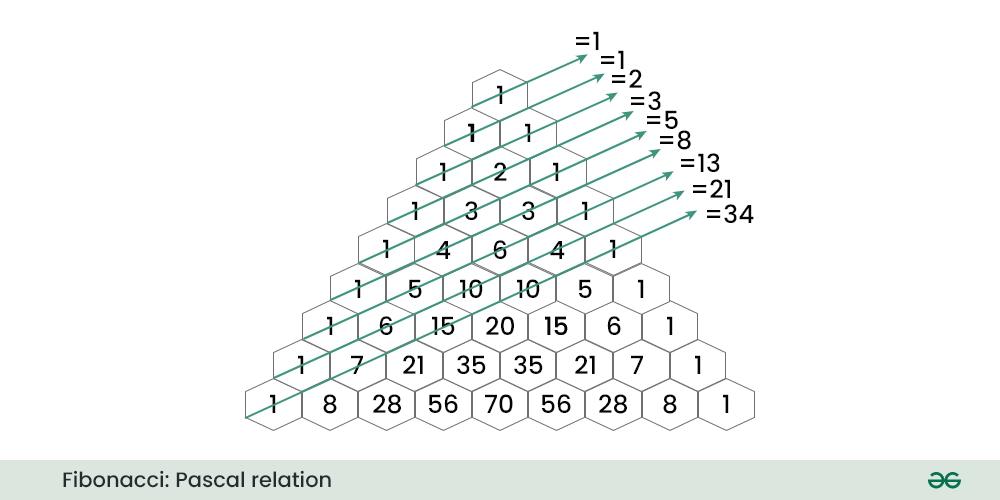
Among the many mathematical concepts discussed in “Liber Abaci,” the one that would immortalize Fibonacci’s name was the sequence of numbers that would later be known as the Fibonacci sequence. This sequence, which begins with 0 and 1, is formed by adding the two preceding numbers to obtain the next: 0, 1, 1, 2, 3, 5, 8, 13, 21, and so on. Although Fibonacci was not the first to discover this sequence, his description of it in “Liber Abaci” popularized its study.
The Fibonacci sequence is not merely a mathematical curiosity; it has deep connections to various natural phenomena, such as the arrangement of leaves on a stem, the branching patterns of trees, the flowering of artichokes, the arrangement of pine cone scales, and even the spiral patterns of shells and galaxies. These natural occurrences of the Fibonacci sequence have fascinated mathematicians, biologists, and artists alike, leading to extensive study and exploration of the sequence’s properties and implications.
Fibonacci’s Influence on Mathematics and Commerce
Fibonacci’s contributions extended beyond the sequence that bears his name. “Liber Abaci” also introduced European mathematicians to several algebraic techniques and problems that had been studied in the Islamic world. For example, Fibonacci’s work included solutions to quadratic equations, which were previously unknown in Europe. His explanations were clear, systematic, and practical, which made them accessible to merchants and other non-scholarly readers.
The adoption of the Hindu-Arabic numeral system, largely due to Fibonacci’s efforts, had a transformative impact on commerce in Europe. The system’s efficiency enabled more complex calculations and financial transactions, facilitating trade across borders. Merchants, bankers, and traders quickly recognized the value of this new system, and it gradually supplanted Roman numerals in commercial and scientific use. This shift was a key factor in the economic development of Europe during the Middle Ages, as it allowed for more sophisticated financial operations and record-keeping.
The Legacy of Fibonacci in Modern Mathematics
Fibonacci’s legacy is most clearly seen in the continued study and application of the Fibonacci sequence. In mathematics, the sequence has been the subject of numerous investigations, leading to discoveries in number theory, algebra, and geometry. The golden ratio, a mathematical constant often associated with aesthetics and design, is closely related to the Fibonacci sequence. As the sequence progresses, the ratio of consecutive Fibonacci numbers approaches the golden ratio, which is approximately 1.618.
The Fibonacci sequence also appears in the analysis of financial markets. Technical analysts use Fibonacci retracement levels as a tool to predict potential levels of support and resistance in stock prices. This application of the Fibonacci sequence in financial analysis is a testament to its versatility and enduring relevance.
Beyond mathematics and finance, Fibonacci’s influence extends to art, architecture, and nature. The golden ratio, derived from the Fibonacci sequence, has been employed by artists and architects to create visually pleasing compositions, from the Parthenon in Greece to the works of Renaissance artists like Leonardo da Vinci. The sequence’s appearance in natural patterns has inspired countless studies in biology, ecology, and even cosmology.
Historical Context: The World of Fibonacci
To fully appreciate Fibonacci’s contributions, it’s important to understand the historical context in which he lived. The late 12th and early 13th centuries were a time of intellectual and cultural exchange between the Islamic world and Europe. The Islamic Golden Age, which spanned from the 8th to the 14th century, was a period of significant advancements in science, mathematics, medicine, and philosophy. Scholars in the Islamic world preserved and expanded upon the knowledge of ancient Greek, Roman, and Indian scholars, and their works were eventually transmitted to Europe through trade and conquest.
Fibonacci’s travels to North Africa and his interactions with scholars in the Islamic world allowed him to access mathematical knowledge that was not yet available in Europe. His work served as a bridge, bringing this knowledge to a European audience and laying the groundwork for the mathematical revolution that would follow in the Renaissance.
Fibonacci’s Recognition and Fame
Despite his significant contributions, Fibonacci did not achieve widespread fame during his lifetime. Mathematics in the 13th century was still a specialized field, and the spread of new ideas was slow. However, Fibonacci’s reputation grew over time, especially as the Hindu-Arabic numeral system became more widely adopted. His work was recognized by mathematicians such as Johannes Kepler and Carl Friedrich Gauss, who built upon Fibonacci’s ideas in their own research.
Fibonacci’s contributions were also acknowledged by the Republic of Pisa, his hometown. In 1240, Pisa honored Fibonacci for his work by granting him a salary, recognizing his role in advancing the city’s intellectual and economic standing. This recognition was significant, as it reflected the growing appreciation of mathematics and its practical applications in governance and commerce.
Fibonacci’s Later Life and Death
Little is known about Fibonacci’s later life. He continued to work on mathematics and produced several other works, including “Flos” and “Liber Quadratorum,” which dealt with algebraic equations and number theory. However, these works did not achieve the same level of recognition as “Liber Abaci.” Fibonacci likely spent his final years in Pisa, where he passed away around 1250. Although the exact date of his death is uncertain, his legacy as a pioneer of modern mathematics is undeniable.
Conclusion: The Enduring Impact of Fibonacci
Fibonacci’s life and work represent a turning point in the history of mathematics. His introduction of the Hindu-Arabic numeral system to Europe and his exploration of the Fibonacci sequence laid the foundation for many mathematical advancements that followed. The practical applications of his work in commerce, finance, and natural sciences underscore the importance of mathematics in everyday life.
Today, Fibonacci is celebrated as one of the greatest mathematicians of the medieval period, and his contributions continue to influence a wide range of fields. The Fibonacci sequence, in particular, has captured the imagination of mathematicians, scientists, and artists alike, demonstrating the profound interconnectedness of mathematics and the natural world.
As we continue to explore the mysteries of mathematics and nature, Fibonacci’s work remains a source of inspiration and discovery, reminding us of the enduring power of mathematical thinking and its ability to unlock the secrets of the universe.


