
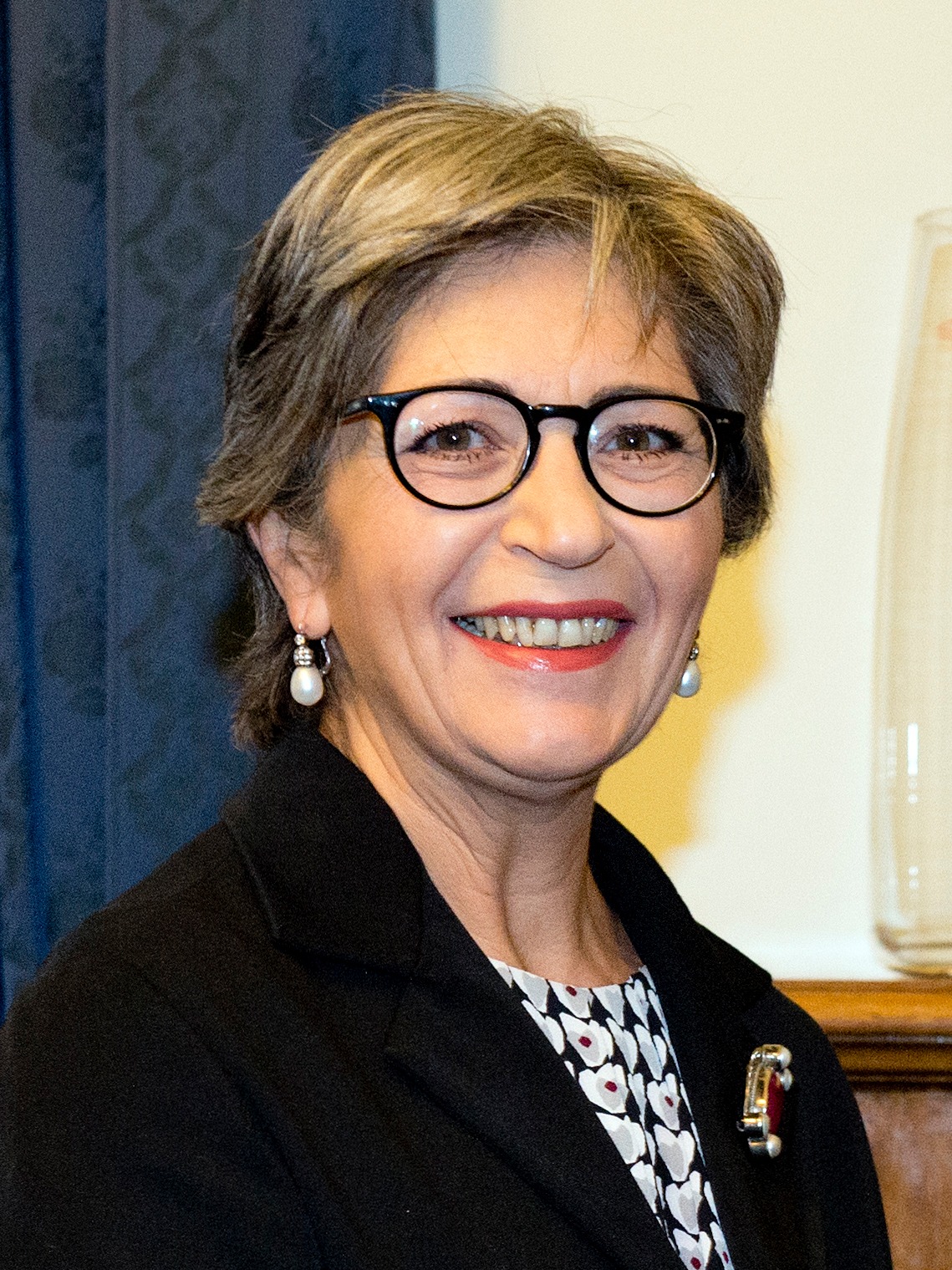
Anna Finocchiaro is a prominent Italian politician and legal professional, known for her extensive career in public service and her significant contributions to the Italian political landscape. Born on March 31, 1955, in Modica, Sicily, Finocchiaro has held several key positions within the Italian government, including Minister for Parliamentary Relations and President of the Constitutional Affairs Commission. This article explores her life, career, and the impact she has made on Italian politics.
Early Life and Education
Anna Finocchiaro was born in Modica, a historic town in the province of Ragusa, Sicily. She grew up in a region deeply influenced by its rich cultural heritage and complex socio-political dynamics. Finocchiaro pursued higher education at the University of Catania, where she earned a degree in Law. Her academic background in jurisprudence laid the foundation for her future career in both law and politics.
Upon completing her legal studies, Finocchiaro embarked on a career in public service. In 1981, she was appointed as a functionary at the Bank of Italy in its Savona branch. Her work at the central bank provided her with valuable insights into the financial and economic mechanisms of the country, an experience that would later inform her political career.
Transition to Law and Early Political Involvement
In the early 1980s, Finocchiaro transitioned from her role at the Bank of Italy to the legal profession. From 1982 to 1985, she served as a magistrate in Leonforte, a small town in Sicily. Her work as a judge exposed her to the complexities of the Italian legal system and deepened her understanding of the challenges faced by the judiciary.
In 1985, Finocchiaro was appointed as Deputy Prosecutor at the Tribunal of Catania, one of Sicily’s largest cities. During her tenure in this role, she dealt with various criminal cases, gaining a reputation for her dedication to justice and her commitment to upholding the law. Her experience as a prosecutor further strengthened her resolve to address the social and political issues affecting her region and the country as a whole.
In 1987, Anna Finocchiaro made her first foray into politics by running for a seat in the Italian Parliament. She was elected as a deputy representing the Italian Communist Party (PCI), marking the beginning of her long and influential career in politics. Her election also coincided with her appointment as a municipal councilor in Catania, a position she held until 1995. During this period, she represented the interests of her constituents and worked on initiatives aimed at improving local governance and public services.
Rise in National Politics and Ministerial Role
As a member of the Italian Communist Party, Finocchiaro was part of a political movement that was undergoing significant transformations during the late 1980s and early 1990s. The fall of the Berlin Wall and the subsequent dissolution of the Soviet Union led to the reconfiguration of leftist political forces in Italy. The PCI evolved into the Democratic Party of the Left (PDS), and Finocchiaro played a crucial role in this transition.
In 1996, following the electoral victory of the center-left coalition led by Romano Prodi, Finocchiaro was appointed as the Minister for Equal Opportunities in the first Prodi government. Her appointment marked a significant milestone in her career, as she became one of the leading female figures in Italian politics.
As Minister for Equal Opportunities, Finocchiaro championed several initiatives aimed at promoting gender equality and protecting the rights of women and children. One of her most notable achievements during her tenure was the introduction of the “Measures Alternative to Detention for the Protection of the Relationship Between Detained Mothers and Minor Children” in 1997. This legislative proposal sought to ensure that pregnant women and mothers of young children would not serve their sentences in prison but could instead serve their sentences at home or in family homes. The law also allowed judges to extend these provisions to mothers of children over ten years old if it was deemed necessary for the child’s physical and psychological well-being.
Continued Political Influence and Leadership Roles
In the early 2000s, Finocchiaro continued to build on her political career by aligning herself with the Democratic Party of the Left (PDS), which later evolved into the Democrats of the Left (DS). She was re-elected as a deputy in the 2001 general elections, a period marked by the rise of Silvio Berlusconi and the center-right coalition. Despite the political challenges posed by the dominance of Berlusconi’s Forza Italia, Finocchiaro remained a prominent figure in the opposition.
Her influence within the DS and the broader center-left coalition grew, leading to her election to the Italian Senate in 2006 as part of the Olive Tree coalition. This coalition was instrumental in the formation of the second Prodi government, and Finocchiaro was appointed as the leader of the DS group in the Senate. Her leadership was characterized by her strategic acumen and her ability to navigate the complex dynamics of Italian parliamentary politics.
In 2007, with the formation of the Democratic Party (PD) as a successor to the Olive Tree coalition, Finocchiaro became a key figure in the new party. She was appointed as the leader of the PD group in the Senate, a position that she held through the 2008 general elections. These elections, however, resulted in a victory for Berlusconi’s center-right coalition, leading to a period of political realignment for the center-left.
Regional Politics and Challenges
In 2008, Anna Finocchiaro ran as the center-left candidate for the presidency of the Sicilian Region. Her candidacy was part of an effort to reclaim the regional government from the center-right, which had held power for several years. Despite a vigorous campaign, Finocchiaro was defeated by Raffaele Lombardo, who secured over 65% of the vote. The loss was a significant setback for the center-left in Sicily and highlighted the challenges of competing in a region with deep-rooted political affiliations.
Finocchiaro’s campaign also attracted criticism, particularly for her decision to involve Salvo Andò, a professional with a controversial reputation, in drafting her electoral program. Andò had been accused of vote-buying but was later acquitted of all charges. Nevertheless, the association cast a shadow over Finocchiaro’s campaign and was used by her opponents to question her judgment.
Despite the defeat, Finocchiaro remained a prominent figure in national politics. She was re-elected as the leader of the PD group in the Senate following the 2008 general elections, continuing to play a central role in the opposition to Berlusconi’s government.
Controversies and Media Scrutiny
Anna Finocchiaro’s career has not been without its share of controversies. In 2010, the Italian media, including the newspaper La Repubblica, raised suspicions about a potential conflict of interest involving Finocchiaro and her husband, Melchiorre Fidelbo. Fidelbo’s company, Solsamb, had received a healthcare contract from the Sicilian Region in 2007, which led to allegations of an improper relationship between the company and the regional government. These accusations were strongly denied by Finocchiaro, who took legal action against the claims. The regional health minister, Massimo Russo, eventually revoked the contract to quell the controversy.
Another media storm erupted in 2012 when the magazine Chi published photographs of Finocchiaro shopping at a supermarket with her bodyguards pushing her shopping cart. The images sparked public outrage, with critics accusing Finocchiaro of misusing public resources for personal convenience. The incident was widely covered in the media and further fueled debates about the privileges enjoyed by politicians in Italy.
Despite these challenges, Finocchiaro continued to maintain a strong presence in Italian politics. In 2013, she was elected as the President of the Senate’s Constitutional Affairs Commission, a key position that underscored her expertise in legal and constitutional matters.
Ministerial Role and Later Career
In December 2016, Anna Finocchiaro was appointed as the Minister for Parliamentary Relations in the government of Paolo Gentiloni, succeeding Maria Elena Boschi. This role involved managing the government’s relationship with Parliament and ensuring the passage of key legislation. Finocchiaro’s appointment was seen as a recognition of her extensive experience and her ability to navigate the intricacies of parliamentary politics.
During her tenure as Minister for Parliamentary Relations, Finocchiaro played a crucial role in supporting Gentiloni’s government, which faced numerous challenges, including economic reforms and the management of Italy’s relationship with the European Union. Her leadership in this role was characterized by her pragmatic approach and her commitment to upholding democratic processes.
Legacy and Impact
Anna Finocchiaro’s career in Italian politics is marked by her dedication to public service, her commitment to legal and social reforms, and her ability to navigate the complexities of both regional and national politics. As one of the leading female politicians in Italy, she has broken barriers and served as a role model for women aspiring to careers in public life.
Her work in promoting gender equality, particularly through her legislative efforts as Minister for Equal Opportunities, has had a lasting impact on Italian society. The laws she championed have improved the lives of countless women and children, ensuring that their rights are protected and that they have access to justice.
Finocchiaro’s legacy also includes her contributions to the evolution of the Italian left, from the Italian Communist Party to the Democratic Party. Her leadership during key transitional periods helped shape the direction of these political movements and ensured their continued relevance in the changing political landscape of Italy.
Despite the controversies and challenges she faced, Anna Finocchiaro’s career is a testament to her resilience and her unwavering commitment to the principles of justice, equality, and democracy. Her influence on Italian politics will be remembered for years to come, and her contributions continue to inspire those who seek to make a difference in public life.


