
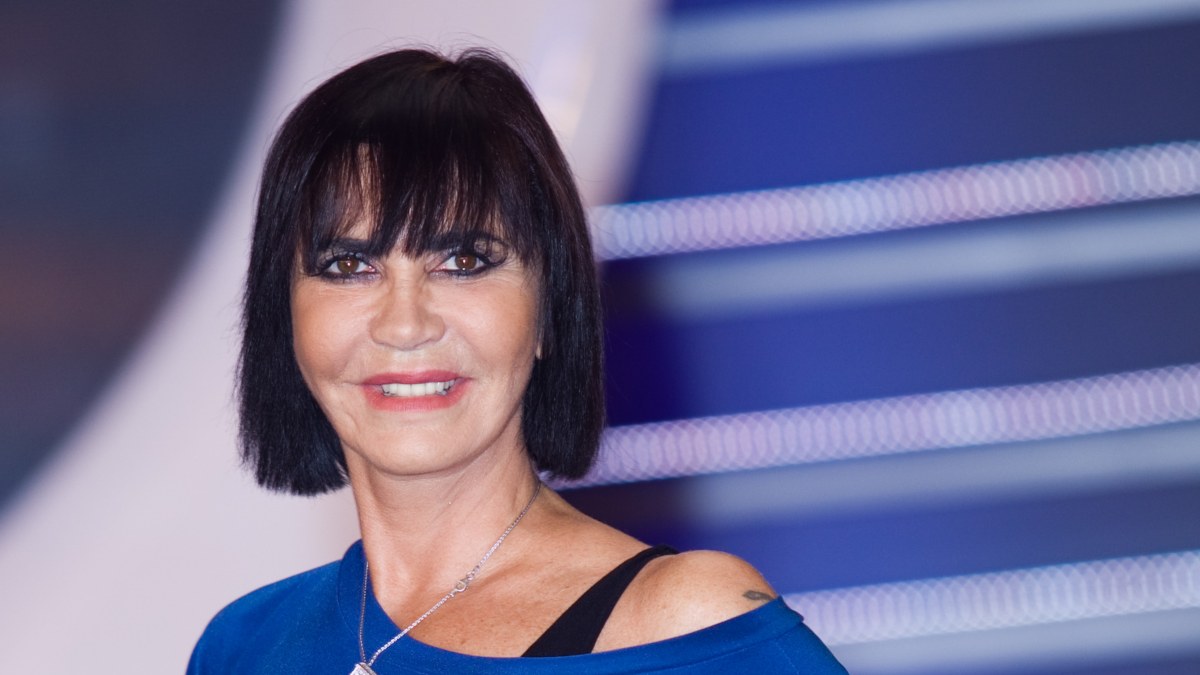
Marina Fiordaliso, widely recognized simply as Fiordaliso, is an iconic Italian singer who has captivated audiences with her powerful voice and emotional performances. Born on February 19, 1956, in Piacenza, Italy, Fiordaliso’s journey from a young girl with dreams of stardom to a celebrated figure in the Italian music scene is a testament to her talent, resilience, and passion for music. This article explores the life, career, and achievements of Marina Fiordaliso, highlighting the milestones that have defined her illustrious career.
Early Life and Musical Beginnings
Marina Fiordaliso was born into a musically inclined family in Piacenza, where her early exposure to music played a crucial role in shaping her career. Her father, Auro, and mother, Carla, supported her passion for music, enrolling her in the “Giuseppe Nicolini” Conservatory in Piacenza. It was here that Fiordaliso honed her skills in singing and piano, laying the foundation for her future career as a professional singer.
Despite the challenges of becoming a mother at a young age—she gave birth to her first child, a son, on February 10, 1972, at the age of 15—Fiordaliso remained committed to her musical ambitions. Her early experiences as a young mother did not deter her from pursuing her dreams. Instead, they fueled her determination to succeed in the music industry.
Fiordaliso’s first significant break came when she joined the Bagutti Orchestra, a well-known Italian ensemble. With the orchestra, she recorded several tracks, including “Io ho bisogno del mare,” which showcased her vocal abilities and caught the attention of industry professionals. Her big break came in 1981 when she was discovered by Depsa (Salvatore De Pasquale), a notable figure in the Italian music industry. This discovery marked the beginning of her solo career and set her on a path to stardom.
Rise to Fame: The Sanremo Music Festival
The early 1980s were a transformative period for Marina Fiordaliso, as she transitioned from performing with orchestras to establishing herself as a solo artist. Her breakthrough moment came in 1981 when she won the prestigious Castrocaro Music Festival with the song “Scappa via,” written by the legendary Italian musician Zucchero. This victory earned her a spot at the 1982 Sanremo Music Festival, Italy’s most renowned music competition, where she performed in the “Newcomers” section with the song “Una sporca poesia.”
Adopting the stage name Fiordaliso, Marina chose to use her surname as her professional moniker, a decision that would soon make her a household name across Italy. Her performance at Sanremo 1982, while not a winner, left a lasting impression on audiences and critics alike, paving the way for her subsequent success.
In 1983, Fiordaliso returned to Sanremo with the song “Oramai,” written by Claudio Daiano, who was also behind Loredana Berté’s iconic hit “Sei bellissima.” Fiordaliso’s powerful, raspy voice and emotive delivery drew comparisons to Berté, establishing her as one of the leading female voices in Italian pop music. Her performance that year earned her a third-place finish among the Newcomers and a respectable sixth-place finish overall, which further solidified her status as a rising star.
Her growing popularity led to a collaboration with Gianni Morandi, one of Italy’s most beloved singers. Fiordaliso joined Morandi on his tour, gaining valuable exposure and experience as she continued to develop her stage presence and vocal style.
Major Hits and International Success
1984 marked a turning point in Fiordaliso’s career with the release of her hit single “Non voglio mica la luna,” another collaboration with Zucchero. The song, which became her signature hit, captured the hearts of listeners with its catchy melody and heartfelt lyrics. “Non voglio mica la luna” was not only a commercial success in Italy, where it reached the top five at Sanremo, but it also resonated with audiences in Spain and Latin America, where it was released as “Yo no te pido la luna.”
The international success of “Non voglio mica la luna” catapulted Fiordaliso to stardom, and she quickly became a prominent figure in the Italian music scene. Her self-titled debut album, Fiordaliso, produced by Luigi Albertelli, further established her as a leading artist, featuring a collection of songs that showcased her vocal range and emotional depth.
In the late 1980s, Fiordaliso signed with the major record label EMI, which helped refine her image and expand her appeal. Her collaboration with the emerging fashion designers Dolce & Gabbana (Domenico Dolce and Stefano Gabbana) added a sophisticated touch to her public persona, while her musical production was handled by the acclaimed artist Toto Cutugno. Cutugno wrote and produced several songs for Fiordaliso, including the neomelodic hit “Per noi,” which she performed at the 1988 Sanremo Music Festival, finishing in eighth place.
Despite facing the demands of motherhood—she gave birth to her second son, Paolino, on January 3, 1989—Fiordaliso continued to pursue her career with unwavering determination. In 1989, she returned to Sanremo with the song “Se non avessi te,” another Cutugno composition, which earned her a sixth-place finish and further cemented her reputation as a powerful and emotive singer.
The 1990s: Continued Success and Evolution
As the 1990s unfolded, Fiordaliso continued to evolve as an artist, experimenting with new musical styles and collaborating with other prominent Italian musicians. In 1990, she joined forces with legendary singers Milva and Mia Martini for the television show “Europa Europa,” which highlighted her versatility and ability to perform alongside some of Italy’s most esteemed vocalists.
That same year, Fiordaliso released the album La vita si balla, featuring a mix of pop and rock influences that reflected her evolving musical tastes. The following year, she returned to the Sanremo stage with “Il mare più grande che c’è (I love you man),” a single from her album Il portico di Dio. The song’s powerful lyrics and Fiordaliso’s impassioned performance resonated with audiences, further solidifying her status as a mainstay of Italian pop music.
Throughout the 1990s, Fiordaliso remained a prolific artist, releasing new music and participating in various television programs. In 2000, she took a bold step by recording a single in Arabic, titled “Linda Linda,” which showcased her willingness to explore new musical territories and connect with diverse audiences.
The 2000s: Reality TV and Reinvention
The new millennium saw Fiordaliso embracing new opportunities and reinventing herself in response to the changing landscape of the music industry. In 2002, she returned to the Sanremo Music Festival with the song “Accidenti a te,” written by Marco Falagiani and Giancarlo Bigazzi. The song was included in her compilation album Risolutamente decisa, which featured a selection of her greatest hits and new material.
In 2003, Fiordaliso collaborated with Pierangelo Bertoli on the duet “Pescatore,” a track from his album 301 Guerre fa. The collaboration showcased her ability to blend her voice with that of other artists, creating a harmonious and emotive sound.
Fiordaliso’s career took an unexpected turn in 2004 when she participated in the reality TV show “Music Farm” on Rai 2. Although she was eliminated in a head-to-head challenge with Riccardo Fogli, the show reignited public interest in her career and introduced her to a new generation of fans.
Her success on “Music Farm” led to further television opportunities, including a co-hosting role on the popular Rai 2 show “Piazza Grande,” where she worked alongside Mara Carfagna and Giancarlo Magalli. Fiordaliso’s engaging personality and natural charisma made her a popular figure on Italian television, further expanding her reach beyond the music industry.
In 2006, Fiordaliso was cast in the Italian production of “Menopause – The Musical,” directed by Manuela Metri. The musical, which had been a hit in the United States, was equally successful in Italy, thanks in part to Fiordaliso’s dynamic performance. The show, which also featured Crystal White, Fioretta Mari, and Marisa Laurito, was praised for its humor and its exploration of women’s experiences with aging.
Fiordaliso continued to embrace reality television, participating in the third edition of “La Talpa,” hosted by Paola Perego, in 2008. Although she was eliminated after just three episodes, her appearance on the show kept her in the public eye and demonstrated her willingness to take on new challenges.
The 2010s and Beyond: A Resilient Star
As Fiordaliso entered the 2010s, she continued to remain active in the entertainment industry, taking on new roles and exploring different creative avenues. In January 2010, she starred in the musical “Animal Rock,” written by Sebastiano Bianco, alongside Paila Pavese and Miranda Martino. The musical, which combined elements of rock music and theatrical performance, was well-received by audiences and showcased Fiordaliso’s versatility as a performer.
Fiordaliso also began teaching, sharing her expertise in stage interpretation and singing at the Musical Artime Academy, directed by Fioretta Mari. Her role as an educator allowed her to mentor young talent and pass on the knowledge she had gained throughout her career.
In 2012, Fiordaliso embarked on a nationwide tour with her new show “Sponsorizzata,” which featured a mix of music, comedy, and storytelling. The tour was a success, and Fiordaliso’s performances were praised for their energy and emotional depth.
The following year, Fiordaliso participated in the popular Italian TV show “Tale e Quale Show,” hosted by Carlo Conti on Rai 1. The show, which challenges celebrities to impersonate famous singers, allowed Fiordaliso to showcase her vocal versatility as she performed as Loredana Berté, Tina Turner, Gianna Nannini, Mia Martini, and Aretha Franklin. Her performances were well-received by both the judges and the audience, and she returned for another season the following year.
In 2015, Fiordaliso released Frikandò, an album of new material that reflected her ongoing creative evolution. The album was followed by her participation in the 11th season of the reality show “L’Isola dei Famosi,” hosted by Alessia Marcuzzi on Canale 5, in 2016. Fiordaliso’s appearance on the show once again brought her into the spotlight, demonstrating her enduring appeal and resilience in the ever-changing world of entertainment.
In 2023, Fiordaliso continued her reality TV journey by participating in the 17th season of “Grande Fratello,” Italy’s version of “Big Brother.” Her presence on the show reaffirmed her status as a beloved public figure, with a career that has spanned multiple decades and continues to thrive.
Legacy and Impact
Marina Fiordaliso’s career is a testament to her talent, versatility, and determination. From her early days as a young mother pursuing her musical dreams to her rise as an international pop star and her later reinvention through reality TV and musical theater, Fiordaliso has remained a constant presence in the Italian entertainment industry.
Her powerful voice, emotional performances, and ability to connect with audiences have made her a beloved figure in Italian music and culture. Fiordaliso’s journey is one of resilience, adaptability, and a relentless pursuit of artistic expression. As she continues to evolve and take on new challenges, Marina Fiordaliso’s legacy as a trailblazer in Italian music and entertainment is secure, inspiring future generations of artists to follow in her footsteps.


