
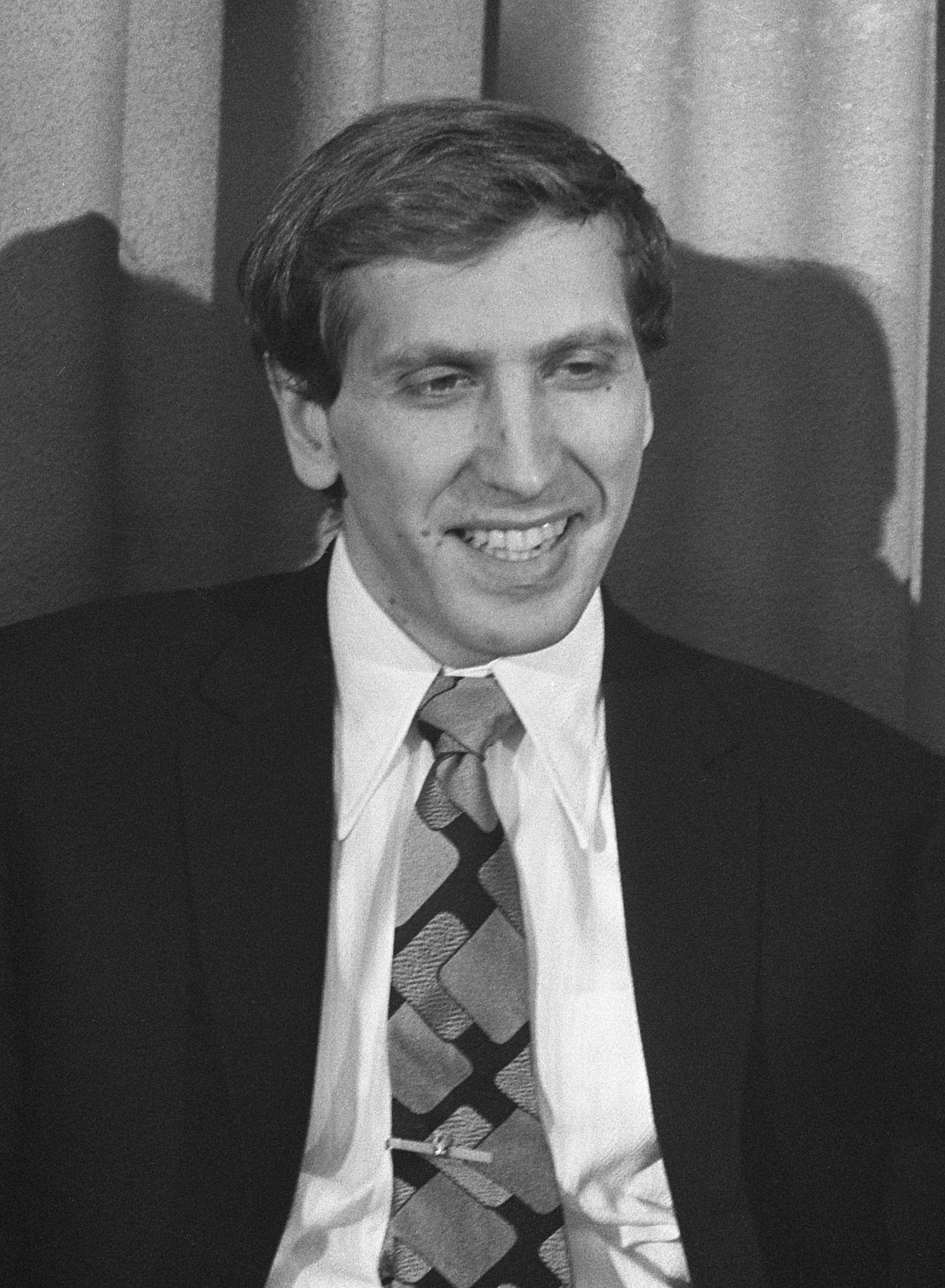
Bobby Fischer, born Robert James Fischer on March 9, 1943, in Chicago, Illinois, was a chess prodigy whose influence on the game of chess remains unparalleled. His rise to fame, characterized by his unmatched genius and equally eccentric behavior, turned him into one of the most enigmatic figures in the history of chess. Fischer’s life was marked by extraordinary achievements, including becoming the World Chess Champion, as well as a complex personal history that saw him retreat from public life and engage in controversial political views. To fully appreciate the significance of Bobby Fischer’s life, it is important to explore his early years, his path to becoming a chess legend, and the tumultuous later years of his life.
Early Life and Introduction to Chess
Bobby Fischer was born to Regina Wender, a Swiss-born American citizen of Jewish descent, and Gerhardt Fischer, a German biophysicist. However, Fischer’s mother raised him largely on her own after separating from his father. Fischer’s early years were spent in Brooklyn, New York, where he moved with his mother and older sister, Joan, when he was just six years old.
It was in Brooklyn that Fischer’s obsession with chess began. He learned to play the game by reading the instructions that came with a chess set his sister had bought. Fischer quickly displayed a natural aptitude for chess, immersing himself in the game with a singular focus. By the time he was 13, Fischer had become a student of Jack Collins, a well-respected chess coach who had trained several top players. Collins would become a mentor and father figure to Fischer, providing guidance during the formative years of his chess career.
Rising Star: The Early Successes
Bobby Fischer’s ascent in the world of chess was meteoric. In 1956, at the age of 13, Fischer won the U.S. Junior Chess Championship, demonstrating his prodigious talent. The following year, Fischer made headlines by winning the U.S. Chess Championship at just 14 years old, becoming the youngest ever to hold the title at that time. This victory also earned him a spot in the 1958 Interzonal tournament, a key stepping stone toward competing for the World Chess Championship.
In 1958, Fischer became the youngest Grandmaster in history at the age of 15, a record that stood for several years. His performance in the Interzonal tournament and his rapid rise through the ranks established him as a serious contender on the international chess scene. However, it was not just his victories that garnered attention—Fischer’s eccentric personality and uncompromising demands were already beginning to emerge.
The Eccentric Genius: Fischer’s Personality and Playing Style
Bobby Fischer was known not only for his brilliant chess play but also for his eccentric and often difficult personality. He was a fierce competitor who demanded perfection in every aspect of the game. Fischer’s insistence on fair play and strict adherence to rules sometimes bordered on paranoia. For example, during the 1959 U.S. Championship, Fischer insisted that the pairings be drawn in public and that his lawyer be present during the games to prevent any irregularities.
Fischer’s playing style was aggressive, creative, and marked by deep strategic understanding. He was known for his incredible ability to calculate complex positions many moves ahead, and his intuitive grasp of the game set him apart from his peers. Fischer’s preparation for matches was meticulous, and he studied his opponents’ games in detail, often finding weaknesses that others had overlooked.
The Path to the World Championship
Fischer’s goal was always clear: to become the World Chess Champion. However, his journey to the title was not without its challenges. Throughout the 1960s, Fischer’s participation in international tournaments was sporadic. He withdrew from the 1962 Candidates Tournament, citing unfair treatment and accusing the Soviet players of colluding against him. Fischer’s distrust of the chess establishment and his reluctance to travel outside the United States led to several years of limited competition.
It wasn’t until the late 1960s that Fischer returned to the international chess scene with renewed determination. In 1970, Fischer participated in the Candidates Tournament in Palma de Mallorca, where he delivered a series of crushing victories, including two 6-0 sweeps against Mark Taimanov and Bent Larsen. These extraordinary results earned him the right to challenge the reigning World Champion, Boris Spassky of the Soviet Union.
The Match of the Century: Fischer vs. Spassky
The 1972 World Chess Championship match between Bobby Fischer and Boris Spassky, held in Reykjavik, Iceland, is widely regarded as one of the most significant events in chess history. Dubbed the “Match of the Century,” it was not only a battle between two top chess players but also a symbolic confrontation between the United States and the Soviet Union during the Cold War.
The match was fraught with drama from the start. Fischer made numerous demands, including changes to the playing conditions and prize money, and his participation was in doubt until the last minute. It was rumored that a phone call from U.S. National Security Advisor Henry Kissinger and a doubling of the prize fund persuaded Fischer to go through with the match.
The match itself was a rollercoaster of emotions. After losing the first game and forfeiting the second, Fischer appeared to be on the brink of defeat. However, he staged a remarkable comeback, winning several games and eventually clinching the title with a final score of 12.5-8.5. Fischer’s victory was hailed as a triumph not only for himself but also for the United States, as it ended 24 years of Soviet domination in the chess world.
A Recluse and the Decline of a Legend
Bobby Fischer’s victory in 1972 marked the pinnacle of his career, but it also signaled the beginning of his retreat from public life. After becoming World Champion, Fischer refused to play in any official tournaments, citing dissatisfaction with the conditions set by FIDE, the international chess federation. When FIDE rejected his demands for changes to the rules governing the World Championship, Fischer forfeited his title in 1975, and Anatoly Karpov was declared the new World Champion by default.
Following his withdrawal from competitive chess, Fischer became increasingly reclusive. He lived in relative obscurity, avoiding the media and public appearances. His behavior grew more erratic, and he became known for his anti-Semitic and anti-American rants, which shocked and alienated many of his former supporters. Fischer’s mental state appeared to deteriorate as he espoused conspiracy theories and made inflammatory statements.
The 1992 Rematch with Spassky
In 1992, Fischer briefly returned to the public eye when he accepted an invitation to play a rematch against Boris Spassky. The match took place in Yugoslavia, which was under United Nations sanctions at the time due to the ongoing conflict in the region. Fischer’s decision to play in Yugoslavia violated U.S. government sanctions, and he was warned by the U.S. State Department not to proceed. In a defiant gesture, Fischer publicly spat on the warning letter, effectively severing his ties with the United States.
The rematch, held 20 years after their first encounter, was billed as the “Revenge Match of the 20th Century.” Although Fischer won the match, it was clear that both players were well past their prime, and the event did not recapture the magic of their 1972 encounter. Nevertheless, Fischer’s victory provided him with a financial windfall, as the prize money for the match was substantial.
Final Years and Controversies
After the 1992 rematch, Bobby Fischer once again disappeared from the public eye. He lived a nomadic life, moving between various countries, including Hungary, the Philippines, and Japan. Fischer’s controversial statements and actions continued to make headlines, particularly his anti-Semitic remarks and his denial of the Holocaust, which alienated many of his former admirers.
In 2004, Fischer was arrested in Japan for traveling on a revoked U.S. passport. Facing extradition to the United States, where he was wanted for violating sanctions during the 1992 match, Fischer sought asylum in Iceland. The Icelandic government, recognizing Fischer’s historical connection to the country due to the 1972 World Championship, granted him citizenship, allowing him to avoid extradition.
Fischer spent his final years living in Reykjavik, Iceland, largely cut off from the world. He continued to make occasional appearances in the media, but his mental and physical health deteriorated. On January 17, 2008, Bobby Fischer died at the age of 64 from kidney failure. His death marked the end of a life that was as brilliant as it was troubled.
Legacy and Impact on Chess
Bobby Fischer’s legacy in the world of chess is immense. He is widely regarded as one of the greatest chess players of all time, and his contributions to the game continue to be studied and admired by players and enthusiasts around the world. Fischer’s victory in the 1972 World Championship match against Boris Spassky is often credited with sparking a worldwide chess boom, particularly in the United States, where interest in the game surged in the aftermath of his win.
Fischer’s approach to chess was revolutionary. He was known for his deep preparation, his use of opening theory, and his ability to find creative and unexpected solutions in complex positions. Fischer’s games are still analyzed today, and his influence can be seen in the playing styles of many top players who followed in his footsteps.
However, Fischer’s legacy is also a cautionary tale. His genius was accompanied by personal demons that ultimately led to his isolation and downfall. Fischer’s life serves as a reminder of the fine line between brilliance and madness, and the potential cost of a singular obsession.
Conclusion: The Enigma of Bobby Fischer
Bobby Fischer was a chess prodigy whose impact on the game was profound and lasting. His rise from a young boy in Brooklyn to the World Chess Champion was marked by incredible achievements, but also by personal struggles and controversies that cast a shadow over his legacy. Fischer’s life story is one of triumph and tragedy, a tale of a brilliant mind that both revolutionized and was consumed by the game of chess.
As we reflect on the life and career of Bobby Fischer, it is clear that his contributions to chess are unparalleled. His influence continues to be felt in the chess world, and his games remain a source of inspiration for players of all levels. Yet, Fischer’s story is also a reminder of the complexities of genius, and the challenges that can accompany extraordinary talent.
Bobby Fischer’s legacy is one of brilliance, controversy, and ultimately, an enduring impact on the game of chess. His life will be remembered not only for his extraordinary achievements on the chessboard but also for the enigma that he became—a man whose genius was as captivating as it was elusive.


