
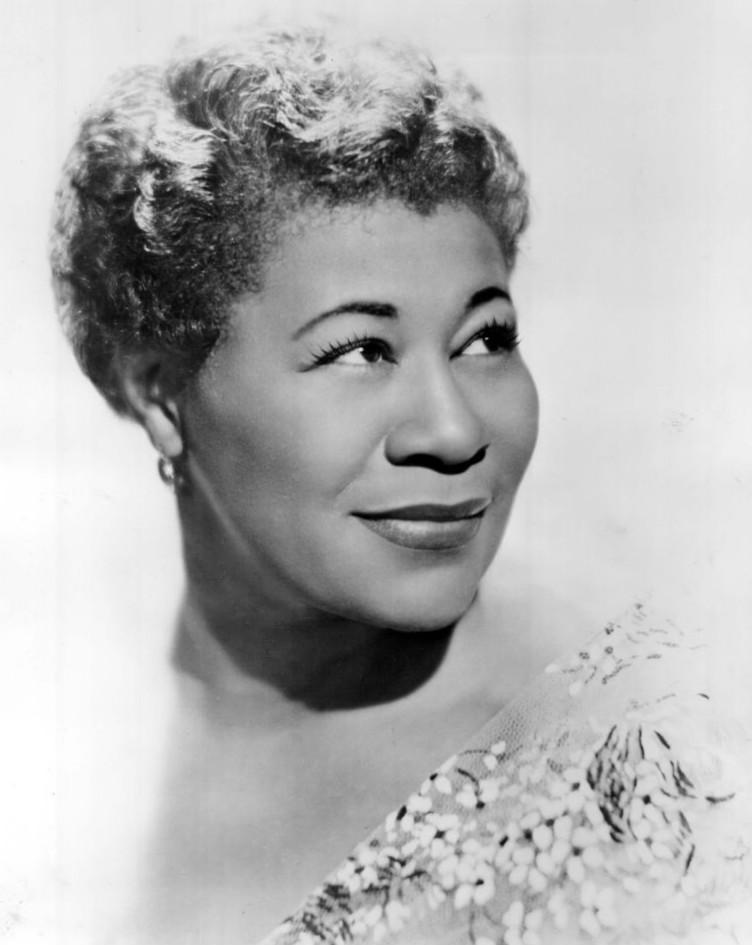
Ella Fitzgerald, often referred to as the “First Lady of Song” or the “Queen of Jazz,” is one of the most celebrated and influential vocalists in the history of jazz music. Born on April 25, 1917, in Newport News, Virginia, Fitzgerald’s extraordinary career spanned over six decades, during which she captivated audiences with her impeccable vocal technique, versatility, and infectious joy for music. Known for her scat singing, pure tone, and wide vocal range, Fitzgerald remains a towering figure in American music.
Early Life: From Humble Beginnings to a Shining Star
Ella Jane Fitzgerald was born into modest circumstances. Her early life was marked by hardship and adversity, but these challenges only seemed to fuel her determination to succeed. After her parents separated shortly after her birth, Fitzgerald moved with her mother to Yonkers, New York, where she spent much of her childhood. Tragically, her mother passed away when Ella was just 15, leaving her to navigate the difficult transition from adolescence to adulthood largely on her own.
Following her mother’s death, Fitzgerald lived with her aunt in Harlem, but she soon dropped out of school and found herself struggling to make ends meet. For a time, she even lived on the streets. However, Fitzgerald’s fortunes began to change when she entered one of the first amateur talent contests at the Apollo Theater in Harlem. Originally intending to dance, Fitzgerald became so nervous that she opted to sing instead, performing “Judy” and “The Object of My Affection.” Her performance won her the contest and set her on a path toward stardom.
The Chick Webb Era: A Star is Born
Fitzgerald’s victory at the Apollo Theater caught the attention of Chick Webb, a renowned drummer and bandleader who offered her the chance to sing with his orchestra. In 1934, at the age of 17, Fitzgerald joined Webb’s band, where she quickly became a featured vocalist. Her time with Webb’s orchestra proved to be a formative period in her career. It was during this time that Fitzgerald began to hone her craft, developing the scat singing and improvisational skills that would later become her trademark.
In 1938, Fitzgerald recorded her first major hit with Webb’s orchestra, “A-Tisket, A-Tasket,” a playful and catchy song that she co-wrote. The song was a massive success, topping the charts for weeks and selling over a million copies. “A-Tisket, A-Tasket” catapulted Fitzgerald to national fame and solidified her status as a rising star in the jazz world. Following Webb’s death in 1939, Fitzgerald took over as the leader of the band, which was renamed Ella Fitzgerald and Her Famous Orchestra.
Expanding Horizons: Solo Career and Beyond
After leading Webb’s band for several years, Fitzgerald decided to embark on a solo career in the early 1940s. As a solo artist, she explored a wide range of musical styles, including swing, bebop, blues, and ballads. Her versatility and ability to adapt to different genres allowed her to reach an even broader audience. By the mid-1940s, Fitzgerald was a household name, known not only for her jazz performances but also for her popular renditions of the Great American Songbook.
In 1946, Fitzgerald joined Norman Granz’s “Jazz at the Philharmonic” (JATP) tour, an event that would further elevate her career. The JATP tours were instrumental in popularizing jazz and bringing it to concert halls around the world. Through these tours, Fitzgerald collaborated with some of the greatest jazz musicians of the era, including Dizzy Gillespie, Charlie Parker, and Louis Armstrong. Her performances were characterized by her incredible vocal agility, effortless improvisation, and deep emotional connection to the music.
The Songbook Series: A Legacy of Timeless Music
One of the defining projects of Fitzgerald’s career was her series of “Songbook” albums, recorded between 1956 and 1964. These albums, produced by Norman Granz and released on the Verve label, featured Fitzgerald performing the works of some of America’s most renowned composers, including Cole Porter, George and Ira Gershwin, Rodgers and Hart, Duke Ellington, and Irving Berlin.
The “Songbook” series was a monumental achievement in American music. Fitzgerald’s interpretations of these classic songs were marked by her impeccable diction, pitch-perfect intonation, and ability to convey the emotional depth of the lyrics. The albums were critically acclaimed and commercially successful, earning Fitzgerald several Grammy Awards and cementing her reputation as one of the greatest interpreters of American popular song.
Notably, her renditions of George Gershwin’s “Summertime” and Irving Berlin’s “Cheek to Cheek” remain some of the most iconic performances in the history of jazz and popular music. The “Songbook” albums not only showcased Fitzgerald’s extraordinary vocal talent but also played a crucial role in preserving and promoting the American Songbook as a vital part of the country’s cultural heritage.
Collaborations and Iconic Performances
Throughout her career, Fitzgerald collaborated with many of the greatest musicians of her time. Her partnership with Louis Armstrong, in particular, produced some of the most memorable recordings in jazz history. The duo’s albums, including “Ella and Louis” (1956) and “Ella and Louis Again” (1957), featured a mix of jazz standards and popular songs, with Fitzgerald’s crystal-clear voice blending beautifully with Armstrong’s gravelly tones.
Another significant collaboration was with Duke Ellington, one of jazz’s most important composers and bandleaders. Their work together, including the album “Ella Fitzgerald Sings the Duke Ellington Songbook” (1957), highlighted Fitzgerald’s ability to interpret complex and sophisticated compositions. These collaborations were not only commercial successes but also critical milestones in Fitzgerald’s career, further establishing her as a versatile and innovative artist.
Fitzgerald’s live performances were legendary. Her ability to captivate an audience with her voice alone was unparalleled. One of her most famous live recordings is from a concert at the Berlin Deutschlandhalle in 1960, where she performed “Mack the Knife” with such spontaneity and flair that it became one of her signature songs. The recording won a Grammy Award and is still celebrated as one of the greatest live performances in jazz history.
Later Years and Legacy
Despite facing significant health challenges in her later years, including a battle with diabetes that eventually led to the amputation of both her legs, Fitzgerald continued to perform and record well into the 1990s. Her final public performance was in 1992 at Carnegie Hall, a venue where she had performed numerous times throughout her career. Even as her health declined, Fitzgerald’s voice retained its warmth, clarity, and emotional power.
Ella Fitzgerald passed away on June 15, 1996, in Beverly Hills, California, at the age of 79. Her death marked the end of an era in jazz, but her legacy lives on. Fitzgerald’s influence on jazz and popular music is immeasurable. She broke barriers for female vocalists, particularly African American women, in a male-dominated industry. Her ability to convey the nuances of emotion through her voice set a new standard for vocal performance.
Fitzgerald’s numerous awards and honors reflect the impact she had on music and culture. She was the first African American woman to win a Grammy Award, and over the course of her career, she won 13 Grammys, including a Lifetime Achievement Award. In 1987, she was awarded the National Medal of Arts, the highest honor given to artists by the United States government. She was also recognized by the Kennedy Center Honors in 1979 and received the Presidential Medal of Freedom in 1992.
Cultural Impact and Continuing Influence
Ella Fitzgerald’s music continues to resonate with audiences around the world. Her recordings are still widely listened to and have been reissued numerous times. Songs like “Dream a Little Dream of Me,” “It Don’t Mean a Thing (If It Ain’t Got That Swing),” and “How High the Moon” remain popular standards, beloved by jazz aficionados and casual listeners alike.
Fitzgerald’s influence extends beyond her music. She was a trailblazer for women in the music industry and an inspiration for countless artists who followed in her footsteps. Vocalists such as Billie Holiday, Sarah Vaughan, and more contemporary singers like Diana Krall and Norah Jones have cited Fitzgerald as a major influence on their work.
In addition to her musical legacy, Fitzgerald’s story of overcoming adversity to achieve greatness has inspired many. Her journey from a troubled youth to one of the most revered figures in music history is a testament to her resilience, talent, and determination. Fitzgerald’s life and career have been the subject of numerous books, documentaries, and films, further cementing her status as a cultural icon.
Conclusion
Ella Fitzgerald was more than just a singer; she was a force of nature, a beacon of excellence, and a symbol of the transformative power of music. Her contributions to jazz and American popular music are unparalleled, and her influence continues to be felt across genres and generations. Fitzgerald’s voice, with its extraordinary range and emotional depth, remains one of the most recognizable and beloved in music history.
As we reflect on her life and career, it is clear that Ella Fitzgerald’s legacy is not only defined by her numerous accolades and achievements but also by the joy and inspiration she brought to millions of people around the world. Her music transcends time, and her story continues to inspire. Ella Fitzgerald will forever be remembered as the “First Lady of Song,” a title that speaks to her enduring impact on the world of music.


