
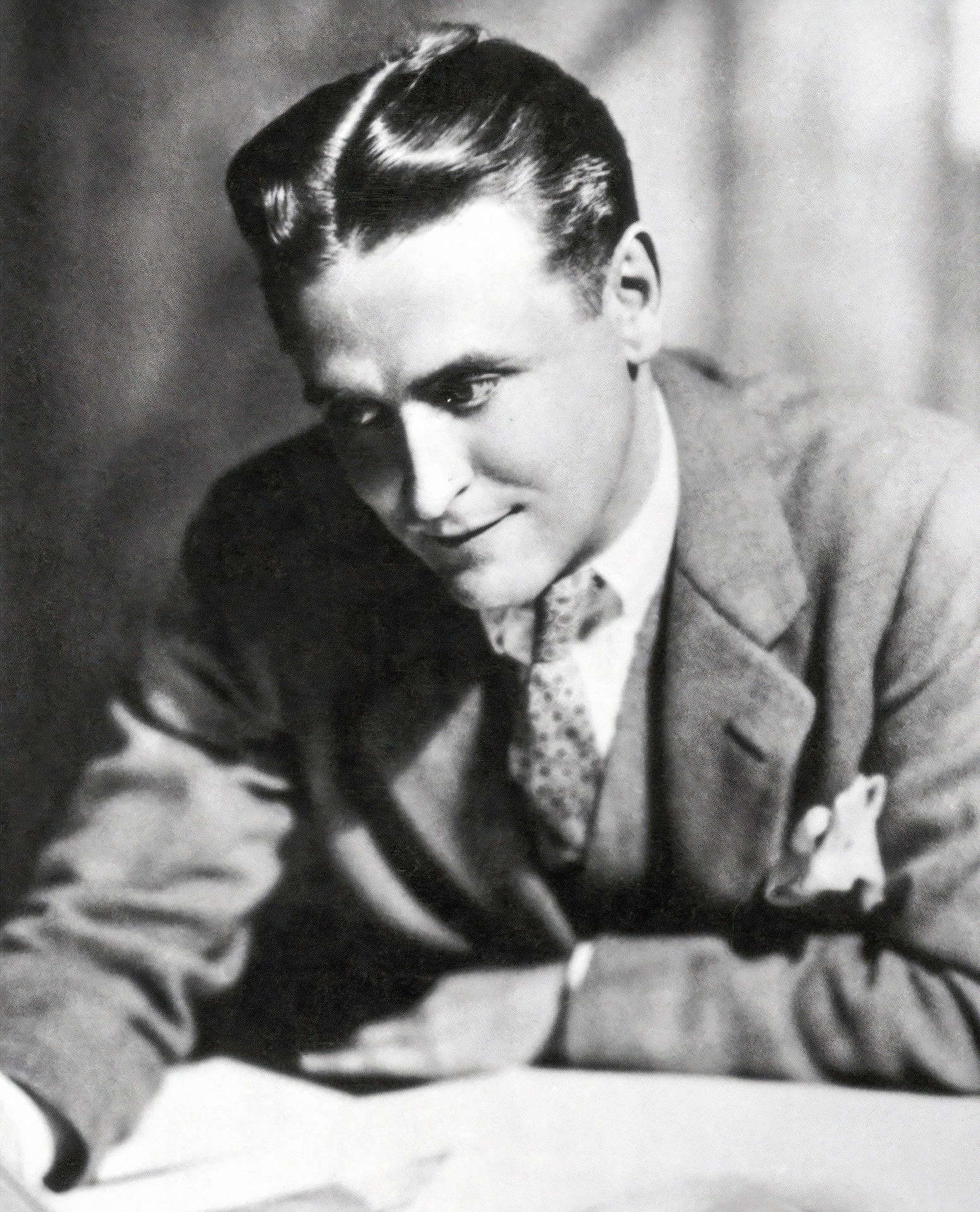
Francis Scott Fitzgerald, widely known as F. Scott Fitzgerald, is one of the most iconic and celebrated American authors of the 20th century. Born on September 24, 1896, in Saint Paul, Minnesota, Fitzgerald’s life was a blend of literary brilliance, personal struggles, and the vibrant yet tumultuous spirit of the Jazz Age—a term he coined himself. His works, most notably The Great Gatsby, continue to resonate with readers around the world, offering a profound exploration of the American Dream, wealth, and the complexities of human nature.
Early Life: Foundations of a Literary Giant
F. Scott Fitzgerald was born into a family with deep roots in American history. His father, Edward Fitzgerald, was a descendant of Francis Scott Key, the author of the American national anthem, “The Star-Spangled Banner.” Despite this prestigious lineage, the Fitzgerald family faced financial difficulties, which profoundly influenced young Scott’s perception of wealth and class—themes that would later become central to his work.
Fitzgerald’s early education was marked by his introduction to literature and his budding talent for writing. However, his academic performance was inconsistent, largely due to his divided focus between his studies and his growing passion for writing. At the age of 13, Fitzgerald published his first piece of writing, a detective story in the school newspaper. This early success encouraged him to pursue writing more seriously.
In 1913, Fitzgerald enrolled at Princeton University, where he immersed himself in the world of literature and drama. It was at Princeton that he began to cultivate his identity as a writer, joining the university’s literary societies and writing for the Princeton Tiger, a humor magazine. However, his academic performance at Princeton was lackluster, and he ultimately left the university without completing his degree when he enlisted in the U.S. Army during World War I in 1917.
World War I and the Beginning of a Literary Career
Fitzgerald’s military service was a turning point in his life. Although he never saw combat, his time in the army provided him with ample opportunity to write. It was during this period that he began working on his first novel, The Romantic Egotist. The novel was initially rejected by publishers, but it laid the groundwork for his later work.
While stationed in Alabama, Fitzgerald met Zelda Sayre, the daughter of a prominent local judge. Zelda was beautiful, vivacious, and emblematic of the new, liberated woman of the Jazz Age. Fitzgerald was immediately smitten, and the two began a passionate relationship. However, Zelda’s initial reluctance to marry him due to his lack of financial stability spurred Fitzgerald to work even harder to achieve literary success.
Fitzgerald’s determination paid off when his revised novel, This Side of Paradise, was accepted for publication by Scribner’s in 1920. The novel, which drew heavily from Fitzgerald’s experiences at Princeton and his life in New York, was an immediate success. It captured the spirit of a generation disillusioned by the war but eager to embrace the hedonism and excess of the Roaring Twenties. The success of This Side of Paradise not only established Fitzgerald as a literary sensation but also led Zelda to agree to marry him. The couple became a symbol of the Jazz Age, living a life of luxury, parties, and excess that both fascinated and troubled Fitzgerald.
The Jazz Age and The Great Gatsby
The 1920s were a period of immense productivity and success for Fitzgerald, but they were also marked by personal challenges and growing dissatisfaction. After the success of This Side of Paradise, Fitzgerald published The Beautiful and Damned in 1922, a novel that explored the lives of a glamorous but doomed couple, reflecting Fitzgerald’s own fears about his marriage to Zelda.
During this time, the Fitzgeralds lived a lavish lifestyle, often spending beyond their means. They traveled frequently, spending time in New York, Paris, and the French Riviera, where they mingled with other expatriate American writers and artists, including Ernest Hemingway and Gertrude Stein. Despite their glamorous lifestyle, the Fitzgeralds’ marriage was increasingly strained by Scott’s alcoholism and Zelda’s mental health issues.
In 1924, Fitzgerald began work on what would become his most famous novel, The Great Gatsby. Published in 1925, the novel is often hailed as the greatest American novel of the 20th century. The Great Gatsby tells the story of Jay Gatsby, a mysterious and wealthy man obsessed with rekindling a romance with Daisy Buchanan, a woman he loved in his youth. Through Gatsby’s tragic pursuit of the American Dream, Fitzgerald offered a critical examination of the corruption and moral decay beneath the glittering surface of the Jazz Age.
Despite its now-legendary status, The Great Gatsby was not an immediate success upon its release. Sales were modest, and the novel received mixed reviews. Fitzgerald was deeply disappointed by the public’s response, as he believed The Great Gatsby was his finest work. It wasn’t until after Fitzgerald’s death that the novel gained the recognition it deserved, eventually becoming a staple of American literature and a definitive exploration of the American Dream.
The Decline: Personal Struggles and Zelda’s Illness
As the 1920s drew to a close, Fitzgerald’s life began to unravel. The stock market crash of 1929 marked the end of the Roaring Twenties, and with it, the Fitzgeralds’ extravagant lifestyle. Fitzgerald’s financial situation became increasingly precarious, and his heavy drinking took a toll on his health and productivity.
Meanwhile, Zelda’s mental health deteriorated. In 1930, she was diagnosed with schizophrenia and spent much of the next few years in and out of mental hospitals in Europe and the United States. The strain of Zelda’s illness and the financial burden of her medical care exacerbated Fitzgerald’s own struggles with depression and alcoholism.
In 1934, Fitzgerald published his fourth novel, Tender Is the Night, which was heavily influenced by his own experiences and Zelda’s illness. The novel tells the story of Dick Diver, a brilliant but troubled psychiatrist, and his wife Nicole, who suffers from a mental illness. Tender Is the Night is a poignant exploration of the disintegration of a marriage and the personal cost of success. However, like The Great Gatsby, the novel received a lukewarm reception and did little to alleviate Fitzgerald’s financial difficulties.
The Hollywood Years and Final Days
In an effort to regain financial stability, Fitzgerald moved to Hollywood in 1937, where he worked as a screenwriter. Although Fitzgerald was not particularly successful in Hollywood, his time there allowed him to pay off some of his debts and continue writing. He also began a romantic relationship with columnist Sheilah Graham, which provided him with some stability during his final years.
While in Hollywood, Fitzgerald began work on his final novel, The Last Tycoon (also known as The Love of the Last Tycoon), a story about the life of a powerful Hollywood producer. The novel, which was unfinished at the time of Fitzgerald’s death, was published posthumously in 1941. The Last Tycoon is considered one of Fitzgerald’s most mature works, offering a nuanced critique of the American film industry and the fleeting nature of success.
Fitzgerald’s health continued to decline during his time in Hollywood. Years of heavy drinking had taken a toll on his body, and he suffered from frequent illnesses. On December 21, 1940, at the age of 44, Fitzgerald died of a heart attack in Graham’s apartment in Hollywood. His death marked the end of a life filled with both extraordinary literary achievements and profound personal challenges.
Legacy: The Enduring Influence of F. Scott Fitzgerald
Although F. Scott Fitzgerald did not live to see the full impact of his work, his legacy has grown exponentially since his death. Today, he is regarded as one of the greatest American writers of the 20th century, with The Great Gatsby standing as a cornerstone of American literature. The novel’s exploration of themes such as the American Dream, wealth, love, and identity continues to resonate with readers and has inspired countless adaptations in film, theater, and other media.
Fitzgerald’s portrayal of the Jazz Age, with its excesses and moral ambiguities, has shaped our understanding of the 1920s as a defining era in American history. His work captures the paradox of the American Dream—the promise of success and happiness alongside the reality of disillusionment and decay. This duality, so central to The Great Gatsby, remains a powerful commentary on American society.
In addition to his novels, Fitzgerald’s short stories, such as “The Diamond as Big as the Ritz,” “The Curious Case of Benjamin Button,” and “Babylon Revisited,” are also celebrated for their insight into human nature and the complexities of life during the Jazz Age. These stories, like his novels, explore the themes of ambition, desire, and the consequences of excess.
Fitzgerald’s life and work have been the subject of numerous biographies, critical studies, and adaptations. His story is often seen as a cautionary tale about the dangers of pursuing fame and fortune at the expense of personal well-being. Yet, despite the hardships he faced, Fitzgerald’s ability to capture the essence of his time and his enduring literary contributions have secured his place as a towering figure in American literature.
Conclusion
F. Scott Fitzgerald’s life was as complex and multifaceted as the characters he created. His work continues to be studied, admired, and adapted, offering timeless insights into the human condition and the American experience. Fitzgerald’s exploration of the American Dream, with all its allure and pitfalls, remains as relevant today as it was in the 1920s. As readers and scholars continue to engage with his work, Fitzgerald’s legacy as one of America’s greatest writers is assured.


