
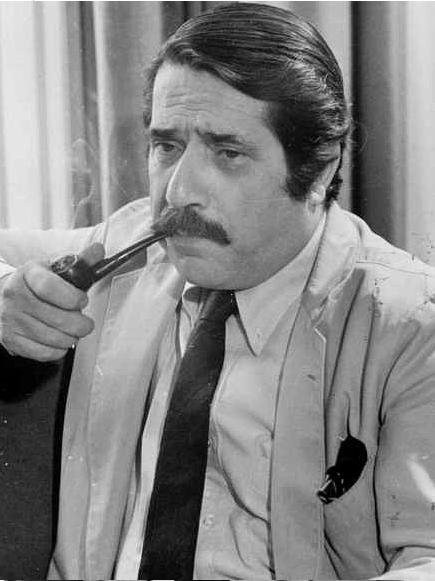
Ennio Flaiano was a multifaceted Italian writer, screenwriter, and journalist whose influence on Italian culture is profound and enduring. Born on March 5, 1910, in Pescara, Italy, Flaiano became one of the most distinguished literary and cinematic figures of the 20th century. His work is characterized by a sharp wit, biting satire, and a deep sense of the absurdities of life. Best known for his collaboration with Federico Fellini and his incisive critiques of post-war Italian society, Flaiano’s legacy continues to resonate in contemporary discussions of literature and film.
Early Life and Education: Shaping a Satirical Voice
Ennio Flaiano’s early life was marked by frequent moves due to his family’s circumstances. He spent his childhood between various schools and boarding houses in cities like Pescara, Camerino, Senigallia, Fermo, and Chieti. These experiences, combined with the instability of his upbringing, likely contributed to the development of his keen observational skills and his ability to capture the nuances of human behavior—a hallmark of his later work.
In the early 1920s, Flaiano moved to Rome, where he completed his education and enrolled in the Faculty of Architecture at the University of Rome. However, he did not complete his degree, as his interests increasingly shifted towards literature and journalism. During this period, Flaiano began writing for various publications, developing his distinct voice in a range of articles and essays. His early work as a journalist laid the groundwork for his later success as a writer and screenwriter.
Flaiano’s connections with other intellectuals of the time, including the likes of Mario Pannunzio, were crucial in shaping his literary career. His contributions to prominent Italian magazines such as Oggi, Il Mondo, and Quadrivio positioned him as a significant voice in Italian cultural discourse. These early journalistic endeavors honed his ability to dissect societal norms with a blend of humor and cynicism, a skill that would become central to his literary and cinematic works.
The 1940s: War, Marriage, and the Beginnings of a Cinematic Career
In 1940, Ennio Flaiano married Rosetta Rota, the sister of the famous Italian composer Nino Rota. The marriage marked the beginning of a tumultuous period in Flaiano’s life, marked by both personal and professional challenges. In 1942, the couple welcomed their daughter Lelè, who was tragically diagnosed with a severe form of encephalopathy. This heartbreaking situation profoundly affected Flaiano, and he later wrote about the experience in his work La valigia delle Indie, which offers a poignant reflection on the challenges of parenting a child with a serious illness.
The 1940s also marked the beginning of Flaiano’s involvement in the world of cinema. In 1943, he started working as a screenwriter, collaborating with some of Italy’s most celebrated filmmakers, including Federico Fellini, Alessandro Blasetti, Mario Monicelli, and Michelangelo Antonioni. His relationship with the film industry was complex; Flaiano harbored a deep ambivalence towards cinema, seeing it as both a necessary outlet for his creativity and a source of frustration due to its collaborative nature, which often clashed with his individualistic tendencies.
Flaiano’s contribution to Italian cinema during this period cannot be overstated. He played a crucial role in crafting the scripts for some of the most iconic films of the post-war era. His work on Roma città libera (1948), Guardie e ladri (1951), and La romana (1954) are just a few examples of his cinematic achievements. However, it was his collaboration with Fellini that truly defined his cinematic legacy.
Collaboration with Federico Fellini: A Creative Partnership
Ennio Flaiano’s collaboration with Federico Fellini is perhaps the most significant aspect of his career. Together, they created some of the most enduring films in Italian cinema. Their partnership began with I Vitelloni (1953), a semi-autobiographical film that captured the malaise of post-war Italian youth. Flaiano’s ability to infuse the script with a blend of humor and pathos helped establish the tone that would characterize much of Fellini’s work.
Following the success of I Vitelloni, Flaiano and Fellini collaborated on several other projects, including La Strada (1954), Le Notti di Cabiria (1957), La Dolce Vita (1960), and 8½ (1963). These films are now considered masterpieces of world cinema, and Flaiano’s contributions were instrumental in shaping their narratives and themes. His satirical perspective and sharp dialogue added depth to Fellini’s visual storytelling, creating films that were both entertaining and intellectually stimulating.
La Dolce Vita is perhaps the most famous of their collaborations, a film that encapsulates the decadence and moral ambiguity of Rome in the 1950s. Flaiano’s script, with its keen observations of the vacuity of high society, remains a critical component of the film’s enduring appeal. The term “La Dolce Vita” itself has entered the cultural lexicon, symbolizing the hedonism and excesses of that era.
Despite their successful collaborations, Flaiano often expressed frustration with the compromises inherent in filmmaking. He once remarked that “cinema is an invention for those who cannot write,” highlighting his preference for the written word over the collaborative nature of film production. Nonetheless, his work with Fellini remains a testament to his genius and versatility as a writer.
Literary Achievements: “Tempo di uccidere” and Beyond
While Ennio Flaiano is perhaps best known for his work in cinema, his literary contributions are equally significant. In 1947, he published his first and only novel, Tempo di uccidere (A Time to Kill), a work that drew heavily on his experiences as a soldier in Ethiopia during Italy’s colonial wars. The novel, which explores themes of guilt, morality, and the absurdity of war, was critically acclaimed and won the prestigious Premio Strega, Italy’s most important literary award.
Tempo di uccidere stands out not only for its exploration of the psychological effects of war but also for its innovative narrative style, blending realism with elements of existentialism. The novel’s protagonist, an Italian officer grappling with the consequences of a tragic mistake, is emblematic of the moral ambiguity that pervades much of Flaiano’s work. The book’s success established Flaiano as a major literary figure in post-war Italy.
Flaiano’s literary output also included numerous essays, short stories, and plays. His writing was characterized by a satirical edge, often exposing the contradictions and hypocrisies of Italian society. His ability to distill complex social and political issues into sharp, witty commentary made him a prominent voice in Italian letters. His essays, many of which were published in newspapers like Corriere della Sera, are still read and admired for their incisive critiques of Italian culture and politics.
A Satirical Observer of Rome: The Chronicler of a Changing City
Ennio Flaiano had a complicated relationship with Rome, the city where he spent much of his life. He was both enamored with and critical of the city, which served as the backdrop for much of his work. Through his writing, Flaiano documented the rapid changes that Rome underwent in the post-war period, from its urban development to its evolving social dynamics.
His observations of Roman life were often tinged with irony and a deep sense of disillusionment. Flaiano was acutely aware of the city’s flaws—the corruption, the bureaucracy, the disparity between the rich and the poor—and he did not shy away from exposing these issues in his work. Yet, despite his criticisms, Flaiano also captured the beauty and vitality of Rome, making it a central character in much of his writing.
Flaiano’s portrayal of Rome is perhaps best encapsulated in his contribution to La Dolce Vita, where the city serves as both a glamorous setting and a symbol of moral decay. His ability to capture the contradictions of Rome—its charm and its corruption, its history and its modernity—has made his work an enduring part of the city’s cultural fabric.
Final Years and Legacy: A Lasting Influence on Italian Culture
In the final years of his life, Ennio Flaiano continued to write, though his health began to decline. In 1971, he suffered a heart attack, which prompted him to begin organizing his papers and manuscripts. He intended to publish a comprehensive collection of his work, but much of it was published posthumously.
On November 20, 1972, Flaiano was admitted to a clinic for routine tests when he suffered a second heart attack, which proved fatal. He was 62 years old at the time of his death. Despite his relatively early death, Flaiano left behind a rich body of work that continues to be studied and celebrated.
After his death, Flaiano’s wife, Rosetta, passed away in 2003, and their remains were eventually moved to a family tomb in the cemetery of Maccarese, near Rome. Flaiano’s legacy lives on through various tributes, including a monument in his hometown of Pescara and the prestigious Premio Flaiano, established in his honor in 1974. The award is one of Italy’s most important honors for screenwriters and filmmakers, ensuring that Flaiano’s contributions to Italian culture are remembered and celebrated.
Conclusion
Ennio Flaiano was a brilliant writer, a master of satire, and a keen observer of Italian society. His work, whether in literature, film, or journalism, offers a profound exploration of the human condition, marked by wit, irony, and a deep understanding of life’s absurdities. Through his collaborations with Federico Fellini and his own literary achievements, Flaiano left an indelible mark on Italian culture.
Flaiano’s legacy continues to inspire writers, filmmakers, and intellectuals in Italy and beyond. His ability to navigate the complexities of post-war Italian society with both humor and seriousness makes his work as relevant today as it was during his lifetime. As a chronicler of Rome, a satirist of modern life, and a pioneer in Italian cinema, Ennio Flaiano remains a towering figure in the world of art and letters.


