
Introduction: The Man Who Changed Medicine Forever
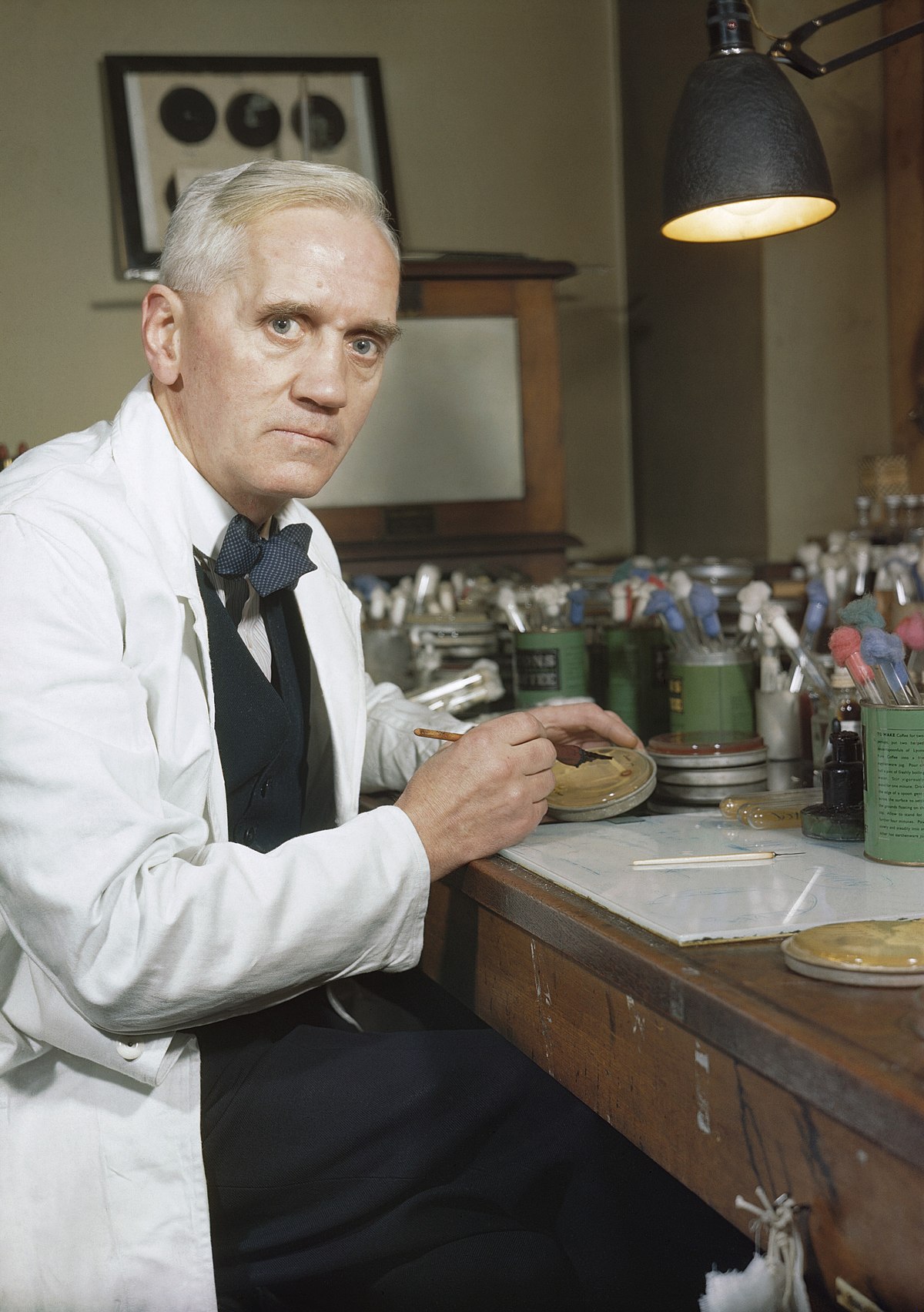
Alexander Fleming, a name synonymous with one of the most significant medical breakthroughs in history, was born on August 6, 1881, in Lochfield, near Darvel, Scotland. His discovery of penicillin, the first true antibiotic, transformed the medical field and saved countless lives. However, Fleming’s journey to this groundbreaking discovery was not straightforward. It involved perseverance, serendipity, and a deep commitment to science. In this article, we delve into the life, fame, and key highlights of Alexander Fleming’s illustrious career, exploring the nuances of his contributions to science and medicine.
Early Life: From Rural Scotland to the Pinnacle of Science
A Humble Beginning
Alexander Fleming was the third of four children born to a family of farmers. His early life was spent in the rural landscapes of Scotland, where he developed a keen interest in the natural world. Fleming’s father passed away when he was just seven years old, leaving his mother and older step-brother to manage the family farm. The young Fleming faced numerous challenges, particularly the long distances he had to travel to attend school. Despite these hardships, his fascination with nature and curiosity about the world around him never waned.
Education and Early Career
Fleming’s academic journey was marked by determination and a relentless pursuit of knowledge. After completing his early education, he worked briefly as a shipping clerk, a job that provided him with the financial means to pursue his studies. In 1901, Fleming enrolled at St. Mary’s Hospital Medical School in London, where he quickly distinguished himself as an exceptional student. He earned his medical degree in 1906 and began working under the guidance of Sir Almroth Wright, a leading immunologist of the time. This mentorship would prove crucial in shaping Fleming’s scientific career.
The Discovery of Penicillin: A Serendipitous Breakthrough
The Accidental Discovery
The discovery of penicillin in 1928 is often described as one of the most fortuitous events in the history of science. Fleming, who was then a bacteriologist at St. Mary’s Hospital, noticed something unusual while conducting experiments on Staphylococcus bacteria. He observed that a petri dish, which had accidentally been left uncovered, became contaminated with a mold. Surprisingly, the bacteria surrounding the mold were destroyed, while those further away remained unaffected. This mold, later identified as Penicillium notatum, produced a substance that could kill a wide range of bacteria.
Challenges and Initial Skepticism
Despite the significance of his discovery, Fleming’s initial findings did not generate widespread enthusiasm. Penicillin had limitations—it did not cure all infections, and it was not effective against viruses. Additionally, the substance was unstable and difficult to produce in large quantities. As a result, Fleming’s work was largely overlooked by the scientific community at the time.
Fame and Recognition: From Obscurity to Global Acclaim
The Revival of Penicillin
It wasn’t until the late 1930s and early 1940s that Fleming’s work gained the recognition it deserved. Howard Florey and Ernst Boris Chain, two researchers at the University of Oxford, were able to purify and mass-produce penicillin. Their work demonstrated the antibiotic’s incredible potential, particularly during World War II when it was used to treat infected wounds among Allied soldiers. The success of penicillin in saving lives during the war catapulted Fleming, Florey, and Chain to global fame.
Nobel Prize and Later Life
In 1945, Alexander Fleming, along with Florey and Chain, was awarded the Nobel Prize in Physiology or Medicine for the discovery of penicillin. Fleming’s contribution to medicine was finally recognized on a global scale, and he became a celebrated figure in the scientific community. Despite his newfound fame, Fleming remained humble, often emphasizing the role of chance in his discovery. He continued to work at St. Mary’s Hospital until his retirement and was knighted in 1944, becoming Sir Alexander Fleming.
Personal Life and Legacy
Fleming married Sarah Marion McElroy, an Irish nurse, in 1915. The couple had one son, Robert, who followed in his father’s footsteps by pursuing a career in medicine. Marion passed away in 1949, and Fleming later married Dr. Amalia Koutsouri-Vourekas in 1953. Fleming’s second marriage was brief, as he passed away on March 11, 1955, at the age of 73. He was buried in St. Paul’s Cathedral, London, a resting place reserved for the most distinguished British figures.
The Impact of Penicillin: Revolutionizing Medicine
A New Era in Medicine
The discovery of penicillin marked the beginning of the antibiotic era, revolutionizing the treatment of bacterial infections. Before penicillin, common infections such as pneumonia, syphilis, and gonorrhea were often fatal. Penicillin provided an effective treatment for these and many other infections, dramatically reducing mortality rates and transforming the practice of medicine. The antibiotic’s success also spurred the development of other antibiotics, further expanding the arsenal of drugs available to combat bacterial diseases.
Challenges and Controversies
While penicillin’s impact on medicine was overwhelmingly positive, its widespread use also led to challenges. One of the most significant issues has been the development of antibiotic resistance. Over time, many bacteria have evolved mechanisms to resist the effects of penicillin and other antibiotics, rendering some treatments less effective. This has prompted ongoing research into new antibiotics and alternative therapies, as well as efforts to promote responsible use of existing drugs.
Fleming’s Warnings
Fleming himself was aware of the potential for antibiotic resistance. In his Nobel Prize acceptance speech, he warned of the dangers of overusing penicillin, particularly when the drug was administered in insufficient doses. He cautioned that improper use could lead to the development of resistant bacteria, a concern that remains relevant today as the world grapples with the rise of antibiotic-resistant infections.
Historical Context: Penicillin and the World Wars
World War I: A Prelude to Discovery
Fleming’s experience during World War I played a crucial role in shaping his research. As a captain in the Royal Army Medical Corps, he witnessed firsthand the devastating effects of infections on wounded soldiers. The limited effectiveness of antiseptics in treating deep wounds fueled his desire to find a more effective treatment for bacterial infections. This experience laid the groundwork for his later discovery of penicillin.
World War II: Penicillin’s Role on the Front Lines
Penicillin’s first major test came during World War II, where it was used extensively to treat wounded soldiers. The antibiotic’s ability to prevent and treat infections in battlefield injuries saved thousands of lives and contributed significantly to the war effort. The success of penicillin during the war also led to its widespread adoption in civilian medicine, further cementing its place as one of the most important medical discoveries of the 20th century.
Conclusion: The Enduring Legacy of Alexander Fleming
Alexander Fleming’s discovery of penicillin not only changed the course of medicine but also saved millions of lives. His work laid the foundation for the modern antibiotic era, and his legacy continues to influence medical research and practice today. Despite the challenges of antibiotic resistance, the impact of penicillin remains a testament to the power of scientific discovery and its potential to transform the world. Fleming’s life and achievements serve as an inspiration to future generations of scientists and medical professionals, reminding us of the importance of curiosity, perseverance, and the willingness to embrace the unexpected.


