
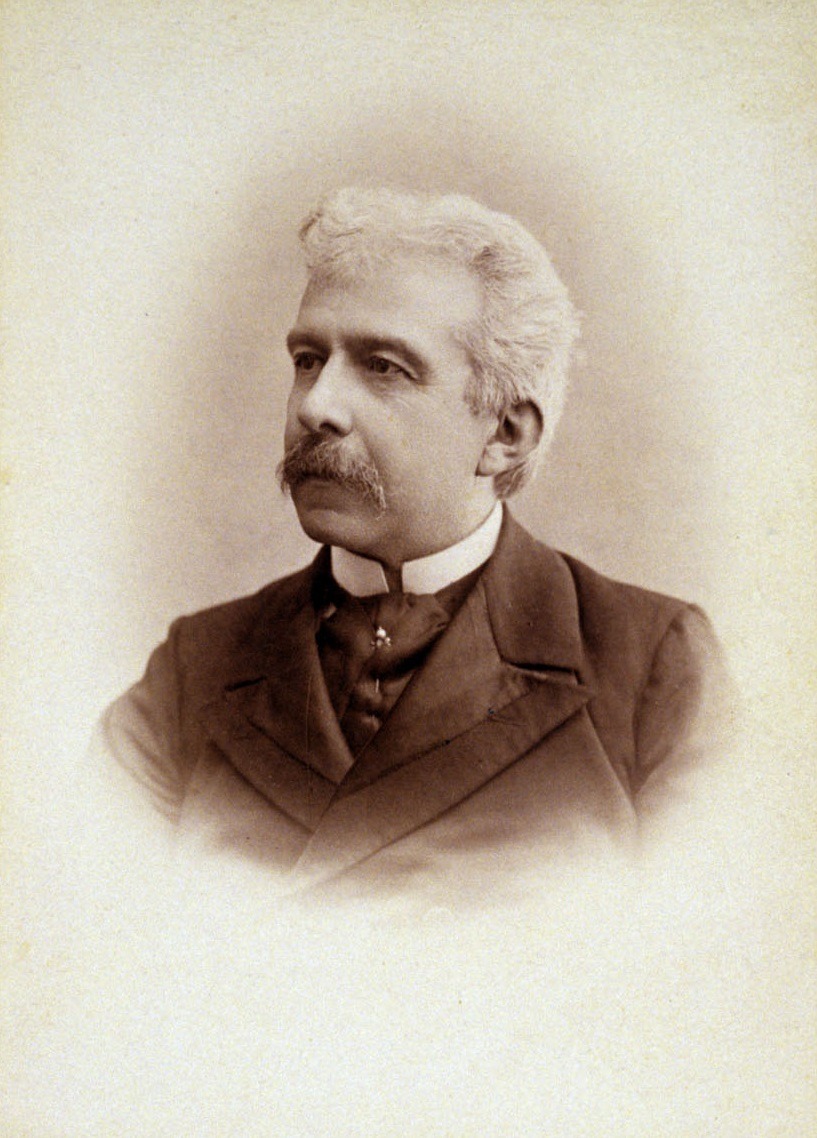
Antonio Fogazzaro, born on March 25, 1842, in Vicenza, Italy, was a prominent Italian novelist and poet whose works reflect the deep cultural and religious currents of his time. His literary output and public life intersected with significant historical and ideological movements, making him a pivotal figure in the late 19th and early 20th centuries. This article explores Fogazzaro’s life, his rise to fame, and the lasting impact of his work on Italian literature and culture.
Early Life and Education: A Foundation in Faith and Literature
Antonio Fogazzaro was born into an affluent and patriotic family deeply involved in the anti-Austrian struggle. This environment of fervent nationalism and religious devotion profoundly shaped his worldview. He received a strict Catholic education, which was complemented by his studies under Giacomo Zanella, a poet and educator who significantly influenced Fogazzaro’s intellectual development.
Zanella not only instilled in Fogazzaro a love for literature but also sparked his interest in the complex relationship between religious faith and scientific progress. This duality would become a central theme in Fogazzaro’s work, reflecting the broader societal tensions of his era as Italy grappled with modernity.
Fogazzaro’s literary interests were further shaped by the second wave of Romanticism, particularly the works of Victor Hugo and other European writers. These influences nurtured a deep sensitivity in Fogazzaro, which would later be evident in the emotional depth and moral complexity of his characters.
Transition from Law to Literature: The Birth of a Novelist
After completing his secondary education in Vicenza, Fogazzaro pursued legal studies at the University of Padua and later at the University of Turin, where he graduated in 1864. Although he briefly practiced law, first in Turin and then in Milan, Fogazzaro quickly realized that his true passion lay in literature.
In 1866, Fogazzaro married Countess Margherita di Valmarana, and the couple eventually settled in Milan. This move marked a decisive turning point in his life, as he began to fully dedicate himself to writing. Milan, a vibrant cultural hub, provided the ideal environment for Fogazzaro to develop his literary voice.
Early Literary Works: Exploring Themes of Faith and Modernity
Fogazzaro’s first major literary work, Miranda, a poem published in 1874, signaled his entry into the Italian literary scene. This was followed by Valsolda in 1876, a collection of lyrical poems that foreshadowed many of the themes that would dominate his later works, including the tension between faith and reason, the beauty of nature, and the complexities of human emotions.
His debut novel, Malombra (1881), introduced readers to a world of psychological depth and moral ambiguity, a hallmark of Fogazzaro’s style. The novel’s exploration of the supernatural, set against the backdrop of a decaying aristocratic family, was a departure from the more straightforward narratives of his contemporaries. This work laid the groundwork for Fogazzaro’s subsequent novels, which increasingly grappled with the challenges of modernity and religious belief.
The Rise to Fame: Piccolo Mondo Antico and Its Success
The publication of Piccolo Mondo Antico (1895) marked a significant milestone in Fogazzaro’s career. This novel, often considered his masterpiece, is set in the Lombardy region during the Italian unification and reflects Fogazzaro’s deep engagement with the historical and cultural issues of his time.
Piccolo Mondo Antico (translated as The Little World of the Past) delves into the lives of a provincial family caught in the turmoil of the Risorgimento, Italy’s movement for unification. Through the story of Franco and Luisa, a young couple navigating personal and political struggles, Fogazzaro explores themes of love, duty, and the conflicts between tradition and progress.
The novel was a critical and commercial success, earning Fogazzaro widespread acclaim and establishing him as one of Italy’s leading novelists. The success of Piccolo Mondo Antico also allowed Fogazzaro to reach an international audience, further solidifying his reputation as a writer of global significance.
Engaging with Positivism and Darwinism: Fogazzaro’s Intellectual Journey
As Fogazzaro’s fame grew, so did his intellectual curiosity. He engaged deeply with the philosophical currents of his time, particularly positivism and Darwinism. The impact of Charles Darwin’s theory of evolution, which challenged traditional religious views of creation, was profound in late 19th-century Europe. Fogazzaro grappled with these ideas, seeking to reconcile his deep Catholic faith with the new scientific paradigms.
This intellectual struggle is evident in his later novels, particularly in Il Santo (The Saint), published in 1905. The novel reflects Fogazzaro’s attempt to bridge the gap between faith and reason, advocating for a reformed Catholicism that could coexist with modern scientific thought. However, this novel was met with considerable controversy and was ultimately placed on the Index of Forbidden Books by the Catholic Church.
The Modernist Movement and the Conflict with the Catholic Church
Fogazzaro’s involvement with the Modernist movement—a group of Catholic intellectuals who sought to modernize the Church by incorporating contemporary scientific and philosophical ideas—brought him into direct conflict with the Vatican. Modernism, which aimed to align Catholicism with modern culture and thought, was viewed with suspicion by the conservative elements within the Church.
Fogazzaro’s Il Santo was seen as a challenge to the Church’s authority, and despite his deep personal faith, he was accused of heresy. Pope Pius X, who was staunchly opposed to Modernism, took a hard stance against the movement, culminating in the encyclical Pascendi Dominici Gregis in 1907, which condemned Modernist ideas.
Faced with the Church’s condemnation, Fogazzaro publicly submitted to the Church’s authority, but he did so without renouncing his personal beliefs. This tension between obedience to the Church and intellectual freedom is a recurring theme in his later works, particularly in his final novel, Leila (1910).
Leila: Fogazzaro’s Final Statement
Leila was intended as a response to the controversies surrounding Il Santo, but it too was condemned by the Church. The novel reflects Fogazzaro’s ongoing struggle to reconcile his faith with his intellectual convictions. In Leila, Fogazzaro explores the themes of redemption, love, and the possibility of spiritual renewal, but the novel’s reception was overshadowed by the continuing conflict with the Catholic hierarchy.
Tragically, Fogazzaro did not live to see the full impact of his final work. He passed away on March 7, 1911, in Vicenza, following complications from surgery. His death marked the end of a career that had been both celebrated and contested, but his influence on Italian literature and culture endures.
Antonio Fogazzaro’s Legacy: A Complex Cultural Icon
Antonio Fogazzaro’s legacy is multifaceted. On one hand, he is remembered as a masterful novelist whose works captured the moral and intellectual challenges of his time. His ability to create characters who grapple with profound ethical dilemmas resonated with readers in Italy and beyond, making his novels enduring classics of Italian literature.
On the other hand, Fogazzaro’s involvement with the Modernist movement and his conflicts with the Catholic Church highlight his role as a cultural and intellectual pioneer. He was a writer who dared to question the status quo, pushing the boundaries of what was acceptable in both literature and religious thought.
Fogazzaro’s novels remain relevant today, not only as historical documents of a particular time and place but also as explorations of universal themes such as faith, doubt, love, and the search for meaning. His work continues to be studied and appreciated for its rich psychological insight, its lyrical beauty, and its courageous engagement with the most pressing issues of his day.
Historical Context: The Intersection of Literature, Religion, and Modernity
To fully understand Antonio Fogazzaro’s work, it is essential to consider the broader historical and cultural context in which he lived. The late 19th and early 20th centuries were a time of great change in Europe, marked by the rise of scientific thought, the decline of traditional religious authority, and the emergence of new social and political movements.
Fogazzaro’s work reflects these broader trends, particularly the tension between tradition and modernity. His novels often portray characters caught between the old and the new, struggling to find their place in a rapidly changing world. This tension is perhaps most evident in his exploration of the relationship between faith and science—a central concern for many intellectuals of his time.
Fogazzaro’s engagement with these issues places him in the company of other great European writers who grappled with similar themes, such as Leo Tolstoy in Russia and Thomas Hardy in England. Like these writers, Fogazzaro used his fiction to explore the moral and spiritual dilemmas of his age, making his work not only a reflection of his time but also a timeless exploration of the human condition.
Antonio Fogazzaro in the Modern Era: A Lasting Influence
Today, Antonio Fogazzaro is recognized as one of Italy’s most important literary figures. His works are studied in schools and universities, and his novels continue to be read by those interested in the intersection of literature, religion, and philosophy. Fogazzaro’s exploration of the complexities of faith, his engagement with modern science, and his deep understanding of human psychology have ensured his place in the canon of Italian literature.
Fogazzaro’s influence extends beyond literature; his ideas have also had a lasting impact on religious thought, particularly in the context of the ongoing dialogue between faith and reason. In this sense, Fogazzaro can be seen as a precursor to later Catholic intellectuals who have sought to reconcile the teachings of the Church with the realities of the modern world.
Conclusion: The Enduring Legacy of Antonio Fogazzaro
Antonio Fogazzaro’s life and work offer a compelling portrait of a man who was deeply engaged with the intellectual and spiritual challenges of his time. His novels, with their rich psychological insight and profound moral questions, continue to resonate with readers today. As a writer, Fogazzaro was both a product of his time and a pioneer who pushed the boundaries of what was possible in literature and religious thought.
His legacy is one of courage, intellectual curiosity, and a deep commitment to exploring the most profound questions of human existence. In an era of rapid change and uncertainty, Fogazzaro’s work offers a reminder of the enduring power of literature to illuminate the complexities of the human soul.


