
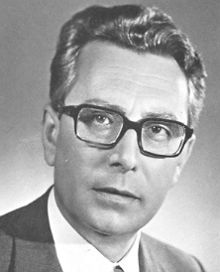
Arnaldo Forlani is a significant figure in Italian political history, known for his extensive career within the Christian Democracy party (Democrazia Cristiana, or DC) and his influence during some of Italy’s most turbulent political periods. Born on December 8, 1925, in Pesaro, Italy, Forlani’s life and career have been marked by both his achievements in government and his involvement in some of Italy’s most notorious political scandals. This article explores Forlani’s life, political career, and the key events that have defined his legacy.
Early Life and Political Beginnings
Arnaldo Forlani was born in the coastal city of Pesaro, in the Marche region of Italy. He pursued higher education in law, earning a degree in jurisprudence, which laid the groundwork for his entry into the legal and political spheres. Forlani’s political career began in earnest in 1948, when he became the provincial secretary of the Christian Democracy party in Pesaro. This role marked the start of his long association with the DC, a party that would dominate Italian politics for several decades.
Forlani quickly rose through the ranks, serving as a provincial and later a municipal councilor in his hometown. His early involvement in local politics provided him with a deep understanding of the political landscape, which would serve him well in his subsequent national roles. By 1954, Forlani had gained enough recognition to be appointed to the national directorate of the DC, positioning him as a key player in the party’s leadership.
Rise to National Prominence
Forlani’s national political career gained momentum in the 1960s. In 1969, he was elected as the Secretary of the Christian Democracy party, a position he held until 1973. His leadership during this period was characterized by efforts to maintain party unity and manage the various factions within the DC, a party known for its internal divisions. Forlani’s tenure as party secretary solidified his reputation as a skilled politician, adept at navigating the complexities of Italian politics.
In the same period, Forlani served in various ministerial roles, including as Minister of State Holdings and Minister for Relations with the United Nations. These positions allowed him to build a broad base of experience in government and deepen his influence within the DC. His role as Minister for Relations with the United Nations, in particular, highlighted his capabilities in handling international affairs, a skill that would later be crucial during his tenure as Minister of Foreign Affairs.
Ministerial Roles and Foreign Affairs
One of the most significant phases of Forlani’s career came in the mid-1970s, when he served as Italy’s Minister of Defense in the fourth and fifth governments led by Aldo Moro, another key figure in Italian politics. During his time as Defense Minister, Forlani played a crucial role in overseeing Italy’s military policies during a period of Cold War tensions.
In 1976, Forlani was appointed as Minister of Foreign Affairs under Prime Minister Giulio Andreotti. This role placed him at the forefront of Italy’s international relations during a pivotal time in European history. Notably, in 1977, Forlani visited Portugal to express Italy’s support for Portugal’s bid to join the European Economic Community (EEC), underscoring his influence in shaping Italy’s foreign policy and its role within the broader European context.
Prime Ministership and Political Challenges
Arnaldo Forlani’s ascent to the position of Prime Minister came in 1980, marking the peak of his political career. His term as Prime Minister, however, was relatively brief, lasting from October 1980 to May 1981. Forlani’s premiership was a period of significant challenges, both domestically and internationally. Domestically, Italy was grappling with economic difficulties, social unrest, and the continuing threat of political violence from extremist groups.
One of the most defining moments of Forlani’s time as Prime Minister was the exposure of the Propaganda Due (P2) Masonic Lodge scandal. The P2 scandal, which involved a secretive Masonic lodge with significant influence over Italian politics, business, and media, shocked the nation. The delayed publication of the P2 membership list, which included numerous high-profile figures, led to widespread criticism of Forlani’s handling of the situation. The scandal eroded public trust in the government and ultimately forced Forlani to resign from his position as Prime Minister in May 1981.
Despite the controversy, Forlani remained an influential figure within the DC. He continued to serve in government, holding the position of Deputy Prime Minister in the cabinets led by Bettino Craxi during the 1980s. His ability to maintain a prominent role in government, even after the P2 scandal, demonstrated his resilience and the depth of his political connections.
The CAF Alliance and Later Years
In 1989, Forlani returned to a leadership role within the Christian Democracy party, taking over as the party’s secretary following Ciriaco De Mita. His return to the helm of the DC marked the beginning of the so-called CAF alliance, an acronym derived from the surnames of its key members: Bettino Craxi, Giulio Andreotti, and Arnaldo Forlani. This alliance represented a powerful bloc within Italian politics, dominating the country’s government during the late 1980s and early 1990s.
However, the political landscape in Italy was rapidly changing. The early 1990s saw the emergence of significant public discontent with the established political order, culminating in the Tangentopoli (Bribesville) scandal. Tangentopoli exposed widespread corruption within Italy’s political system, including illegal party financing and bribery. The scandal was part of the broader Mani Pulite (Clean Hands) investigation, which targeted corruption across the political spectrum.
Forlani’s involvement in the Tangentopoli scandal severely damaged his political career and reputation. He was implicated in the Enimont case, one of the most significant corruption cases of the era, which involved illicit party financing. During the Cusani trial, a key part of the Mani Pulite investigations, Forlani famously responded to questioning with “I don’t remember,” a phrase that became symbolic of the broader denial and evasion tactics used by many politicians of the time. In the end, Forlani was convicted of illegal party financing and received a sentence of two years and four months in prison.
The fallout from Tangentopoli and Mani Pulite marked the end of Forlani’s political career. The scandal led to the dissolution of the Christian Democracy party, which had been the dominant force in Italian politics for decades. Forlani’s downfall was emblematic of the broader collapse of the old political order in Italy, as the country entered a new era of political realignment.
Legacy and Impact on Italian Politics
Arnaldo Forlani’s career is a reflection of the complexities and challenges of Italian politics during the second half of the 20th century. He was a key figure in a party that shaped Italy’s post-war political landscape, and his influence extended across various facets of government and foreign policy. However, his legacy is also inextricably linked to the scandals and controversies that marked the decline of the Christian Democracy party and the broader political establishment in Italy.
Forlani’s tenure as Prime Minister, though short-lived, was marked by significant challenges, including the P2 scandal, which remains one of the most infamous episodes in Italian political history. His involvement in the Tangentopoli scandal further tainted his legacy, contributing to the perception of systemic corruption within the Italian political system.
Despite these controversies, Forlani’s contributions to Italian politics, particularly in the areas of foreign policy and defense, are noteworthy. His efforts to maintain Italy’s influence within the European community and his work in navigating the Cold War landscape highlight his capabilities as a statesman.
In the years following his departure from politics, Forlani has remained a figure of historical interest, particularly for those studying the dynamics of Italian politics during the 20th century. His career serves as a reminder of the challenges faced by politicians in navigating the often treacherous waters of Italian political life, where alliances, scandals, and public opinion can shift rapidly.
Conclusion
Arnaldo Forlani’s life and career offer a window into a critical period of Italian history, marked by both remarkable achievements and significant challenges. As a leading figure within the Christian Democracy party, Forlani played a crucial role in shaping Italy’s political landscape during the post-war era. His work in government, particularly in foreign affairs and defense, demonstrated his skills as a leader and a diplomat.
However, Forlani’s legacy is also defined by the scandals that marred his later years, including the P2 scandal and his involvement in Tangentopoli. These events not only ended his political career but also contributed to the broader collapse of the political order in Italy. Today, Forlani’s story serves as a complex narrative of power, influence, and the pitfalls of political life in Italy.
As we reflect on Arnaldo Forlani’s life, it is clear that his contributions to Italian politics are both significant and contentious. His legacy, like that of many political figures, is one of both accomplishment and controversy, offering valuable lessons for future generations of politicians and leaders.


