
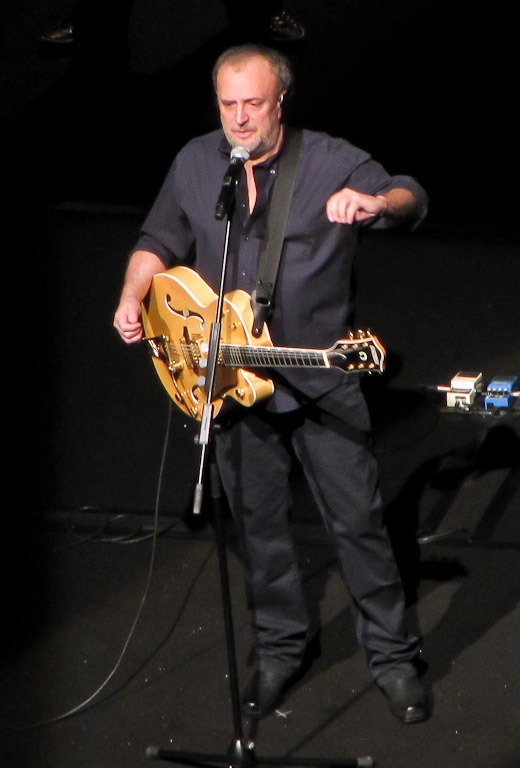
Ivano Fossati, born on September 21, 1951, in Genoa, Italy, is a distinguished figure in Italian music, known for his remarkable contributions as a singer-songwriter, composer, and multi-instrumentalist. With a career spanning over five decades, Fossati’s work reflects a deep understanding of the complexities of life, love, and art, making him one of the most respected and influential artists in Italy.
Early Life and Musical Beginnings
Ivano Fossati’s love for music emerged at an early age. Born in Genoa, a city with a rich musical tradition, Fossati began studying piano at the age of eight. His early exposure to music would lay the foundation for his future career, where he would not only master the piano but also become proficient in other instruments, including the guitar and flute. This versatility as a musician became a hallmark of his work, earning him a reputation as one of the most “cultured” and complete musicians on the Italian music scene.
Fossati’s early musical journey was shaped by the vibrant cultural environment of Genoa, known for its significant contributions to Italian music, particularly the canzone d’autore (singer-songwriter genre). His deep-seated passion for music led him to explore various musical styles, ultimately making him a versatile artist capable of blending different genres and influences.
The Progressive Rock Era: Delirium and Early Success
Fossati’s professional career began in the early 1970s when he became involved with the progressive rock movement. He joined the band Delirium as their frontman and flutist, contributing significantly to their first album, Dolce Acqua (1971). The album featured the hit single “Jesahel,” which became a massive success in 1972, establishing Fossati as a prominent figure in the Italian music scene. “Jesahel” was a quintessential example of the progressive rock genre, blending complex musical structures with poetic lyrics, a combination that would become a trademark of Fossati’s later work.
Despite the success with Delirium, Fossati’s restless creativity led him to explore new musical horizons. He left the band to pursue a solo career, which allowed him to delve deeper into various musical genres and to develop his unique style. This decision marked the beginning of an illustrious solo career that would see Fossati evolve into one of Italy’s most innovative and respected musicians.
Solo Career and Musical Evolution
Ivano Fossati’s solo career took off in the mid-1970s, and he quickly established himself as a versatile artist with a wide-ranging musical palette. His early solo work, including albums like Il Grande Mare Che Avremmo Traversato (1973) and Goodbye Indiana (1975), showcased his ability to blend rock, jazz, and folk influences with introspective and poetic lyrics.
Fossati’s music during this period was characterized by its sophisticated arrangements and thoughtful exploration of themes such as love, existentialism, and social commentary. His lyrics often reflected his deep engagement with literature and philosophy, drawing on a wide range of influences, from classical literature to contemporary social issues. This intellectual depth, combined with his musical versatility, made Fossati a unique voice in Italian music.
Collaborations and Compositions for Other Artists
Throughout his career, Ivano Fossati has been known for his collaborations with other artists, both as a songwriter and a producer. His work with legendary Italian singer-songwriter Fabrizio De André is particularly noteworthy. The two artists shared a deep mutual respect and a similar approach to music, which resulted in some of the most poignant and powerful songs in Italian music history. Songs like “Quello che non ho” and “Sally” remain iconic examples of their collaboration.
Fossati also worked with other prominent Italian musicians, including Francesco De Gregori, Mina, and Patty Pravo. His ability to craft songs that resonate with both artists and audiences alike has made him a sought-after collaborator in the Italian music industry. Many of Italy’s most celebrated singers, including Gianni Morandi, Fiorella Mannoia, Ornella Vanoni, and Mia Martini, have performed songs written by Fossati, further cementing his status as a master songwriter.
Transition to Instrumental Music and Exploration of New Genres
In the 1980s and 1990s, Fossati continued to expand his musical horizons. He began to explore jazz and world music, collaborating with internationally renowned musicians like Trilok Gurtu, Tony Levin, and Enrico Rava. This period of his career was marked by a willingness to experiment with new sounds and musical forms, reflecting his constant search for new ways to express his artistic vision.
One of the most significant developments in Fossati’s career was his shift towards instrumental music. In 2001, he released the album Not One Word, a completely instrumental work that showcased his skills as a composer and his ability to create evocative and atmospheric music. The album was a departure from his previous work, which had primarily focused on lyrical songwriting, but it was warmly received by critics and fans alike, who appreciated Fossati’s willingness to push the boundaries of his artistry.
Contributions to Film and Theater
In addition to his work in the music industry, Ivano Fossati has made significant contributions to film and theater. He has composed music for several films, including Il Toro (1994) and L’Estate di Davide (1998), directed by Carlo Mazzacurati. His ability to create music that complements and enhances the emotional impact of visual storytelling has made him a respected figure in the world of film scoring.
Fossati has also been involved in theater, composing music for various productions, including the stage adaptation of Lewis Carroll’s Alice’s Adventures in Wonderland, titled Alice allo Specchio. His work in theater and film demonstrates his versatility as a composer and his ability to adapt his musical talents to different artistic mediums.
Recognition and Awards
Ivano Fossati’s contributions to music and culture have been widely recognized throughout his career. He has received numerous awards and honors, including the prestigious Premio Tenco, an award given to outstanding singer-songwriters in Italy. In 2008, he won the David di Donatello Award for Best Original Song and the Nastro d’Argento for Best Song for “L’amore trasparente,” featured in the film Caos Calmo.
Fossati’s influence extends beyond Italy. His music has been released internationally, and his albums have been published in countries such as France, where his work has been particularly well-received. His international recognition reflects the universal appeal of his music, which transcends linguistic and cultural boundaries.
Retirement from the Stage and Continued Influence
In 2011, during an appearance on the television show Che tempo che fa, Ivano Fossati announced his retirement from live performances. This decision marked the end of an era for his fans, who had long admired his live performances for their emotional intensity and musical excellence. However, Fossati made it clear that while he would no longer perform on stage, he would continue to write and compose music.
Despite his retirement from performing, Fossati’s influence on Italian music remains strong. His songs continue to be covered by other artists, and his albums are still celebrated for their artistic depth and innovation. In 2019, Fossati released the album Mina Fossati, a collaboration with the legendary Italian singer Mina. The album was a critical and commercial success, demonstrating that Fossati’s creative spark remains undiminished.
Personal Life and Relationships
Ivano Fossati’s personal life has often been the subject of public interest, particularly his relationships with some of Italy’s most famous women. In the late 1970s, Fossati was involved in a tumultuous relationship with singer Mia Martini. The relationship was marked by intense passion and conflict, and it ultimately ended in heartbreak. Martini later described the relationship as a “minefield,” highlighting the challenges they faced as both lovers and artists.
Fossati later married Gildana Caputo, with whom he had a son, Claudio Fossati, who has followed in his father’s footsteps as a musician. However, the marriage ended in the early 1990s. In the mid-1990s, Fossati was romantically involved with actress Nancy Brilli, a relationship that was also marked by its intensity and eventual demise. Fossati’s relationships have often mirrored the emotional depth and complexity of his music, reflecting his passionate and introspective nature.
Legacy and Impact on Italian Music
Ivano Fossati’s legacy in Italian music is undeniable. His work has influenced countless artists and has helped to shape the course of Italian popular music. Fossati’s ability to blend different musical genres, from rock and jazz to classical and world music, has made him a unique and influential figure in the music industry.
Fossati’s lyrics, known for their poetic quality and deep emotional resonance, have touched the hearts of listeners for decades. His exploration of themes such as love, loss, and the passage of time has made his music timeless, appealing to multiple generations of listeners. Fossati’s commitment to artistic integrity and his refusal to conform to commercial pressures have earned him a place among the most respected and admired artists in Italy.
Conclusion
Ivano Fossati is a towering figure in Italian music, whose contributions as a singer-songwriter, composer, and multi-instrumentalist have left an indelible mark on the cultural landscape. His career, marked by a relentless pursuit of artistic excellence and a willingness to explore new musical territories, has made him one of the most influential and respected artists in Italy.
Fossati’s music, characterized by its intellectual depth and emotional intensity, continues to resonate with audiences both in Italy and abroad. His legacy is one of innovation, creativity, and a deep commitment to the art of music. As we reflect on Ivano Fossati’s life and career, it is clear that his influence on Italian music will endure for generations to come.


