
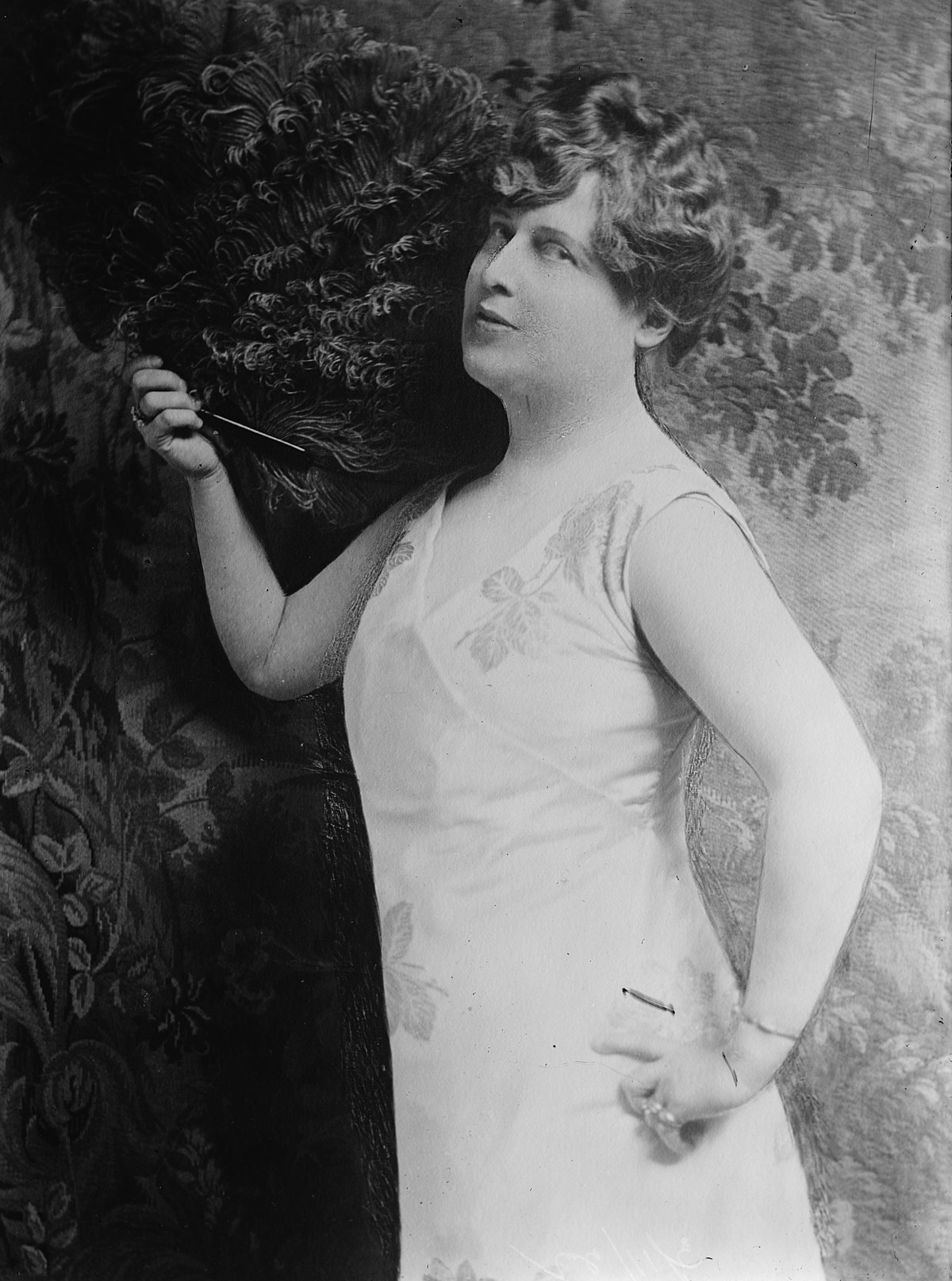
Florence Foster Jenkins, born Florence Foster on July 19, 1868, in Wilkes-Barre, Pennsylvania, was a woman whose legacy is as unique as her life. Her story is a fascinating blend of musical ambition, social influence, and the power of self-belief. Despite her lack of conventional talent, Jenkins became a celebrated figure in the New York music scene, ultimately earning a place in history as one of the most famously inept singers of all time. But her story is more than just about poor singing; it’s a tale of perseverance, the impact of social circles, and the nuanced interplay of fame and infamy.
Early Life and Musical Aspirations
Florence Foster was born into a wealthy family, her father Charles being a successful lawyer. From a young age, Florence showed a keen interest in music, particularly the piano. Her early musical education saw her excel, and she even performed across Pennsylvania and at the White House during Rutherford B. Hayes’s presidency. However, her ambition to study music abroad was thwarted by her father’s refusal to fund her education, a decision that would significantly shape her future.
In 1885, Florence married Dr. Frank Thornton Jenkins, a marriage that soon turned tragic as both contracted syphilis. This illness, which Florence would battle for the rest of her life, may have contributed to the neurological issues that later affected her musical abilities. After the marriage dissolved, Florence moved to Philadelphia, where she attempted to support herself by giving piano lessons. However, an arm injury forced her to abandon this pursuit, leaving her in financial distress until her mother’s support enabled them to relocate to New York.
The New York Years and Social Ascendancy
New York in the early 1900s was a city of opportunity, particularly for those with wealth and ambition. After her father’s death in 1909, Florence inherited a considerable fortune, which she used to pursue her dream of becoming a singer. This marked the beginning of her unique career. In New York, she became deeply involved in the city’s musical and social circles, founding her own club, The Verdi Club, and becoming a prominent figure in various cultural organizations.
Florence’s singing career began in earnest in 1912, despite her obvious limitations. Lacking rhythm, pitch, and tone, her performances were often off-key, with her accompanists frequently having to adjust to her unpredictable timing. Yet, Florence’s self-belief never wavered. She saw herself as a serious artist, on par with the great sopranos of her time, such as Luisa Tetrazzini and Frieda Hempel. This self-perception, combined with her eccentric performances, made her a beloved figure, especially in New York’s high society.
Her repertoire was as ambitious as it was ill-suited to her abilities, ranging from the challenging works of Brahms, Strauss, Verdi, and Mozart, to songs she composed herself with the help of her accompanist, Cosmé McMoon. Despite her lack of technical skill, Florence’s performances were theatrical events, complete with elaborate costumes and props. Her audiences, composed largely of society’s elite, were charmed by her enthusiasm and eccentricity, if not by her musicality.
The Cult of Florence Foster Jenkins
Florence’s fame—or notoriety—grew as she continued to perform, particularly at her annual recitals at the Ritz-Carlton in New York. These events were eagerly anticipated by the city’s socialites, who reveled in the spectacle of her performances. Her concerts became social events, not just for the music, but for the sheer entertainment of witnessing something so unique. Florence’s audiences may have laughed at her lack of skill, but they also admired her courage and indomitable spirit.
In 1944, at the age of 76, Florence gave what would be her most famous performance at Carnegie Hall. This event, a milestone in her career, sold out weeks in advance, with tickets highly sought after by celebrities and the public alike. Among those in attendance were Cole Porter, Marge Champion, and Gian Carlo Menotti. The concert was both a triumph and a disaster, cementing her legacy as a cultural icon. Just a month later, Florence passed away from a heart attack, perhaps hastened by the strain of the concert and the mixed reception she received.
Legacy and Cultural Impact
Florence Foster Jenkins is remembered not just as a singer, but as a symbol of determination and the love of music for its own sake. Her story raises interesting questions about the nature of talent, the role of social influence in artistic success, and the fine line between fame and infamy. Florence’s belief in her talent was unshakable, even in the face of widespread ridicule, and this confidence earned her a place in history that more technically proficient musicians might envy.
In many ways, Florence’s life can be seen as a commentary on the social dynamics of her time. Her ability to draw large crowds despite—or perhaps because of—her lack of conventional talent speaks to the power of personality and social connections. Her story also highlights the often-contradictory nature of fame, where success can be as much about perception and narrative as it is about skill.
Her life was later immortalized in the 2016 film “Florence Foster Jenkins,” directed by Stephen Frears and starring Meryl Streep in the titular role. The film brought her story to a new generation, showcasing both her flaws and her remarkable spirit. It also reignited discussions about the nature of artistic merit and the importance of passion in the creative process.
Historical Context and Final Thoughts
Florence Foster Jenkins lived during a time when the arts were deeply intertwined with social status. Her journey from a wealthy daughter of Pennsylvania to one of New York’s most talked-about performers is a testament to her relentless pursuit of her dreams, no matter how unconventional they were. Her story also serves as a reminder of the complexities of artistic success, where factors like social connections, personal branding, and sheer willpower can sometimes outweigh raw talent.
The cultural phenomenon surrounding Florence Foster Jenkins continues to resonate today, as her story is a poignant example of how belief in oneself, regardless of external validation, can create a lasting legacy. Her life invites us to reconsider our definitions of success and talent, and to appreciate the joy that can come from pursuing one’s passions, no matter the outcome.
Florence Foster Jenkins may not have been the most talented singer, but she was undoubtedly one of the most memorable. Her legacy is a reminder that the arts are not just about perfection, but also about passion, courage, and the ability to bring joy to others, even in unexpected ways.


