
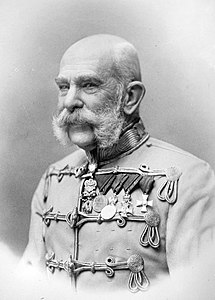
Francesco Giuseppe I d’Austria, born on August 18, 1830, at the Schönbrunn Palace in Vienna, was one of the most significant and enduring monarchs in European history. His reign, which lasted nearly 68 years, from 1848 until his death in 1916, spanned a period of immense political, social, and technological change. As Emperor of Austria and King of Hungary, Francesco Giuseppe navigated his empire through turbulent times, including revolutions, wars, and the eventual decline of the Austro-Hungarian Empire. This article delves into the life, reign, and legacy of Francesco Giuseppe I, exploring his impact on European history and the personal tragedies that marked his life.
Early Life and Ascendancy to the Throne
Francesco Giuseppe I was born into the House of Habsburg-Lorraine, a dynasty with a storied history in European politics. He was the eldest son of Archduke Franz Karl of Austria and Princess Sophie of Bavaria. From an early age, Francesco Giuseppe was groomed for leadership, with a strong emphasis on military training and dynastic responsibilities. By the age of 13, he had already been appointed a colonel, marking the beginning of his lifelong association with the military.
The decision to prepare Francesco Giuseppe for the throne came early, partly due to the instability within the Habsburg family and the broader European political landscape. His uncle, Emperor Ferdinand I of Austria, who was mentally unfit and childless, was seen as an inadequate ruler. This led to the grooming of Francesco Giuseppe as the future emperor, with his mother, Sophie, playing a pivotal role in his upbringing and education.
The political situation in Europe during Francesco Giuseppe’s youth was fraught with tension. The Revolutions of 1848, a series of political upheavals across Europe, posed a direct threat to the Habsburg monarchy. Metternich, the influential Austrian statesman, resigned in the wake of these revolts, and the young Francesco Giuseppe was thrust into the center of the political storm. On December 2, 1848, at the age of 18, Francesco Giuseppe ascended to the throne, following the abdication of his uncle Ferdinand I. This marked the beginning of one of the longest reigns in European history.
Early Reign and Challenges
Francesco Giuseppe’s early years as emperor were marked by significant challenges. The revolutions that had swept across Europe were still simmering, and the new emperor faced unrest in various parts of his empire, including Italy and Hungary. In Italy, the First War of Italian Independence was ongoing, and Francesco Giuseppe played a direct role in the conflict. He joined the Austrian forces led by Field Marshal Radetzky, participating in the Battle of Santa Lucia in May 1848. The young emperor’s involvement in military affairs would become a defining feature of his reign.
The defeat of the Piedmontese forces in Italy and the suppression of the Hungarian Revolution of 1848 were early victories for Francesco Giuseppe, but they came at a high cost. The Hungarian revolt, in particular, was brutally quashed, with the execution of key Hungarian leaders leaving a lasting scar on the relationship between Hungary and Austria. These early successes reinforced Francesco Giuseppe’s commitment to a strong, centralized monarchy, but they also set the stage for future tensions within the empire.
In 1853, the emperor narrowly escaped an assassination attempt by a Hungarian nationalist, János Libényi. The attempt on his life underscored the ongoing resistance to Habsburg rule, particularly in Hungary, and added to the growing list of personal and political challenges faced by Francesco Giuseppe.
Marriage to Elisabeth of Bavaria and Personal Life
One of the most significant events in Francesco Giuseppe’s life was his marriage to Elisabeth of Bavaria, better known as Sissi. The two were first cousins, and their union was initially arranged as a political match. However, the emperor fell deeply in love with the young Elisabeth, who was known for her beauty and free spirit. The couple married on April 24, 1854, in a grand ceremony in Vienna.
Elisabeth, though admired by the public, struggled with the rigid protocols of the Habsburg court and the demands of her role as empress. Her relationship with Francesco Giuseppe was complex, characterized by both deep affection and significant tension. Sissi’s independent nature and her frequent travels away from the court created strains in their marriage. Nevertheless, Elisabeth remained a significant figure in Francesco Giuseppe’s life, providing him with support and counsel during his long reign.
The couple’s personal life was marred by tragedy. Their first daughter, Sophie, died in infancy, and their only son, Crown Prince Rudolf, died in 1889 in what became known as the Mayerling Incident. Rudolf’s death, officially ruled a suicide, was a devastating blow to both Francesco Giuseppe and Elisabeth. The emperor’s personal losses, combined with the political pressures of his reign, contributed to the austere and reserved demeanor for which he was known.
Political and Military Leadership
Francesco Giuseppe’s reign was marked by a series of wars and political struggles that reshaped the map of Europe. His leadership during these conflicts demonstrated his commitment to preserving the Habsburg Empire, even as it faced significant challenges from rising nationalist movements and other European powers.
One of the earliest military conflicts during his reign was the Crimean War (1853-1856), in which Austria maintained a neutral stance. However, Austria’s failure to support Russia, a traditional ally, led to a deterioration of relations between the two empires. This diplomatic isolation would have significant consequences in the years to come.
The Second Italian War of Independence in 1859 was a major setback for Francesco Giuseppe. The war, fought against the forces of the Kingdom of Sardinia and its ally, France, resulted in the loss of Lombardy to Sardinia. The defeats at the battles of Solferino and San Martino were particularly significant, leading to the signing of the Armistice of Villafranca and a reduction in Austrian influence in Italy. By 1866, following the Austro-Prussian War, Austria lost control of Venetia as well, further diminishing its territorial holdings in Italy.
The Austro-Prussian War of 1866 was another pivotal conflict during Francesco Giuseppe’s reign. The war, which was largely a struggle for dominance within the German Confederation, ended in a decisive defeat for Austria at the Battle of Königgrätz. This loss forced Austria to withdraw from German affairs and led to the establishment of the North German Confederation under Prussian leadership. The war also prompted significant internal reforms within the Habsburg Empire.
In 1867, in an effort to stabilize his empire and address the growing demands of the Hungarian nobility, Francesco Giuseppe agreed to the Ausgleich (Compromise), which created the Dual Monarchy of Austria-Hungary. This agreement granted Hungary greater autonomy while maintaining the unity of the empire under the Habsburg crown. While the compromise temporarily alleviated tensions, it also highlighted the challenges of governing a multi-ethnic empire in an era of rising nationalism.
Later Reign and Decline of the Empire
As the 19th century drew to a close, Francesco Giuseppe’s empire faced increasing challenges from both internal and external forces. The rise of nationalist movements among the various ethnic groups within the empire posed a continual threat to its stability. The emperor’s attempts to implement reforms, such as the introduction of universal male suffrage in 1907, were often too little, too late to address the deep-seated divisions within the empire.
The early 20th century saw Austria-Hungary’s position in Europe increasingly precarious. The annexation of Bosnia and Herzegovina in 1908, while intended to strengthen the empire, only served to inflame tensions with Serbia and other Balkan states. The assassination of Archduke Franz Ferdinand, Francesco Giuseppe’s nephew and heir presumptive, in Sarajevo on June 28, 1914, by a Bosnian Serb nationalist, triggered the July Crisis and ultimately led to the outbreak of World War I.
Francesco Giuseppe, by then in his eighties, was reluctant to go to war, but the pressures from his military advisors and the complex web of alliances left him with little choice. On July 28, 1914, Austria-Hungary declared war on Serbia, setting off a chain reaction that plunged Europe into one of the deadliest conflicts in history.
Death and Legacy
Francesco Giuseppe I died on November 21, 1916, in the Schönbrunn Palace, at the age of 86. His death marked the end of an era, as he had been a constant presence on the European stage for nearly seven decades. He was succeeded by his great-nephew, Karl I, who would be the last emperor of Austria, as the Austro-Hungarian Empire dissolved at the end of World War I in 1918.
Francesco Giuseppe’s legacy is complex. He is remembered as a diligent and dutiful ruler who sought to maintain the unity and stability of his empire in the face of overwhelming challenges. However, his reign was also marked by significant failures, including the loss of key territories, the rise of nationalist movements that he struggled to contain, and the eventual collapse of the empire he had devoted his life to preserving.
The personal tragedies he endured, including the deaths of his son Rudolf and his wife Elisabeth, added a poignant dimension to his life story. These events, coupled with the immense pressures of his role, contributed to the image of Francesco Giuseppe as a stoic and solitary figure, dedicated to his duties but ultimately unable to prevent the decline of his empire.
Conclusion
Francesco Giuseppe I d’Austria’s life and reign were emblematic of the complexities and contradictions of the late 19th and early 20th centuries. His efforts to uphold the Habsburg tradition and navigate the shifting political landscape of Europe left an indelible mark on history. Despite the eventual dissolution of the Austro-Hungarian Empire, Francesco Giuseppe remains a significant figure in European history, symbolizing both the endurance of imperial rule and the inevitable changes that swept across the continent during his lifetime.
His reign, marked by both triumphs and tragedies, serves as a reminder of the challenges faced by monarchs in an era of dramatic social and political transformation. As we reflect on his legacy, Francesco Giuseppe I d’Austria stands as a testament to the complexities of leadership and the enduring impact of historical events on the course of nations.


