
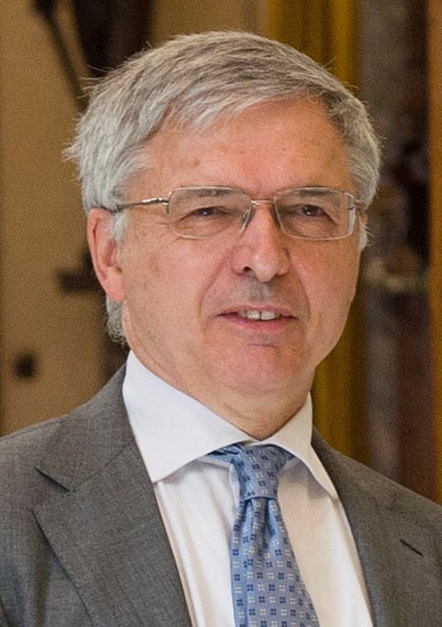
Daniele Franco, born on June 7, 1953, in Trichiana, Belluno, is one of Italy’s most respected economists and public servants. With a career spanning over four decades, Franco has played a pivotal role in shaping Italy’s economic policies, particularly during some of the country’s most challenging periods. This article explores the life, career, and influence of Daniele Franco, providing detailed insights into his rise to prominence and the impact of his work on Italy’s economic landscape.
Early Life and Education
Daniele Franco’s journey into the world of economics and public service began in the small town of Trichiana in the Veneto region of northern Italy. Born into a modest family, Franco demonstrated an early aptitude for academics, which would later serve as the foundation for his illustrious career.
In 1977, Franco graduated with a degree in Political Science from the University of Padua, one of Italy’s most prestigious universities. His education did not stop there; recognizing the importance of specialized knowledge in the field of economics, Franco pursued further studies, earning a Master’s degree in Business Administration from the Consorzio Universitario di Organizzazione Aziendale in Padua in 1978. His academic journey continued abroad, where he obtained a Master of Science in Economics from the University of York in the United Kingdom in 1979. This international experience broadened his perspective and prepared him for the complex economic challenges he would later face.
Early Career: Banca d’Italia and European Commission
Daniele Franco’s professional career began in 1979 when he joined the Banca d’Italia, Italy’s central bank, where he was assigned to the Research Department. His role involved analyzing and interpreting economic data, contributing to the formulation of monetary policies. Franco’s analytical skills and deep understanding of economic theory quickly earned him recognition within the institution.
After 15 years at Banca d’Italia, Franco took on a new challenge in 1994 when he became an Economic Advisor at the Directorate-General for Economic and Financial Affairs of the European Commission. During his time in Brussels, Franco gained invaluable experience in European economic policy, working closely with policymakers across the European Union to address the continent’s economic issues. This period was crucial in shaping his understanding of the interconnectedness of national and European economic policies.
Return to Banca d’Italia: Leadership Roles and Contributions
Franco returned to Banca d’Italia in 1997, where he was appointed Director of the Public Finance Division within the Research Department. In this role, Franco was responsible for analyzing Italy’s public finances, a critical task given the country’s high levels of public debt and ongoing fiscal challenges. His work involved evaluating government spending, taxation policies, and the overall sustainability of public finances.
Between 1999 and 2007, Franco chaired the Public Finance Working Group of the European System of Central Banks. This role underscored his expertise in public finance and his ability to navigate complex economic issues at both national and European levels. Franco’s leadership in this area helped shape discussions on fiscal policies within the Eurozone, particularly during the early years of the euro currency.
In 2007, Franco was promoted to Head of the Economic and Financial Structure Department at Banca d’Italia. His responsibilities expanded to include overseeing economic research and providing strategic advice on Italy’s economic policies. During this period, Franco also represented Banca d’Italia in various international forums, including the International Monetary Fund (IMF) and the Organization for Economic Co-operation and Development (OECD), where he contributed to discussions on global economic stability and financial regulation.
Ragioniere Generale dello Stato: A Critical Role in Public Finance
One of the most significant phases of Daniele Franco’s career came in 2013 when he was appointed Ragioniere Generale dello Stato, or Accountant General of the State. This role placed Franco at the heart of Italy’s public finance management, overseeing the preparation and execution of the national budget.
During his tenure, which lasted until 2019, Franco played a critical role in navigating Italy through a period of significant economic challenges, including the aftermath of the global financial crisis and the ongoing pressures of managing public debt. His role required balancing the demands of fiscal austerity with the need to support economic growth, a task that often placed him at the center of political debates.
Franco’s tenure as Ragioniere Generale was marked by several high-profile clashes with Italian political leaders. In 2014, then-Prime Minister Matteo Renzi publicly criticized Franco for what he described as “technically false” assessments regarding the funding of Renzi’s flagship policy, the €80 bonus for low-income workers. Despite the criticism, Franco’s insistence on sound fiscal management and his commitment to transparency in public finances earned him respect across the political spectrum.
Franco also faced challenges during the coalition government between the Five Star Movement and the League, led by Prime Minister Giuseppe Conte. Franco expressed concerns about the economic feasibility of some of the government’s proposed measures, such as the citizen’s income and pension reforms. These instances highlighted Franco’s dedication to maintaining fiscal discipline, even in the face of political pressure.
Vice Director General of Banca d’Italia and Academic Contributions
In May 2019, Daniele Franco was appointed Vice Director General of Banca d’Italia, further solidifying his position as one of the most influential figures in Italy’s economic policy. In this role, Franco was responsible for assisting in the overall management of the central bank, with a particular focus on economic research and financial stability. He also became a member of the Integrated Directory of the Institute for the Supervision of Insurance (IVASS), where he contributed to the oversight of Italy’s insurance sector.
Franco’s influence extended beyond his formal roles in government and banking. Throughout his career, he has been an active contributor to academia, teaching courses at universities such as the University of Bergamo, the University of Trieste, the Catholic University of Milan, and the Scuola Superiore della Pubblica Amministrazione. His academic work includes numerous publications on public expenditure, social protection systems, and European fiscal rules, making him a respected voice in economic policy circles.
Franco’s research has addressed key issues in public economics, including budgetary policy, fiscal federalism, generational accounting, taxation of financial activities, and income distribution. His work has contributed to the understanding of how fiscal policies can be designed to promote economic stability and social equity, both in Italy and across Europe.
Daniele Franco’s career reached its pinnacle in February 2021 when he was appointed Minister of Economy and Finance in the government of Prime Minister Mario Draghi. His appointment came at a critical time, as Italy faced the dual challenges of recovering from the COVID-19 pandemic and managing the economic impact of the crisis.
As Minister of Economy and Finance, Franco was tasked with overseeing the implementation of Italy’s National Recovery and Resilience Plan (PNRR), a key component of the European Union’s recovery strategy. The plan, which included significant investments in infrastructure, digitalization, and green energy, was designed to revive Italy’s economy and address long-standing structural issues.
Franco’s role also involved managing Italy’s public finances, including efforts to reduce the country’s debt-to-GDP ratio, which had surged during the pandemic. His expertise in public finance and his deep understanding of European economic policies made him a critical figure in negotiations with the European Commission and other EU member states.
Under Franco’s leadership, Italy successfully secured €191.5 billion in grants and loans from the EU’s Next Generation EU fund, the largest allocation to any single country. Franco’s handling of the economic recovery was widely praised, both domestically and internationally, for its focus on long-term sustainability and structural reforms.
Legacy and Impact
Daniele Franco’s legacy as an economist and public servant is characterized by his unwavering commitment to fiscal responsibility and his ability to navigate complex economic challenges. His work has had a profound impact on Italy’s economic policy, particularly in the areas of public finance and budgetary management.
Franco’s career serves as a testament to the importance of expertise, integrity, and impartiality in public service. His ability to maintain a steady hand in times of economic uncertainty has earned him the respect of colleagues, policymakers, and the public alike.
In addition to his contributions to Italy’s economic policy, Franco’s work has influenced broader discussions on fiscal policy within the European Union. His leadership in various international forums has helped shape the policies that underpin the stability and growth of the Eurozone.
As Italy continues to face economic challenges, including the ongoing impact of the COVID-19 pandemic and the need for structural reforms, Daniele Franco’s legacy will undoubtedly continue to influence the country’s economic trajectory. His career stands as a reminder of the critical role that skilled and dedicated public servants play in shaping the future of nations.
Conclusion
Daniele Franco’s life and career offer a compelling example of the impact that a dedicated public servant can have on a nation’s economic policy. From his early days at Banca d’Italia to his role as Minister of Economy and Finance, Franco has consistently demonstrated a commitment to fiscal responsibility, transparency, and the long-term stability of Italy’s economy.
As a key figure in Italy’s response to some of the most significant economic challenges of the past few decades, Franco’s contributions have left a lasting mark on the country’s economic landscape. His work, both in Italy and on the European stage, has helped to shape policies that promote stability, growth, and social equity.
In the years to come, Daniele Franco’s legacy will continue to serve as a model for future generations of economists and public servants, illustrating the importance of expertise, integrity, and dedication in the pursuit of the public good.


