
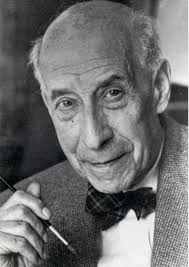
Josef Frank, born on July 15, 1885, in Baden, Austria, is an iconic figure in the world of architecture. His life and work are marked by a profound influence on modernist design, a legacy that stretches across continents, from Austria to Sweden. As a renowned architect, Frank’s contributions have shaped the landscape of modern architecture, and his life story is one of resilience, creativity, and cultural exchange.
Early Life and Education
Josef Frank was born into a Jewish family, with his parents, Jenny Feilendorf and Ignaz Frank, hailing from Heves, Hungary. The Frank family was deeply rooted in the cultural milieu of Austria, which profoundly influenced Josef’s upbringing and future career. Growing up in a family with a strong intellectual and cultural background, Josef was encouraged to pursue education and artistic expression.
He had three siblings: an older brother, Philipp Frank (1884-1966), a younger sister, Hedwig Frank (1887-1966), and a younger brother, Rudolf Frank (1890-1942). The family environment was one of intellectual curiosity and cultural engagement, which undoubtedly shaped Josef’s outlook on life and his future endeavors in architecture.
Josef Frank pursued his education at the Vienna Polytechnic, where he studied architecture. His time at the Polytechnic was instrumental in forming his architectural philosophy, which combined elements of traditional Viennese design with the emerging modernist trends of the early 20th century. This fusion of old and new would become a hallmark of Frank’s work, distinguishing him from his contemporaries.
Architectural Career and Achievements
After completing his studies, Josef Frank began teaching at the Academy of Fine Arts Vienna from 1919 to 1925. His academic career was marked by a dedication to fostering a new generation of architects who would carry forward the principles of modernist design. During this period, Frank co-founded the Vienna School of Architecture alongside Oskar Strand. This institution would become a crucial center for the development of modernist architecture in Austria.
In 1926, Josef Frank co-founded the Wiener Werkbund, an organization that played a pivotal role in promoting modernist architecture and design in Austria and beyond. The Wiener Werkbund sought to integrate art, architecture, and industry, emphasizing the importance of functional design and the relationship between form and function. Frank’s involvement with the Werkbund highlighted his commitment to these principles and his belief in the power of architecture to improve society.
Josef Frank’s architectural philosophy was characterized by a rejection of the stark, rigid lines that defined much of modernist architecture. Instead, he embraced a more humanistic approach, favoring designs that were colorful, organic, and influenced by natural forms. This approach can be seen in his residential designs, which often featured spacious, light-filled interiors and a harmonious relationship with the surrounding environment.
One of Frank’s most significant contributions to architecture was his involvement with the CIAM (Congrès Internationaux d’Architecture Moderne), an international organization founded in 1928 to promote the principles of modern architecture. Through his work with CIAM, Frank helped to foster a network of European architects dedicated to the advancement of functionalist urban planning and architectural design.
Exile and Life in Sweden
The rise of Nazism in the 1930s forced many Jewish intellectuals and artists, including Josef Frank, to flee Austria. In 1933, Frank emigrated to Sweden, where he would spend the remainder of his life. The move to Sweden marked a significant shift in Frank’s career, as he began to integrate Scandinavian design principles into his work. This fusion of Viennese modernism with Scandinavian functionalism resulted in a unique style that continues to influence designers and architects today.
In 1939, Josef Frank became a Swedish citizen, solidifying his connection to his adopted homeland. Despite the upheaval of exile, Frank’s work continued to flourish in Sweden. He became associated with the Swedish design firm Svenskt Tenn, where he collaborated with Estrid Ericson to create some of his most famous designs. Frank’s work with Svenskt Tenn was characterized by vibrant patterns, bold colors, and a sense of playfulness that contrasted with the more austere modernist designs of his contemporaries.
One of the defining characteristics of Frank’s work during this period was his use of color. He believed that color had the power to evoke emotion and transform spaces, and this belief is evident in his textile designs for Svenskt Tenn. These designs, which often featured intricate botanical patterns, have become iconic in the world of interior design and continue to be popular to this day.
Legacy and Impact on Modern Architecture
Josef Frank’s legacy extends far beyond his architectural designs. He was a visionary who challenged the conventions of his time, advocating for a more human-centered approach to architecture and design. His work has had a lasting impact on the field of modern architecture, influencing generations of architects and designers.
Frank’s emphasis on the importance of individuality and personal expression in design was a departure from the more dogmatic approaches of his modernist peers. He believed that homes should be comfortable, welcoming spaces that reflected the personalities of their inhabitants, rather than sterile, uniform environments. This philosophy is evident in his residential designs, which often featured eclectic furnishings, vibrant textiles, and a mix of traditional and modern elements.
In addition to his architectural work, Josef Frank was also a prolific writer and theorist. His book, Architektur als Symbol (Architecture as Symbol), published in 1931, explores the symbolic meaning of architecture and its role in shaping human experience. This work, along with his numerous essays and lectures, has contributed to a deeper understanding of the social and cultural dimensions of architecture.
Frank’s influence can be seen in the work of contemporary architects and designers who continue to draw inspiration from his approach to design. His belief in the power of architecture to improve quality of life remains relevant today, as designers grapple with the challenges of creating spaces that are both functional and aesthetically pleasing.
Conclusion
Josef Frank’s life and work represent a unique fusion of cultural influences, from the intellectual traditions of Vienna to the functionalist design principles of Scandinavia. His contributions to modern architecture and design are not only significant in their own right but also serve as a testament to the enduring power of creativity and resilience in the face of adversity.
Frank’s emphasis on color, comfort, and individuality in design continues to resonate with designers and architects around the world. His work challenges us to think about architecture not just as a technical discipline, but as an art form that has the power to shape our lives and our environments in profound ways.
In reflecting on the life and legacy of Josef Frank, it is clear that his contributions to architecture and design are as relevant today as they were during his lifetime. His work reminds us of the importance of creativity, individuality, and the human spirit in the built environment.


