
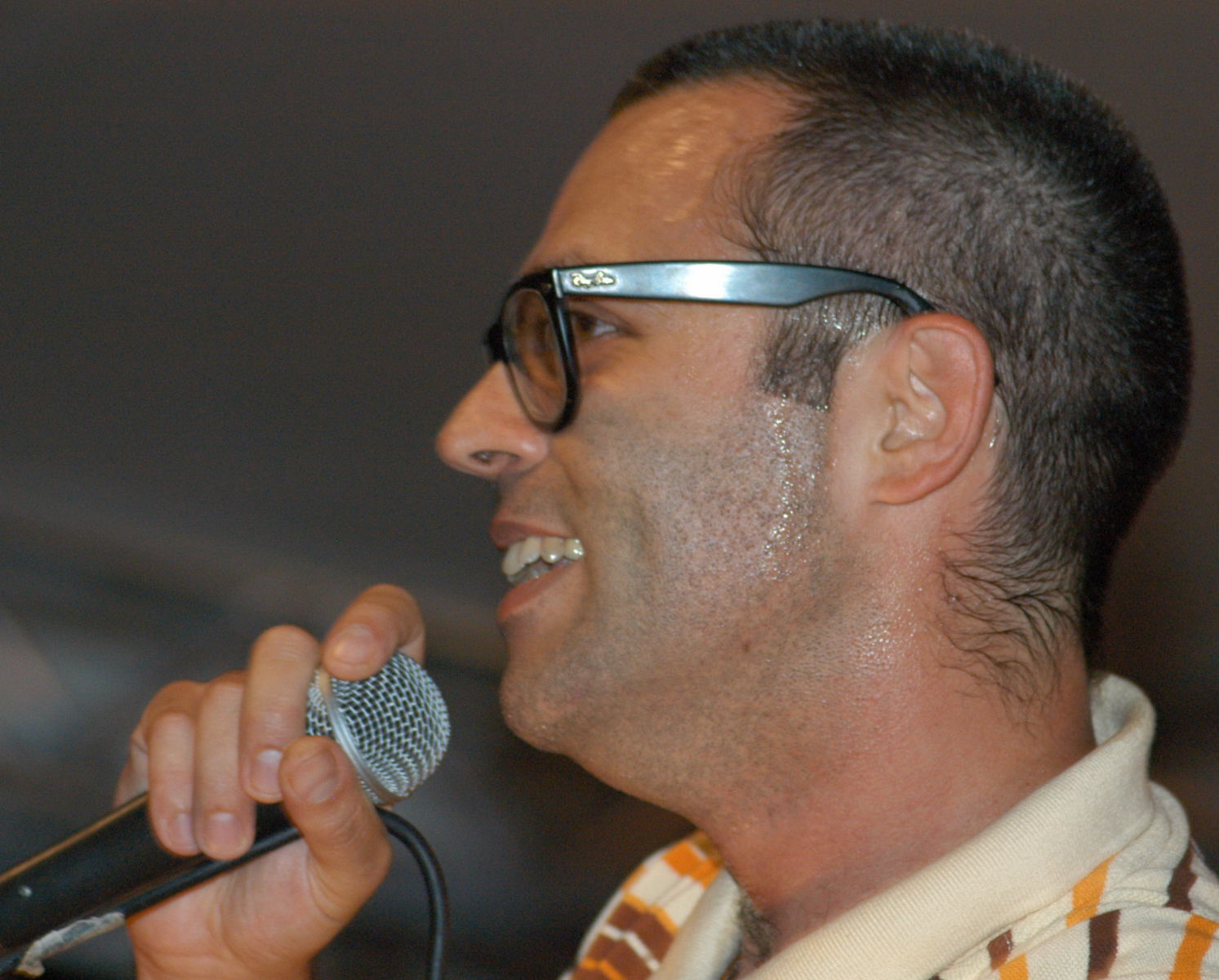
Frankie Hi-NRG MC, born Francesco Di Gesù on July 18, 1969, in Turin, Italy, is a pioneering figure in the Italian hip-hop scene. With Sicilian roots, Frankie Hi-NRG MC is not only a rapper but also a cultural commentator whose lyrics reflect deep socio-political awareness. As a key player in the Italian hip-hop movement since the early 1990s, his music has resonated with audiences through its sharp critiques of societal issues.
Early Life and Origins
Born in Turin, but with deep Sicilian heritage, Frankie Hi-NRG MC grew up in a period of significant political and social change in Italy. This environment undoubtedly shaped his worldview and later influenced the content of his music. His formative years were marked by exposure to the emerging hip-hop culture, which was gaining momentum worldwide. Frankie found his voice within this genre, merging the global rhythms of hip-hop with the unique socio-political landscape of Italy.
The Birth of a Rap Icon: 1990s and “Verba Manent”
Frankie Hi-NRG MC made his debut in the music industry with the release of his first album, Verba Manent, in 1992. This album, whose title translates to “Words Remain,” quickly set him apart from other artists in the Italian music scene. His style, characterized by intricate rhymes and potent lyrical content, earned him recognition. The album’s standout track, “Fight da Faida,” became an anthem against criminal organizations like the Mafia and Camorra, as well as a broader denunciation of terrorism and corruption. The song’s raw energy and fearless message established Frankie as a fearless artist willing to tackle the most pressing issues of the time.
Rise to Fame: “La Morte dei Miracoli” and “Quelli che Benpensano”
After the success of his debut album, Frankie Hi-NRG MC took a five-year hiatus before returning with his sophomore effort, La Morte dei Miracoli, in 1997. This album solidified his status as one of Italy’s foremost rappers. The single “Quelli che Benpensano” became a cultural phenomenon, addressing the hypocrisy and moralistic attitudes prevalent in society. The song’s critical acclaim was matched by its commercial success, earning the Premio Italiano della Musica for Song of the Year. Other notable tracks from the album include “Autodafé” and “Giù le Mani da Caino,” the latter expressing Frankie’s staunch opposition to capital punishment, a stance shared by several of his contemporaries.
The Visual Artist: Expanding into Directing
Beyond his musical talents, Frankie Hi-NRG MC has made significant contributions to the visual side of music. He began directing his own music videos, starting with “Quelli che Benpensano” and “Autodafé.” His directorial work was not limited to his own projects; he also directed music videos for other prominent Italian artists, including Pacifico and Flaminio Maphia. One of his most notable achievements in this area was directing the video for “La Descrizione di un Attimo” by Tiromancino, which won the “Duel” award for Best Pop Video at the MEI (Meeting delle Etichette Indipendenti) in Faenza. This expansion into visual arts showcases Frankie’s versatility and his ability to communicate powerful messages across different media.
Continued Success and Evolution: 2000s Onwards
In 2003, Frankie Hi-NRG MC released his third album, Ero un Autarchico. The album, led by the single “Chiedi Chiedi,” featured collaborations with a diverse range of artists, including Paola Cortellesi, Franca Valeri, and Pacifico. This album further demonstrated Frankie’s ability to evolve and stay relevant in a rapidly changing music landscape. His work during this period continued to blend sharp political commentary with innovative musical styles.
In July 2005, he released Rap©ital, a compilation album featuring re-arranged versions of his best-known tracks, along with the new song “Dimmi Dimmi Tu.” This release served as both a retrospective of his career and a reaffirmation of his position in the Italian music scene.
Collaborations and Broader Influence
Frankie Hi-NRG MC has always been a collaborative artist, working with a variety of both Italian and international musicians. His collaborations span a wide array of genres and artists, from Niccolò Fabi and Daniele Silvestri to international names like Nas and Shel Shapiro. These partnerships highlight his versatility and ability to adapt his style to different musical contexts. Frankie’s influence extends beyond music; he has become a cultural icon whose work reflects the complexities of modern society.
The Sanremo Experience and Later Works
In 2008, Frankie Hi-NRG MC participated in the prestigious Sanremo Music Festival, presenting the song “Rivoluzione.” This entry was followed by the release of his fourth studio album, Deprimomaggio. The album continued his tradition of addressing serious social issues, while also showcasing his growth as an artist. Participation in Sanremo, one of Italy’s most important music festivals, marked a significant milestone in his career, bringing his music to an even wider audience.
Legacy and Cultural Impact
Frankie Hi-NRG MC’s legacy is one of fearlessness and innovation. He brought hip-hop to the forefront of Italian music and used it as a tool for social change. His lyrics, often laden with biting social commentary, have resonated with audiences for decades. He is not just a musician but a storyteller, a commentator on the times, and an artist unafraid to challenge the status quo. His work has inspired a generation of Italian rappers and continues to influence the music industry today.
Conclusion: A Pioneer and a Voice for the Voiceless
Frankie Hi-NRG MC’s career is a testament to the power of music as a form of protest and cultural expression. From his early days in the 1990s to his ongoing influence in the Italian music scene, he has remained true to his roots while constantly evolving as an artist. His ability to blend sharp political critique with engaging music has made him a unique figure in the world of hip-hop and beyond. As he continues to create and collaborate, Frankie Hi-NRG MC’s impact on both Italian and global music is undeniable. His journey from the streets of Turin to the heights of fame serves as an inspiration for aspiring artists and a reminder of the enduring power of authentic, fearless expression.


