
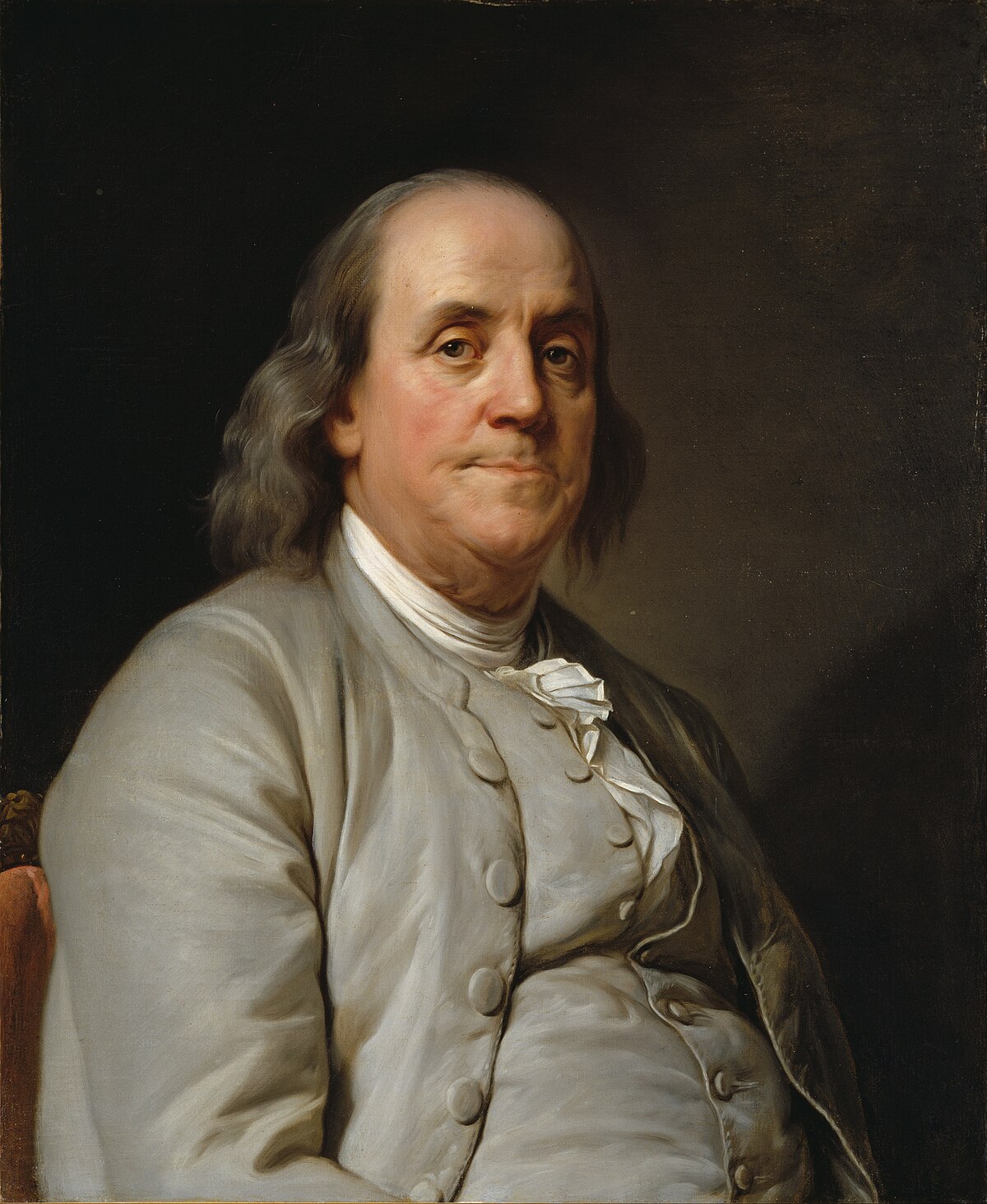
Benjamin Franklin, one of the most illustrious figures in American history, was born on January 17, 1706, in Boston, Massachusetts. Franklin was not only a founding father of the United States but also a polymath whose contributions to science, politics, and society have left an indelible mark on history. This comprehensive overview will delve into his life, from his early years to his rise to fame, and highlight his most significant achievements. We will explore the nuances of his life, including the historical context that shaped his ideas, while ensuring that every aspect of this article is optimized for search engines, making it an essential resource for anyone seeking to understand Benjamin Franklin’s legacy.
Early Life and Origins
Benjamin Franklin was born into a modest family as the fifteenth of seventeen children to Josiah Franklin, a candle and soap maker, and Abiah Folger. His early life was marked by financial constraints, limiting his formal education to just two years of schooling. Despite these challenges, Franklin’s insatiable curiosity and intellectual vigor set him on a path of self-education. By the age of 12, Franklin had become an apprentice to his brother James, a printer, which ignited his lifelong passion for reading and writing. This early exposure to printing and literature laid the groundwork for his later endeavors as a writer, publisher, and thinker.
The Path to Fame: Printer, Writer, and Entrepreneur
Franklin’s early career was characterized by his work in the printing industry. In 1723, at the age of 17, Franklin left Boston and moved to Philadelphia, where he found employment as a printer. By 1728, he had established his own printing business. One of his most famous publications was Poor Richard’s Almanack, first published in 1732 under the pseudonym Richard Saunders. The almanac, filled with witty aphorisms, practical advice, and weather forecasts, became immensely popular and solidified Franklin’s reputation as a shrewd and insightful writer.
Franklin’s success as a printer allowed him to expand his business and invest in other ventures, including the founding of the Pennsylvania Gazette. Under his leadership, the Gazette became one of the most successful newspapers in the American colonies, known for its incisive commentary on social and political issues. Franklin’s entrepreneurial spirit extended beyond printing; he also played a pivotal role in establishing institutions such as the Library Company of Philadelphia, the American Philosophical Society, and the University of Pennsylvania.
Scientific Discoveries and Inventions
While Franklin is often celebrated for his political contributions, his scientific achievements are equally noteworthy. Franklin’s curiosity about the natural world led him to conduct experiments in various fields, most notably electricity. In 1746, he attended a lecture on electricity in Boston, which piqued his interest and led him to acquire equipment to conduct his own experiments.
Franklin’s most famous experiment, conducted in 1752, involved flying a kite during a thunderstorm to demonstrate that lightning is a form of electricity. This experiment, though dangerous, was a pivotal moment in the study of electricity and led to the invention of the lightning rod. Franklin’s work on electricity earned him international recognition, and he published his findings in a series of letters titled Experiments and Observations on Electricity. These contributions laid the foundation for modern electrical theory and demonstrated Franklin’s innovative approach to scientific inquiry.
In addition to his work with electricity, Franklin made significant contributions to other fields. He invented the Franklin stove, which improved the efficiency of heating homes, and the bifocal glasses, which allowed individuals to see both near and far distances without changing lenses. Franklin’s inventive mind extended to the creation of the odometer, which helped measure distances traveled by horse-drawn carriages, and the glass armonica, a musical instrument that became popular in Europe.
Political Career and the American Revolution
Benjamin Franklin’s political career was as illustrious as his scientific pursuits. In 1757, Franklin was sent to London as a representative of the Pennsylvania Assembly to address colonial grievances with the British government. During his time in England, Franklin became a vocal advocate for the rights of the American colonies, writing pamphlets and essays that articulated the colonists’ frustrations with British policies.
Franklin’s diplomatic skills were put to the test during the lead-up to the American Revolution. In 1776, Franklin was appointed as a member of the Second Continental Congress and was one of the five men tasked with drafting the Declaration of Independence. His signature on this historic document marked his formal entry into the fight for American independence.
After the Declaration was adopted, Franklin was sent to France as the United States’ first ambassador. His mission was to secure French support for the American cause, and he succeeded brilliantly. Franklin’s charm, wit, and diplomatic acumen endeared him to the French court, and his efforts culminated in the signing of the Treaty of Alliance in 1778, which brought France into the war on the side of the American colonies. This alliance was crucial in securing American victory over Britain.
Later Years and Contributions to Society
Following the end of the American Revolution, Franklin continued to play a significant role in shaping the new nation. In 1785, he returned to the United States and was elected President of the Supreme Executive Council of Pennsylvania, a position equivalent to governor. During this time, Franklin also participated in the Constitutional Convention of 1787, where he was instrumental in drafting the United States Constitution. His wisdom and experience provided valuable guidance during the debates, and his support for the document helped ensure its ratification.
Franklin’s later years were marked by continued public service and intellectual activity. He was an outspoken advocate for the abolition of slavery, serving as president of the Pennsylvania Society for the Abolition of Slavery. In his final years, Franklin published numerous essays and letters on a wide range of topics, from politics and philosophy to science and technology. His prolific writing and correspondence with leaders around the world solidified his status as one of the most influential thinkers of his time.
Franklin died on April 17, 1790, at the age of 84, in Philadelphia. His funeral was attended by thousands, a testament to the profound impact he had on his country and the world. Franklin’s legacy lives on through the institutions he founded, the scientific discoveries he made, and the principles of liberty and democracy he helped enshrine in American society.
The Historical Context of Franklin’s Achievements
Understanding Benjamin Franklin’s contributions requires an appreciation of the historical context in which he lived. The 18th century was a period of great intellectual and political ferment, often referred to as the Age of Enlightenment. Enlightenment thinkers emphasized reason, science, and the importance of individual rights, ideas that resonated deeply with Franklin and influenced his work.
Franklin’s scientific inquiries were part of a broader movement to understand and harness the natural world through experimentation and observation. His political philosophy was shaped by the Enlightenment’s emphasis on liberty, democracy, and the social contract. Franklin’s advocacy for American independence, his work on the Constitution, and his efforts to promote education and civic engagement all reflect the values of this era.
Moreover, Franklin’s life and achievements must be seen in the context of the American colonies’ struggle for independence from Britain. The tensions between the colonies and the British government were rooted in issues of taxation, representation, and the desire for self-governance. Franklin’s diplomatic efforts in Europe and his role in securing French support were critical to the success of the American Revolution. His contributions to the founding of the United States cannot be overstated; he was a key architect of the nation’s political institutions and a tireless advocate for the principles of freedom and democracy.
Legacy and Cultural Impact
Benjamin Franklin’s legacy is multifaceted, reflecting his diverse talents and contributions. He is remembered as a founding father of the United States, a diplomat, a scientist, an inventor, and a writer. Franklin’s impact on American society and the world at large is immeasurable. His ideas about democracy, education, and civic responsibility continue to influence contemporary thought, and his inventions and scientific discoveries laid the groundwork for future advancements in technology and industry.
Franklin’s life is also a testament to the power of self-education and perseverance. Despite his limited formal schooling, Franklin’s curiosity and determination enabled him to achieve greatness in multiple fields. His life story serves as an inspiration to generations of Americans, embodying the ideals of hard work, ingenuity, and the pursuit of knowledge.
In the realm of science, Franklin’s experiments with electricity revolutionized the field and paved the way for future innovations. His invention of the lightning rod not only protected buildings from fire but also demonstrated the practical applications of scientific research. Franklin’s work as a printer and publisher helped shape public opinion in the colonies and provided a platform for the exchange of ideas.
Franklin’s contributions to American political thought are equally significant. As a diplomat, he helped secure the international alliances that were essential to the success of the American Revolution. His role in drafting the Declaration of Independence and the Constitution laid the foundation for the United States’ political system. Franklin’s advocacy for education, freedom of the press, and civic engagement continues to resonate in American society today.
Conclusion: A Pioneer of Enlightenment and a Founding Father
Benjamin Franklin’s life and achievements are a testament to the power of intellect, innovation, and civic responsibility. As a leading figure of the Enlightenment, Franklin used his talents to advance the cause of science, promote democratic ideals, and improve society. His legacy as a founding father of the United States and a pioneer in various fields of study continues to inspire and influence the world.
From his humble beginnings in Boston to his rise as one of the most respected figures of his time, Franklin’s journey is a story of perseverance, ingenuity, and the relentless pursuit of knowledge. His contributions to the founding of the United States, his scientific discoveries, and his efforts to promote education and civic engagement have left an indelible mark on history. Benjamin Franklin’s life is a reminder of the impact that one individual can have on the world, and his legacy will continue to endure for generations to come.


