
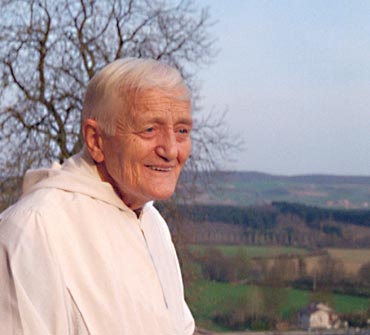
Frère Roger, born Roger Louis Schutz, is a name that resonates with those seeking spiritual solace, unity, and reconciliation. As the founder of the Taizé Community, a monastic fraternity in France dedicated to fostering unity among Christians, Frère Roger’s life was one of deep spiritual commitment, unwavering faith, and a profound dedication to peace. This article delves into the life of Frère Roger di Taizé, exploring his age, the rise to fame, and the significant highlights of his life and legacy.
Early Life and Background
Roger Louis Schutz was born on May 12, 1915, in Provence, a small village in the French-speaking part of Switzerland. His upbringing was marked by a strong religious foundation, as his father was a Swiss pastor with a deep specialization in New Testament exegesis, and his mother, Amelie Marsauche, was of French origin with a profound love for music. The significance of music in Roger’s family cannot be overstated. His maternal ancestors were musically inclined, with connections to the great composer Franz Liszt, and this heritage would later influence the Taizé Community’s renowned use of music as a form of prayer.
One of Roger’s most cherished memories was of his maternal grandmother, Marie-Louise Marsauche-Delachaux, who played a pivotal role in shaping his early life. During World War I, Marie-Louise lived near the front lines in northern France, providing refuge for those fleeing the conflict, despite the dangers. This early exposure to the horrors of war and his grandmother’s unwavering commitment to helping others profoundly impacted Roger’s worldview, instilling in him a lifelong desire for peace and reconciliation.
The Desire for Unity and Reconciliation
Roger’s early life was not without challenges. During his adolescence, he suffered from pulmonary tuberculosis, a severe illness that led to several relapses, leaving him fearing for his life. However, after recovering, Roger found himself at a crossroads. Despite his initial desire to study literature and pursue a career as a writer, his father encouraged him to study theology. Reluctantly, Roger enrolled in theological studies at the universities of Lausanne and Strasbourg.
It was during this time that Roger began to nurture the idea of creating a community dedicated to living out the reconciliation and peace espoused in the Gospel. The outbreak of World War II in 1939 intensified this desire, as the world was once again plunged into conflict. In 1940, Roger embarked on a journey by bicycle across France, seeking a place where he could realize his vision of a community that would welcome those in need, regardless of their background.
He found this place in the small, isolated village of Taizé, near Cluny, in the Burgundy region of France. Roger was convinced that this was the right place when a local woman, Henriette Ponceblanc, invited him to stay, expressing the loneliness of the villagers. For Roger, it was as if Christ Himself had spoken through this woman, confirming that Taizé was where he was meant to be.
The Founding of the Taizé Community
Roger purchased a house in Taizé and began to offer refuge to those fleeing the horrors of war, particularly Jews. The village of Taizé, with its remote location, provided a safe haven for those seeking sanctuary from the Nazi occupation. However, as the Gestapo intensified its efforts to capture fugitives, Roger was forced to flee to Switzerland in 1942 after narrowly escaping arrest.
While in Switzerland, Roger continued to work on his vision for the community, writing a booklet titled “Note Explicative,” which outlined the principles and ideals of the Taizé Community. This booklet caught the attention of two students, Pierre Souvairan and Max Thurian, who were so inspired by Roger’s vision that they joined him in his mission. Together, they returned to Taizé in 1944, where they obtained a “mission order” that allowed them to move freely throughout France, offering assistance to those in need.
As the war drew to a close, the Taizé Community began to grow. The local church, with the permission of the Vatican’s nuncio to Paris, Angelo Giuseppe Roncalli (later Pope John XXIII), was made available to the small community for prayer. In 1949, the brothers of Taizé made a lifelong commitment to live in simplicity and celibacy, dedicating themselves to a life of prayer, work, and hospitality.
The Growth and Influence of Taizé
The Taizé Community quickly gained recognition as a center for spiritual renewal and ecumenical dialogue. In 1958, the community was warmly received by Pope John XXIII, who referred to Taizé as a “little springtime,” reflecting the renewal and hope it brought to the Christian world. This meeting marked the beginning of a close relationship between Taizé and the Vatican, with Frère Roger and other brothers participating in the Second Vatican Council from 1962 to 1965.
One of the most significant milestones in the community’s history was the construction of the “Church of Reconciliation” in Taizé, inaugurated on August 6, 1962. This church became a symbol of the community’s mission to foster reconciliation among Christians of all denominations. The dedication of the church was marked by an ecumenical gathering of representatives from the Catholic, Orthodox, Protestant, and Anglican churches, reflecting the inclusive and unifying spirit of Taizé.
The community’s influence continued to grow, attracting young people from around the world who came to Taizé in search of spiritual nourishment and peace. To accommodate the growing number of visitors, the community expanded its facilities and began hosting annual “Pilgrimages of Trust on Earth.” These pilgrimages, held in various European cities, aimed to inspire young people to become peacemakers and agents of reconciliation in their own communities.
In 1976, Frère Roger spent time living in a slum in Calcutta, India, where he forged a close friendship with Mother Teresa. This experience deepened his commitment to serving the poor and marginalized, and it inspired the community to extend its mission beyond Europe. By 1985, the “Pilgrimages of Trust” had become intercontinental, with the first non-European gathering held in Madras, India.
The Legacy of Frère Roger
Frère Roger’s vision of a community dedicated to peace, reconciliation, and unity continues to inspire people worldwide. The Taizé Community remains a beacon of hope for those seeking spiritual renewal, and its influence has spread far beyond the small village in Burgundy. The community now includes brothers from various Christian traditions, including Catholic, Protestant, and Anglican, who live together in simplicity, sharing their resources and working to support those in need.
The community’s commitment to ecumenism is reflected in its practice of welcoming all Christians, regardless of denomination, to participate in its prayers and activities. This openness has made Taizé a unique and powerful symbol of Christian unity in a world often divided by religious differences.
Frère Roger’s writings, characterized by their simplicity, poetic beauty, and deep spiritual insight, continue to inspire readers around the world. His books, such as “The Sources of Taizé” (1952), “Living Today with God” (1959), and “Violence of the Peacemakers” (1968), offer timeless reflections on faith, love, and the call to live a life of peace and reconciliation.
Throughout his life, Frère Roger received numerous awards and honors in recognition of his tireless work for peace and unity. Among these were the Peace Prize of the German Book Trade in 1974, the UNESCO Prize for Peace Education in 1988, and the Human Dignity Award from Saint John University in 2003.
A Tragic End and a Lasting Legacy
Frère Roger’s life came to a tragic end on August 16, 2005, when he was killed while at prayer in the Church of Reconciliation in Taizé. His death was a profound loss for the community and for the millions of people around the world who had been touched by his life and work.
Despite this tragedy, Frère Roger’s legacy lives on through the continued work of the Taizé Community. The brothers of Taizé remain committed to the principles of peace, unity, and reconciliation that Frère Roger championed throughout his life. The community continues to welcome thousands of visitors each year, offering them a place of refuge, reflection, and spiritual renewal.
Today, the Taizé Community stands as a testament to the power of faith, hope, and love to bring people together across divides. Frère Roger’s vision of a world where Christians of all denominations can live in harmony and work together for the common good remains as relevant and inspiring as ever.
In conclusion, Frère Roger di Taizé was more than just a religious leader; he was a visionary who dedicated his life to building bridges between people, fostering peace, and creating a community where love and reconciliation are the guiding principles. His life and legacy continue to inspire generations of Christians and non-Christians alike, reminding us all of the power of unity in a world often divided by conflict and misunderstanding.


