
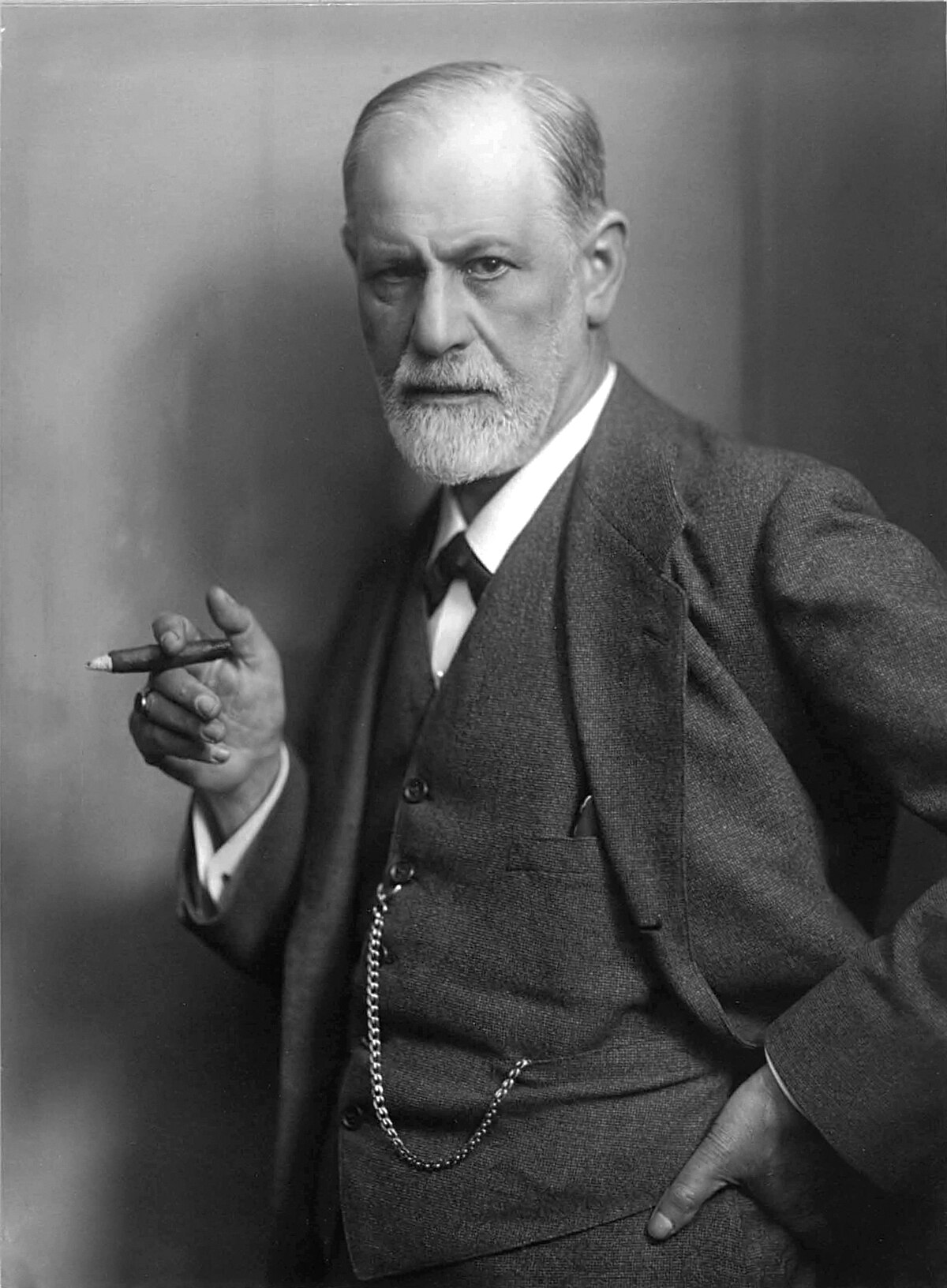
Sigmund Freud, born on May 6, 1856, in Freiberg, Moravia (now part of the Czech Republic), is widely regarded as the father of psychoanalysis and one of the most influential figures in the field of psychology. His groundbreaking work on the human psyche, sexuality, and the unconscious mind has left an indelible mark on both the scientific community and popular culture. This article delves into the life of Sigmund Freud, exploring his age, rise to fame, and the significant highlights of his life and career.
Early Life and Education
Freud was born into a Jewish family in a region under the control of the Austro-Hungarian Empire. His father, Jakob Freud, was a wool merchant, and his mother, Amalie Nathansohn, was the third wife of Jakob. Freud was the first of eight children, and his early years were marked by a deep intellectual curiosity and a voracious appetite for learning. The family moved to Vienna when Freud was four years old, a city that would become the center of his life and work for the next seventy-eight years.
Freud excelled academically, and in 1873, he entered the University of Vienna to study medicine. He graduated with a medical degree in 1881, and his early career was marked by an interest in neurophysiology. Freud worked under the renowned physiologist Ernst Brücke, where he honed his skills in scientific research. However, due to financial constraints, Freud abandoned his research aspirations and turned to clinical practice, specializing in neurology.
The Influence of Jean-Martin Charcot
In 1885, Freud received a fellowship to study under Jean-Martin Charcot at the Salpêtrière Hospital in Paris. Charcot was a leading neurologist, known for his work on hysteria and hypnosis. This experience profoundly influenced Freud and marked the beginning of his interest in the psychological underpinnings of mental disorders. Charcot’s demonstrations of hypnosis and its effects on patients fascinated Freud and led him to question the prevailing medical views of the time, which often attributed hysteria and other mental disorders solely to organic causes.
Freud’s exposure to Charcot’s work laid the groundwork for his later theories on the unconscious mind, repression, and the role of sexuality in human behavior. However, Freud’s interpretations of Charcot’s work were unique, and he began to develop his own ideas that would eventually diverge from those of his mentor.
The Birth of Psychoanalysis
Freud’s early clinical work in Vienna involved treating patients with hysteria, a condition characterized by unexplained physical symptoms such as paralysis and convulsions. Freud’s collaboration with Josef Breuer, another Viennese physician, was pivotal in the development of psychoanalysis. Together, they published “Studies on Hysteria” in 1895, which introduced the concept of “talk therapy” or the “talking cure.” This therapeutic approach involved encouraging patients to speak freely about their thoughts and feelings, leading to the exploration of unconscious material.
A key case from this period involved a patient referred to as Anna O., who suffered from severe hysteria. Through Breuer’s use of hypnosis, Anna O. was able to recall traumatic events that had been repressed in her unconscious mind. This process of bringing repressed memories to consciousness and verbalizing them provided relief from her symptoms, a phenomenon Freud would later term “catharsis.”
Freud’s work with Anna O. and other patients led him to develop the technique of free association, where patients were encouraged to say whatever came to mind without censorship. This technique became a cornerstone of psychoanalysis, allowing Freud to explore the unconscious mind and uncover the root causes of psychological distress.
The Interpretation of Dreams
In 1900, Freud published “The Interpretation of Dreams,” a seminal work that is considered the foundation of psychoanalytic theory. In this book, Freud introduced the concept of the unconscious mind and argued that dreams are a form of wish fulfillment, expressing desires that are repressed during waking life. He proposed that dreams have both manifest content (the literal storyline) and latent content (the hidden psychological meaning).
Freud’s theory of dreams was revolutionary, suggesting that the human mind operates on multiple levels, with much of our behavior and thoughts influenced by unconscious forces. This work laid the groundwork for many of Freud’s later theories, including the Oedipus complex, the structure of the psyche (id, ego, and superego), and the concept of repression.
“The Interpretation of Dreams” was initially met with skepticism and even ridicule by many in the scientific community. However, it gradually gained recognition and established Freud as a leading thinker in psychology. The book’s impact extended beyond academia, influencing literature, art, and popular culture.
The Development of Psychoanalytic Theory
Throughout the early 20th century, Freud continued to develop and refine his theories on the human psyche. He introduced the concept of the Oedipus complex, which posits that during the phallic stage of psychosexual development, children experience unconscious sexual desires for the opposite-sex parent and feelings of rivalry with the same-sex parent. Freud’s theories on childhood sexuality were highly controversial and challenged the moral and social norms of his time.
In 1905, Freud published “Three Essays on the Theory of Sexuality,” where he elaborated on the stages of psychosexual development and introduced the idea of polymorphous perversity, suggesting that infants are born with the capacity for sexual pleasure but that societal norms shape their sexual development.
Freud’s work attracted a following, leading to the formation of the Vienna Psychoanalytic Society in 1908. This group, which included prominent figures such as Carl Jung and Alfred Adler, became the center of the psychoanalytic movement. However, differences in theoretical perspectives led to splits within the group, with Jung and Adler eventually developing their own schools of thought.
Despite these schisms, Freud’s influence continued to grow, and psychoanalysis spread throughout Europe and the United States. Freud’s ideas on the unconscious mind, defense mechanisms, and the importance of early childhood experiences in shaping personality became foundational concepts in psychology.
Freud’s Later Years and Legacy
As Freud’s fame grew, so did the controversies surrounding his work. His theories on sexuality, the unconscious, and the nature of the human mind challenged the prevailing scientific and cultural beliefs of his time. Freud’s work was often met with hostility, particularly from conservative circles that viewed his ideas as a threat to traditional values.
In the 1930s, the rise of the Nazi regime in Germany posed a direct threat to Freud’s life and work. As an outspoken critic of the Nazis and a prominent Jewish intellectual, Freud’s works were among those burned in the infamous book burnings of 1933. In 1938, after the annexation of Austria by Nazi Germany, Freud was forced to flee Vienna and seek refuge in London. He spent the last year of his life in exile, continuing to write and work despite suffering from advanced oral cancer, a disease he had battled for many years.
Freud died on September 23, 1939, in London. His death marked the end of an era, but his legacy continued to grow in the years that followed. Freud’s work laid the foundation for modern psychoanalysis and had a profound influence on psychology, psychiatry, and the broader cultural landscape. His ideas have been both celebrated and critiqued, and his work remains a subject of intense debate among scholars and practitioners.
Freud’s influence extends far beyond the field of psychology. His ideas on the unconscious mind, repression, and the role of sexuality in human behavior have permeated literature, art, film, and popular culture. The concepts of the “Freudian slip,” “id, ego, and superego,” and “Oedipus complex” are now part of the cultural lexicon, reflecting Freud’s enduring impact on how we understand the human mind.
Key Works and Contributions
Freud’s body of work is vast, and his contributions to psychology are numerous. Some of his most influential works include:
- Studies on Hysteria (1895) – Co-authored with Josef Breuer, this work introduced the concept of the “talking cure” and laid the foundation for psychoanalysis.
- The Interpretation of Dreams (1900) – Freud’s groundbreaking work on the role of dreams in revealing unconscious desires.
- Three Essays on the Theory of Sexuality (1905) – Explored the stages of psychosexual development and introduced key concepts in psychoanalytic theory.
- Totem and Taboo (1913) – Examined the origins of human society and the role of religion and cultural practices in shaping behavior.
- Beyond the Pleasure Principle (1920) – Introduced the concept of the death drive, a fundamental part of Freud’s later work on the instincts driving human behavior.
- Civilization and Its Discontents (1930) – A reflection on the tension between individual desires and societal expectations, and the inherent conflict between the pursuit of pleasure and the constraints of civilization.
Freud’s theories have been both lauded and criticized, but there is no denying their profound influence on the development of psychology and the way we think about the mind. His work has inspired countless other theorists, from Carl Jung and Alfred Adler to more contemporary figures such as Jacques Lacan and Slavoj Žižek.
Conclusion
Sigmund Freud’s life and work represent a pivotal chapter in the history of psychology and intellectual thought. His exploration of the unconscious mind, the role of sexuality, and the mechanisms of repression challenged the conventional wisdom of his time and opened new avenues for understanding human behavior. Though some of his theories have been revised or refuted, Freud’s impact on psychology, culture, and society remains profound.
Freud’s legacy endures not only in the field of psychoanalysis but also in the broader cultural and intellectual landscape. His ideas continue to influence how we think about the mind, identity, and the complexities of human behavior. As we reflect on Freud’s life and contributions, it is clear that his work has left an indelible mark on our understanding of what it means to be human.


