
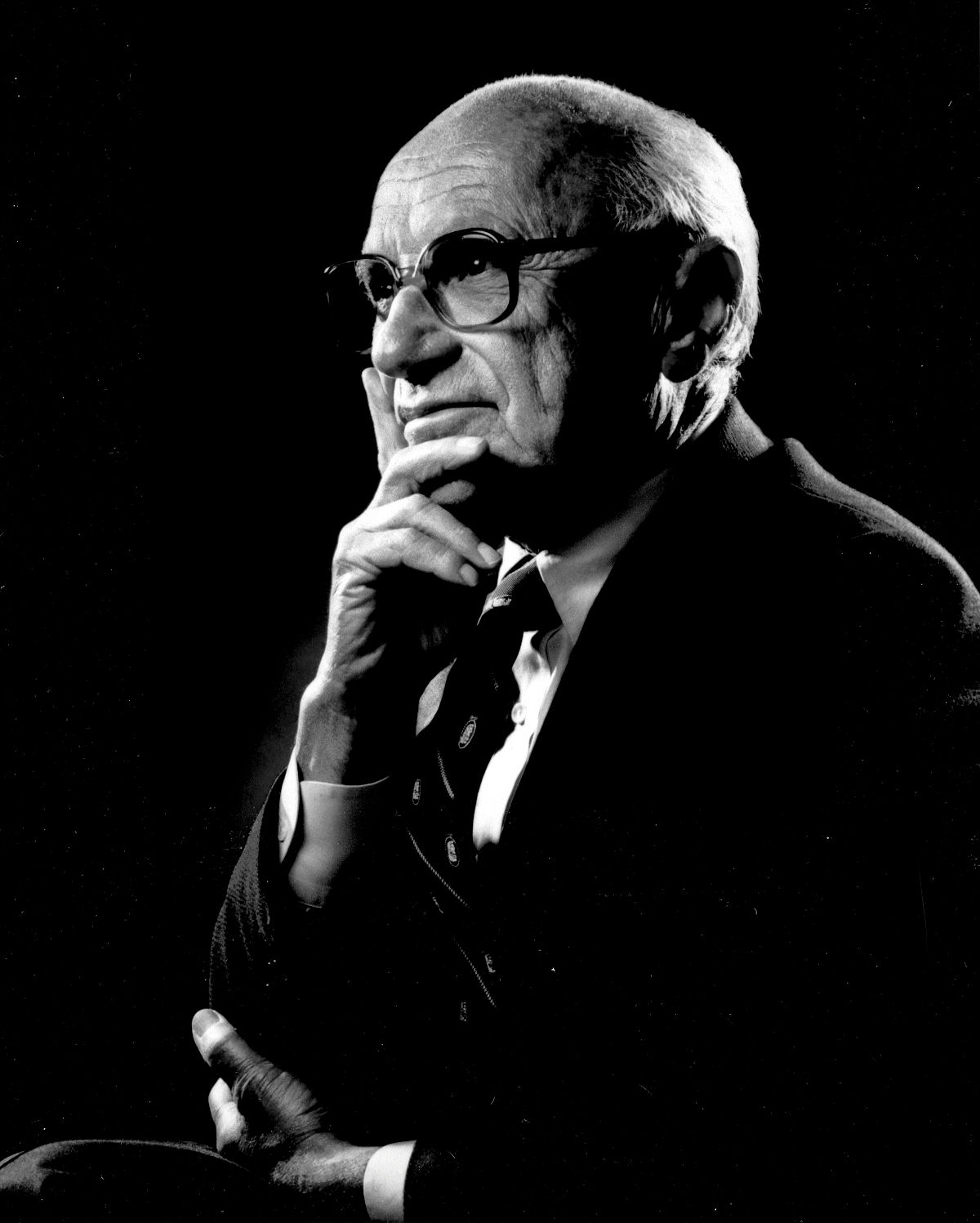
Milton Friedman, born on July 31, 1912, in Brooklyn, New York, is widely regarded as one of the most influential economists of the 20th century. His work laid the foundation for modern economic theory, particularly in the areas of monetarism and free-market capitalism. Friedman’s ideas have shaped economic policies worldwide, influencing leaders and thinkers across the political spectrum. This article delves into the life of Milton Friedman, exploring his age, rise to fame, and the significant highlights of his life and career.
Early Life and Education
Milton Friedman was born into a poor Jewish family that had emigrated from Eastern Europe to the United States at the turn of the century. His parents, who were both small business owners, struggled financially, but they placed a high value on education. This emphasis on learning played a crucial role in shaping Friedman’s intellectual development.
Friedman’s academic prowess was evident from an early age. He attended Rutgers University, where he earned a bachelor’s degree in economics in 1932. His time at Rutgers was formative, as it was here that he first encountered the ideas of economic theorists such as Arthur F. Burns and Homer Jones, who would later become influential figures in his life. After graduating, Friedman went on to earn a master’s degree from the University of Chicago in 1933, followed by a Ph.D. from Columbia University in 1946.
Early Career and Influence of the Chicago School
Friedman’s early career was marked by his association with the University of Chicago, where he became a leading figure in what would later be known as the “Chicago School” of economics. This group of economists, which included luminaries such as Friedrich Hayek, George Stigler, and Gary Becker, advocated for free-market principles and minimal government intervention in the economy.
In 1947, Friedman, along with Hayek, Ludwig von Mises, and other prominent liberal thinkers, founded the Mont Pèlerin Society. This organization aimed to promote liberalism (in the classical sense) and counter the growing influence of state intervention in economic affairs, which had become prevalent in the post-World War II era. The Mont Pèlerin Society became a hub for intellectuals dedicated to defending and advancing the principles of a free society, and it played a pivotal role in shaping the global economic landscape in the latter half of the 20th century.
Monetarism and Economic Theory
Milton Friedman is perhaps best known for his work in developing and promoting the theory of monetarism. Monetarism is an economic theory that emphasizes the role of governments in controlling the amount of money in circulation. According to this theory, variations in the money supply have major influences on national output in the short run and the price level over longer periods. In contrast to Keynesian economics, which advocates for active government intervention to stabilize the economy, monetarism argues that the economy is inherently stable and that economic downturns are often the result of poor monetary policy.
Friedman’s most significant contribution to monetarism came with the publication of “A Monetary History of the United States, 1867–1960,” co-authored with Anna Schwartz in 1963. This work provided an empirical analysis of the role of monetary policy in shaping economic outcomes, challenging the Keynesian consensus that had dominated economic thought since the 1930s. A particularly famous chapter in this book deals with the Great Depression, where Friedman and Schwartz argued that the Federal Reserve’s failure to provide adequate liquidity to the banking system turned what could have been a normal economic downturn into the most severe depression in American history.
This analysis was groundbreaking and had far-reaching implications for economic policy. It suggested that the central bank’s actions, or lack thereof, played a crucial role in determining economic stability. Friedman’s work laid the foundation for the modern understanding of monetary policy and its impact on the economy. His theories became increasingly influential in the 1970s and 1980s, particularly as governments around the world grappled with stagflation—a combination of high inflation and stagnant economic growth that Keynesian economics struggled to explain.
Political Advocacy and the Fight Against the Welfare State
Beyond his contributions to economic theory, Milton Friedman was a passionate advocate for individual freedom and a staunch critic of government intervention in the economy. He argued that government policies, particularly those associated with the welfare state, often did more harm than good. In his view, welfare programs created dependency, distorted incentives, and were inefficient at achieving their intended goals.
Friedman’s critique of the welfare state was not just theoretical; it was deeply rooted in his belief in the importance of individual freedom. He saw government intervention as a threat to personal liberty and believed that the best way to help the poor was to empower them through economic freedom rather than through government handouts.
One of Friedman’s most well-known proposals was the concept of the “negative income tax,” which he introduced in his 1962 book “Capitalism and Freedom.” The negative income tax was designed as an alternative to the welfare state, where individuals earning below a certain threshold would receive direct cash payments from the government. This approach, Friedman argued, would be more efficient and less paternalistic than traditional welfare programs, allowing individuals to make their own choices about how to spend their money.
Friedman’s ideas on welfare reform were influential in shaping public policy, particularly in the United States. His advocacy for school choice, for example, led to the development of voucher programs that allow parents to use public funds to send their children to private schools. Friedman believed that competition in education would lead to better outcomes for students and greater accountability for schools.
Influence on Global Economic Policy
Milton Friedman’s influence extended far beyond the academic world. His ideas played a significant role in shaping economic policy in the United States and around the world. In the 1980s, his advocacy for free markets and limited government intervention found a powerful ally in President Ronald Reagan, who implemented many of Friedman’s ideas during his time in office. Reagan’s economic policies, often referred to as “Reaganomics,” emphasized tax cuts, deregulation, and a reduction in the size of government—principles that were heavily influenced by Friedman’s work.
Friedman’s influence was not limited to the United States. His ideas also had a profound impact on economic policy in other countries, particularly in the United Kingdom under Prime Minister Margaret Thatcher. Thatcher was a strong proponent of free-market policies and implemented a series of economic reforms in the 1980s that were inspired by Friedman’s theories. These reforms included privatizing state-owned industries, reducing the power of trade unions, and controlling inflation through monetary policy.
Friedman’s work also had an impact in developing countries. In Chile, for example, Friedman’s ideas were adopted by a group of economists known as the “Chicago Boys,” who implemented a series of market-oriented reforms in the 1970s and 1980s. These reforms, which included privatization, deregulation, and trade liberalization, helped to stabilize the Chilean economy and set the stage for decades of economic growth.
Awards and Recognition
Milton Friedman’s contributions to economics and public policy were widely recognized during his lifetime. In 1976, he was awarded the Nobel Prize in Economic Sciences for his achievements in the fields of consumption analysis, monetary history, and the complexity of stabilization policy. The Nobel Prize solidified Friedman’s status as one of the most important economists of the 20th century and brought his ideas to a broader audience.
Friedman was also a prolific author, writing numerous books and articles on economics and public policy. His 1980 book “Free to Choose,” co-authored with his wife, Rose Friedman, became a bestseller and was later turned into a television series that reached a wide audience. The book and television series further popularized Friedman’s ideas and made him a household name.
Legacy and Lasting Impact
Milton Friedman passed away on November 16, 2006, at the age of 94, but his legacy continues to influence economic thought and policy. His ideas on monetary policy, the role of government, and the importance of economic freedom remain central to the field of economics and continue to shape debates over public policy.
Friedman’s advocacy for free markets and limited government has had a lasting impact on economic policy around the world. His work laid the intellectual foundation for the shift toward market-oriented reforms in the late 20th century, and his ideas continue to resonate with policymakers and economists today.
While Friedman’s views were often controversial, particularly his critiques of the welfare state and his support for free-market capitalism, there is no denying the profound influence he has had on both economic theory and practice. His work has inspired generations of economists, policymakers, and thinkers who continue to grapple with the questions he raised about the role of government, the importance of individual freedom, and the power of markets to generate prosperity.
Conclusion
Milton Friedman’s life and work represent a monumental contribution to the field of economics and the broader intellectual landscape. His ideas on monetarism, free markets, and the role of government have shaped economic policy and public discourse for decades. As one of the most influential economists of the 20th century, Friedman’s legacy continues to inspire and challenge those who seek to understand the complexities of the modern economy.
Friedman’s impact is evident not only in the policies implemented by governments around the world but also in the ongoing debates over the proper role of government in the economy. His work reminds us of the power of ideas to shape the course of history and the importance of intellectual rigor in the pursuit of truth.
In a world that continues to grapple with economic challenges, Milton Friedman’s insights into the dynamics of markets, the dangers of government overreach, and the importance of individual freedom remain as relevant today as they were during his lifetime. His legacy endures as a testament to the enduring power of free-market economics and the principles of liberty.


